Cuban activist denounces repression at UN forum, delegate booed for interruption
At a Geneva UN forum, Oraisa Estrada Velma accused Cuba of harassing Black dissidents, and the delegation's attempt to cut her off drew boos instead.
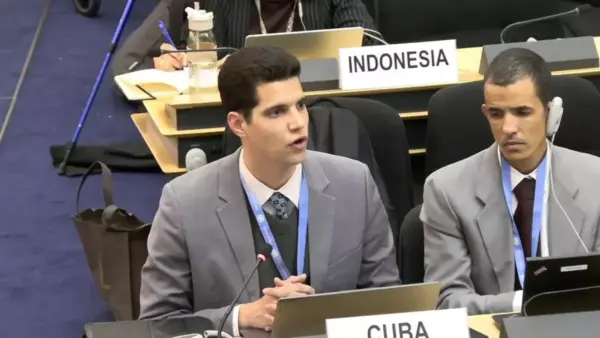
A Cuban delegation’s attempt to silence Oraisa Estrada Velma at a UN forum in Geneva turned into the moment that defined the room. Estrada, an Afro-descendant Cuban activist based in Valencia, Spain, used her remarks at the Palais des Nations to denounce harassment, surveillance, psychological pressure and torture against Cubans who refuse to give up their voice, especially Black and mixed-race Cubans and political prisoners. When the Cuban representative interrupted her, the move backfired and the interruption drew boos, not credibility.
Estrada’s intervention landed because she named names. She identified Afro-Cuban political prisoners Luis Manuel Otero Alcántara and Maykel Osorbo as emblematic cases of the repression she described. Video of the exchange spread quickly online and resonated with Cubans abroad, who saw in the confrontation the same pattern they say plays out repeatedly: the Cuban state tries to discredit critics in public, including on the international stage, rather than answer the substance of the accusations.
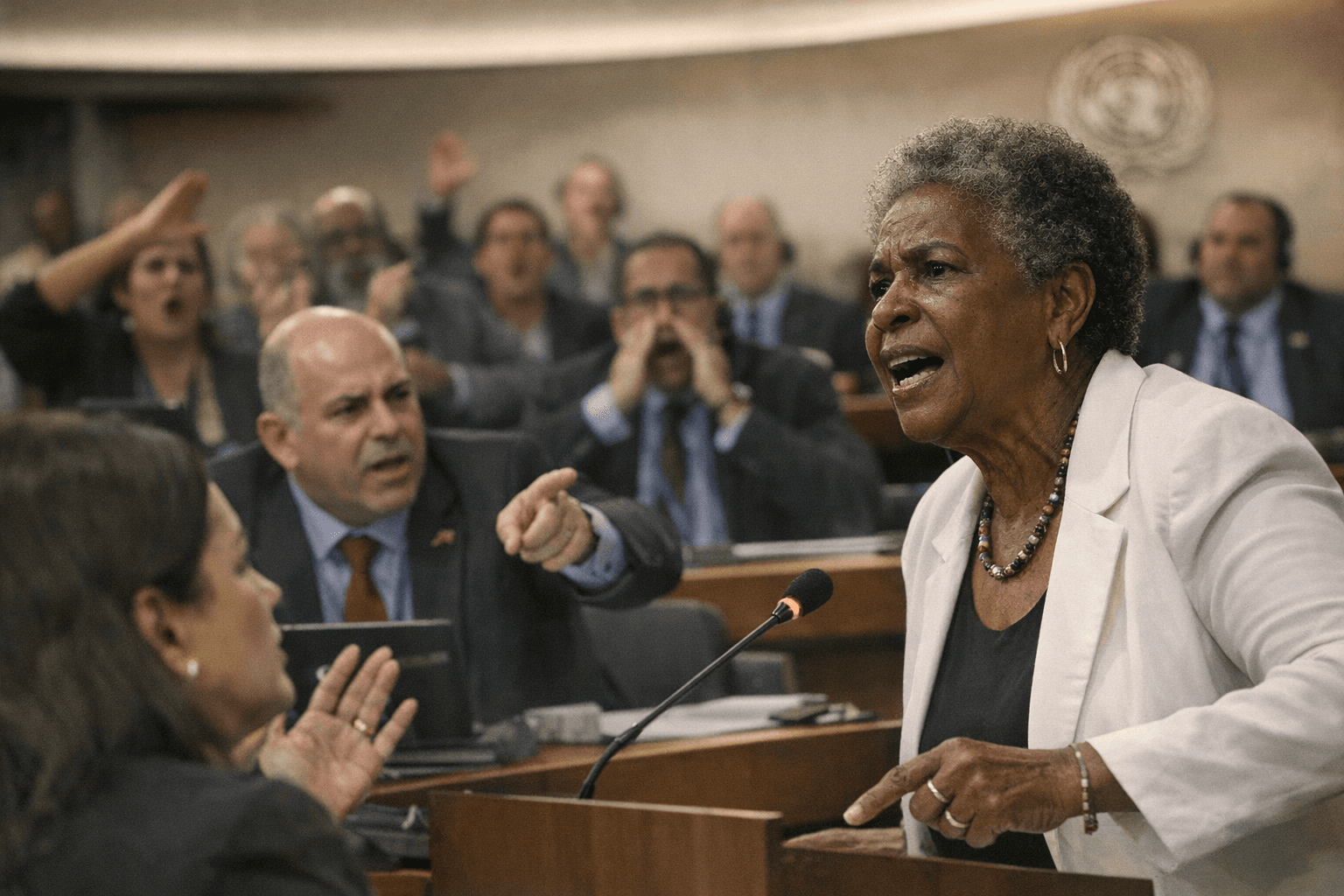
The clash took place during the fifth session of the United Nations Permanent Forum on People of African Descent, held from April 14 to 17 under the theme of expanding the human rights of people of African descent under the Second International Decade for People of African Descent. The forum is meant to function as an open consultation, bringing together governments, UN entities, experts, civil society and the public to discuss practical steps on rights and justice. That made Geneva a particularly sensitive setting for Cuba, which has long portrayed itself as a defender of racial equality.
The broader human rights record points in the opposite direction. Amnesty International says discrimination continued against women, Afro-descendants and LGBTI people in Cuba. Human Rights Watch says Cuban authorities still use broad security powers to target critics, including Afro-Cuban and LGBT people. In March 2021, UN expert Mary Lawlor said Cuba must stop intimidation and detention of human rights defenders working for racial justice, a warning that still hangs over the island’s anti-racism debate.
The numbers sharpen the picture. Human Rights Watch reported in 2025 that rights groups counted more than 1,000 political prisoners in Cuba by August, including 30 minors, while more than 650 people detained after the July 2021 protests remained behind bars. In April 2026, HRW also said a government-announced release of 2,010 prisoners did not include any political prisoners identified by independent groups. Against that backdrop, Cuba’s reflex to interrupt Estrada at a forum on African descent looked less like a protocol dispute than another effort to control the narrative where Afro-Cuban activists are trying to break it open.
This article was produced by Prism’s automated news system from verified source data, official records, and press releases, then run through automated quality and moderation checks before publishing. The system is built and supervised by the people who set the standards it runs under. Read our full AI policy.
Did this article answer your question?