Cuban-Americans Rally in Hialeah, Urging Trump to Free Cuba Next
Hundreds rallied at Milander Park in Hialeah on March 24, chanting "Cuba next" as Mayor Bryan Calvo declared the Cuban people have waited long enough for freedom.
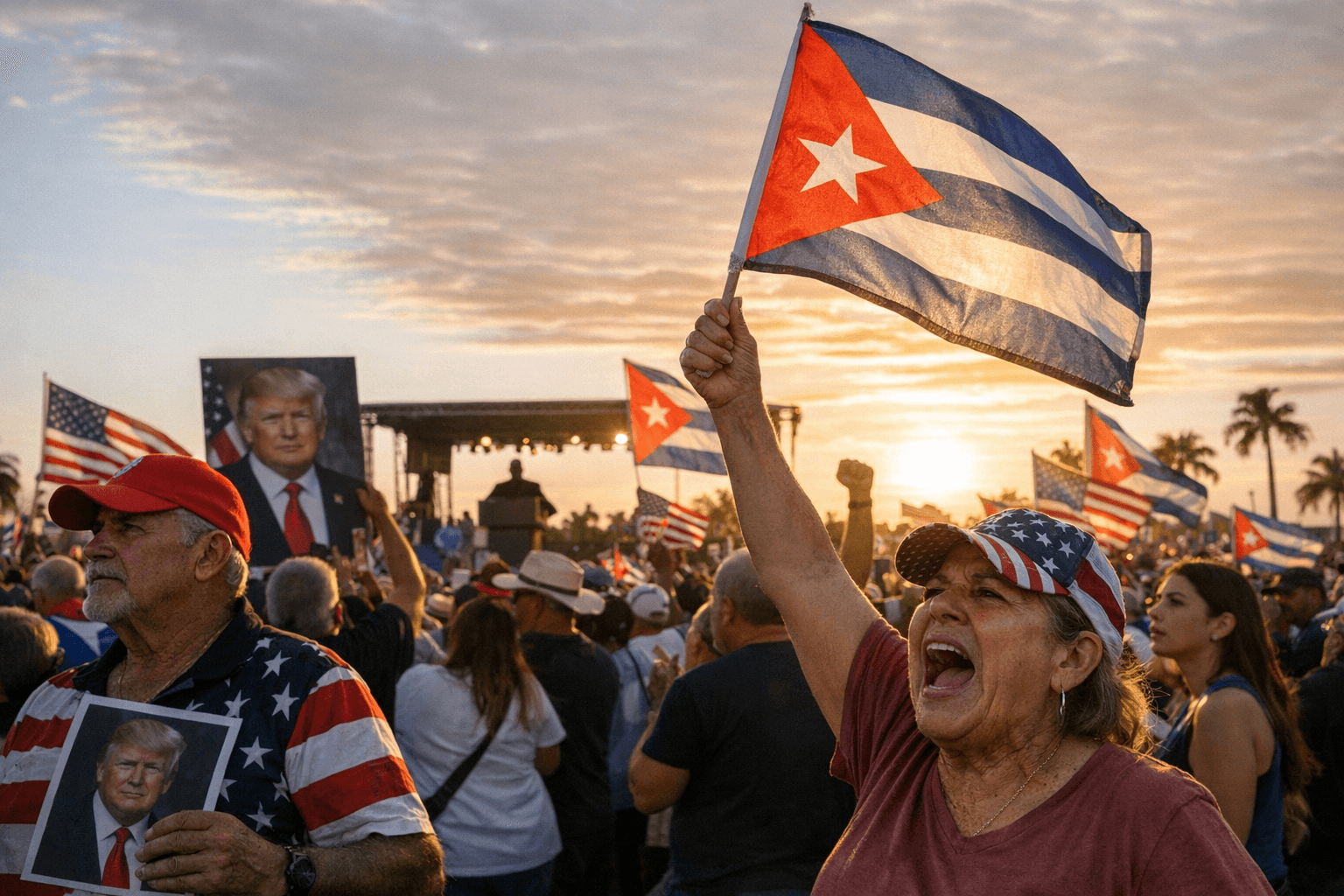
The city of Hialeah held a "Free Cuba Rally" Tuesday night at Milander Park, backing the Trump administration's demand that Cuban President Miguel Díaz-Canel resign along with other top communist Cuba leaders. Hundreds of Cuban exiles filled the park alongside activists, community and faith leaders, and artists, running from 7 p.m. to 10 p.m. The chant "Cuba next" rang out repeatedly, a direct echo of the U.S.-led ouster of Venezuelan President Nicolás Maduro earlier this year and the pressure campaign that followed.
"From the heart of the Cuban-American community, this rally sends a clear message: the time for freedom in Cuba is now," city officials said in a statement announcing the rally. Mayor Bryan Calvo put it plainly: "Let me be clear. The Cuban people have waited long enough." Calvo, 28 years old and the youngest mayor in the history of Hialeah, is a Harvard Law School graduate elected in November 2025 with 52.93% of the vote.
Hialeah has the largest concentration of Cuban-Americans in the U.S., with roughly 8 in 10 city residents of Cuban descent, making it a natural staging ground for exile politics. The city framed the rally not just as protest but as a forward-looking declaration. "This rally honors their unbreakable spirit and calls for undeniable regime change," Mayor Calvo said. "Hialeah stands ready to lead, to support, and to help envision a post-regime Cuba rooted in hope and action."
Special guest performers Yotuel Romero and El Chacal were confirmed for the event. Yotuel is the co-author of "Patria y Vida," the anthem of Cuba's July 11, 2021 protests, which won two Latin Grammys that year.
The rally came at a time when Trump and top administration officials have been pressing for dramatic change in Cuba and an end to its communist government. Trump and Secretary of State Marco Rubio, who is Cuban-American, have said they see the island nation as the next country where the U.S. can expand its influence. The Associated Press previously reported that the administration is looking for Díaz-Canel to leave his position, though no detail has been offered about who the administration might like to see come to power.
Cuba's dependence on imported oil, mostly from Venezuela, was severed after the 2026 U.S. intervention in Venezuela ousted Venezuelan president Nicolás Maduro, leaving the island without adequate supply. The United States has confirmed that regime change in Cuba is a goal by the end of the year, asking the government of Díaz-Canel to "make a deal before it's too late."
Havana pushed back publicly. Cuban Deputy Foreign Minister Carlos Fernández de Cossío refuted any suggestion that political system change or Díaz-Canel's departure was on the table as part of ongoing talks between the two countries. Díaz-Canel publicly confirmed in March that his government was engaged in diplomatic talks with the United States aimed at addressing the severe oil and energy blockade. The announcement was framed as an effort to find "solutions," and Cuba agreed upfront to release 51 political prisoners.
City officials closed with a unified message: "We stand together, raising our voices for a free and democratic Cuba. This rally is a declaration of hope and a call to action for a post-regime Cuba." For a community that has spent decades watching Havana outlast every pressure campaign thrown at it, the chant of "Cuba next" carried something it rarely has before: the sense that Washington, for the first time in a generation, might actually mean it.
This article was produced by Prism’s automated news system from verified source data, official records, and press releases, then run through automated quality and moderation checks before publishing. The system is built and supervised by the people who set the standards it runs under. Read our full AI policy.
Did this article answer your question?