Cuban customs seizes 48 cocaine capsules from body-packer at Havana airport
Customs pulled 48 cocaine capsules from a passenger's body at José Martí, adding another case to a six-operation drug crackdown in 2026.
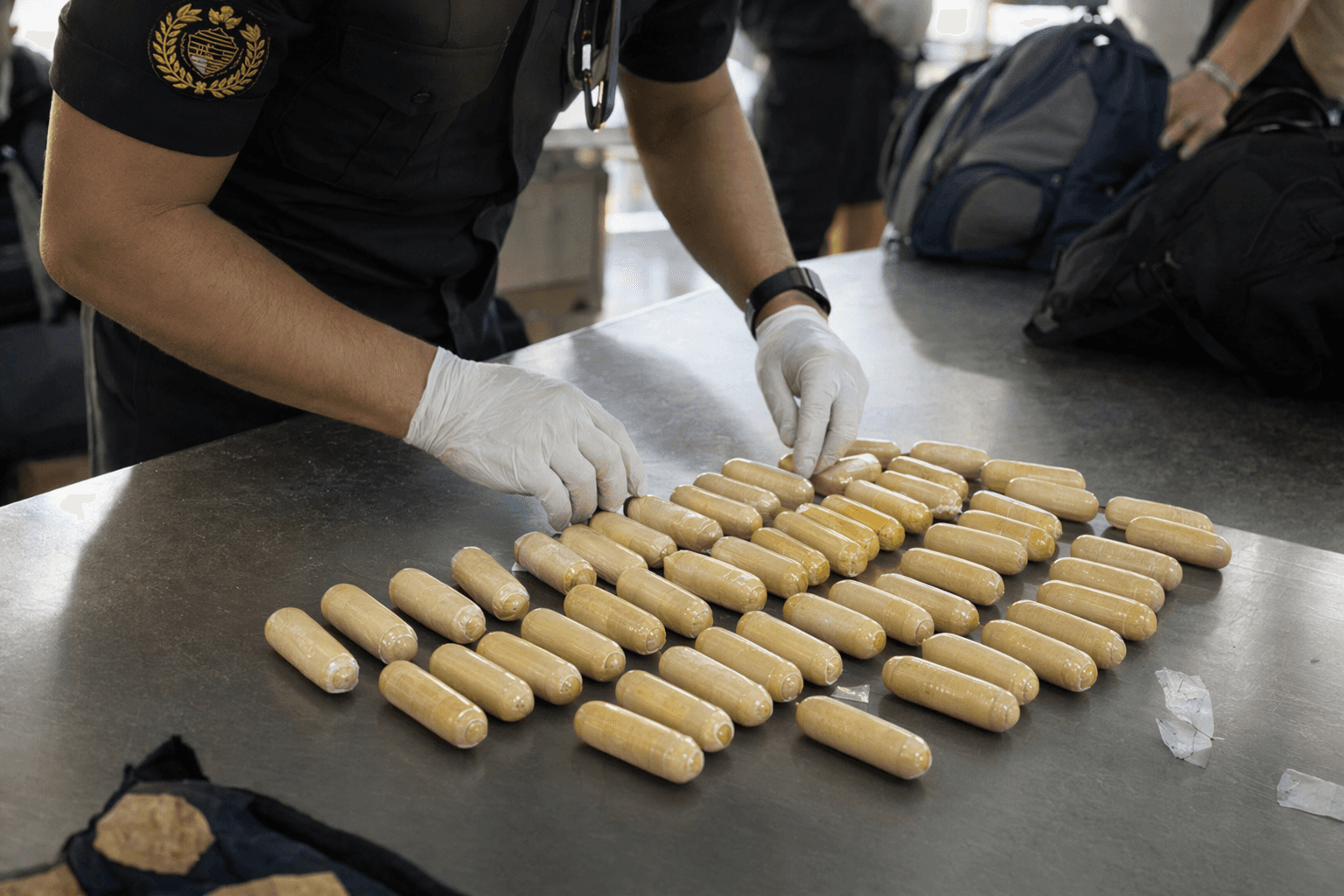
A passenger trying to slip through José Martí International Airport with 48 cocaine capsules hidden inside the body was stopped by Cuban customs, a seizure that puts Havana’s main airport back at the center of the island’s drug-control fight.
William Pérez González, the first deputy chief of the General Customs of the Republic, announced the interception after officers carried out a risk-analysis check and anti-drug screening. Images released with the announcement showed the extracted capsules and an abdominal X-ray that revealed their presence, a reminder that customs enforcement at the airport is becoming increasingly dependent on medical-style detection.
The case also fits a broader pattern that Cuban customs says is building in 2026. Officials have said this was at least the sixth drug-trafficking operation intercepted this year, after a separate April case at the same airport in which methamphetamine was hidden in a package of rice. Other 2026 seizures have involved narcotics concealed in cereals, instant beverages, electric coffee makers, baseballs, jars, a bottle of rum and a water pump.
The airport has seen similar tactics before. In July 2025, customs reported more than one kilogram of cocaine hydrochloride hidden inside an Eleguá statue at José Martí International Airport. In August 2025, authorities thwarted attempts to smuggle drugs in scented candles and modeling clay pots, showing how traffickers have used everything from religious figures to household goods to try to defeat controls.
Customs has said it seized 14 kilograms of drug substances at its borders from January through May 2026, a figure that points to both the scale of the problem and the variety of concealment methods being tested. For Havana airport, that means passengers, baggage and parcels are all moving through a tighter screen than before, with risk-analysis checks and X-ray scans now central to the response.
The stakes are high beyond the criminal charge itself. Body packing can be life-threatening if a packet ruptures inside the body, turning a smuggling attempt into an emergency. At José Martí, the latest seizure shows that Cuban authorities are treating the airport not just as a transit point, but as a frontline border where narcotics, surveillance and passenger privacy now collide.
This article was produced by Prism’s automated news system from verified source data, official records, and press releases, then run through automated quality and moderation checks before publishing. The system is built and supervised by the people who set the standards it runs under. Read our full AI policy.
Did this article answer your question?