Cuba’s blackouts turn streets deadly as crashes rise nationwide
A fatal Havana crash shows Cuba's blackout crisis has become a road-safety crisis, with dark intersections, broken signals and 750 deaths in 2025.
Dark intersections are the new hazard
A car hit an electric tricycle and a pedicab at San Lázaro and Lealtad in Havana on March 28, and the scene quickly became a wider warning for the island. Witnesses described a loud impact, then found themselves in the middle of another collision only blocks away, the kind of after-dark chain reaction that blackouts make far more likely.
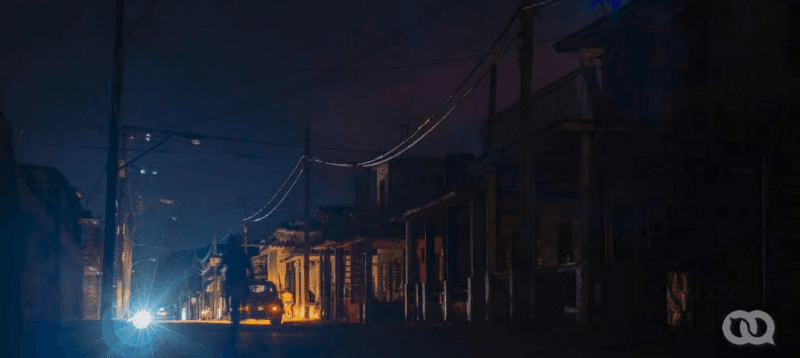
That is the heart of Cuba’s new road danger. When public lighting fails and traffic signals are out of service, intersections stop behaving like intersections. Streets and highways become harder to read, pedestrians and cyclists fade into darkness, and every driver has to guess at the order of movement.
The numbers behind the risk
The scale is no longer anecdotal. Official figures presented to the National Road Safety Commission show Cuba recorded 7,538 traffic accidents in 2025, with 750 deaths and 6,718 injuries. That means the crash problem is no longer just about damaged vehicles or delays. It is costing lives at a pace that is hard to ignore.
Authorities said 72% of those crashes were linked to failing to yield, lack of attention, and speeding. They also reported that motorcycles, mopeds, and pedestrians were involved in 63% of traffic incidents, while 31% of drivers involved in accidents did not have a license. Those are not isolated failures. They describe a road system where the most exposed people are also the most likely to be hurt.
Why the road itself is part of the problem
Official analysis still leans heavily on human error, but that explanation leaves out the condition of the street. Roberto Rodríguez, the head of the Specialized Traffic Body of the Ministry of the Interior, acknowledged in July 2024 that Cuba had not managed to stop the deterioration of roads and signage, and that many traffic lights were broken or in poor condition. He also said replacement lights cost between $12,000 and $14,000 each, a price that is difficult for the state budget to absorb.
That matters because a broken signal does not just slow traffic. It changes the rules in real time. Drivers now improvise right-of-way at intersections that are dark, unmarked, or both, and that improvisation creates the conditions for collisions. A Havana driver quoted in the feature said he could not count how many near misses he has had because intersections are so poorly lit and the traffic lights rarely work.
A transport mix built for exposure
The danger is growing as Cuba’s transport system shifts toward smaller, more vulnerable vehicles. As the state fleet shrinks and fuel shortages keep regular service irregular, more people are turning to motorcycles, electric tricycles, and adapted private vehicles. Those modes keep the island moving, but they also put riders and passengers closer to the pavement and farther from protection.
That shift has a direct effect on the severity of crashes. Smaller vehicles are more exposed, and many are being driven by operators with less experience than the people who once handled the larger state fleet. A June 2025 report captured the same trend from another angle, saying Cuba was seeing fewer accidents overall in the first five months of the year but more deaths, with motorcycles and scooters playing a bigger role in the vehicle mix.
By February 2026, AFP reported that the fuel crisis was pushing Havana taxi drivers toward electric tricycles and bicycle taxis as practical alternatives to gasoline cars. In a city already living through frequent outages, that creates a new contradiction. The vehicles that help people work through the fuel shortage depend on electricity, the same system that is repeatedly failing to keep the streets lit.
When the grid goes down, the road goes dark too
The blackout pattern helps explain why the roads have become so dangerous after sunset. Havana Times reported a nationwide grid collapse on March 14, 2025, the fourth in five months after earlier nationwide disconnections on October 18, November 6, and December 4, 2024. The March collapse left many localities with blackouts lasting more than 20 hours a day.
That kind of outage does more than empty refrigerators. It strips away the lighting that makes urban movement legible. Traffic lights stay dark, crosswalks disappear, and even familiar streets become difficult to judge. In that setting, a pedestrian stepping off a curb or a motorcycle emerging from a side street can be almost impossible to see in time.
What drivers are changing now
The result is a quieter, more cautious driving culture, but one built around improvisation rather than safety. People slow down where they cannot trust the signals, leave more room than they used to, and try to guess which intersections are functioning and which are not. On paper, the crash statistics still look like familiar traffic failures. On the ground, the blackout has become part of the crash scene.
- Dead traffic lights now mean there is no reliable order at many intersections.
- Unlit crossings make pedestrians and cyclists harder to spot until they are already in the roadway.
- Motorcycles, mopeds, and electric tricycles are filling more of the transport gap, while also increasing exposure in a crash.
- A roadway that lacks lighting, signage, and maintenance forces drivers to make split-second decisions with incomplete information.
The crash at San Lázaro and Lealtad is not just one more tragedy in Havana. It is evidence that Cuba’s energy crisis has spilled directly onto the asphalt, where darkness, weak infrastructure, and a changing vehicle fleet are turning ordinary streets into places of heightened risk.
This article was produced by Prism’s automated news system from verified source data, official records, and press releases, then run through automated quality and moderation checks before publishing. The system is built and supervised by the people who set the standards it runs under. Read our full AI policy.
Did this article answer your question?