Díaz-Canel invites U.S. oil investment, warns Cuba would resist invasion
Díaz-Canel used a rare NBC interview to invite U.S. oil investment while warning any invasion would meet armed resistance, as Cuba’s fuel crisis deepened.

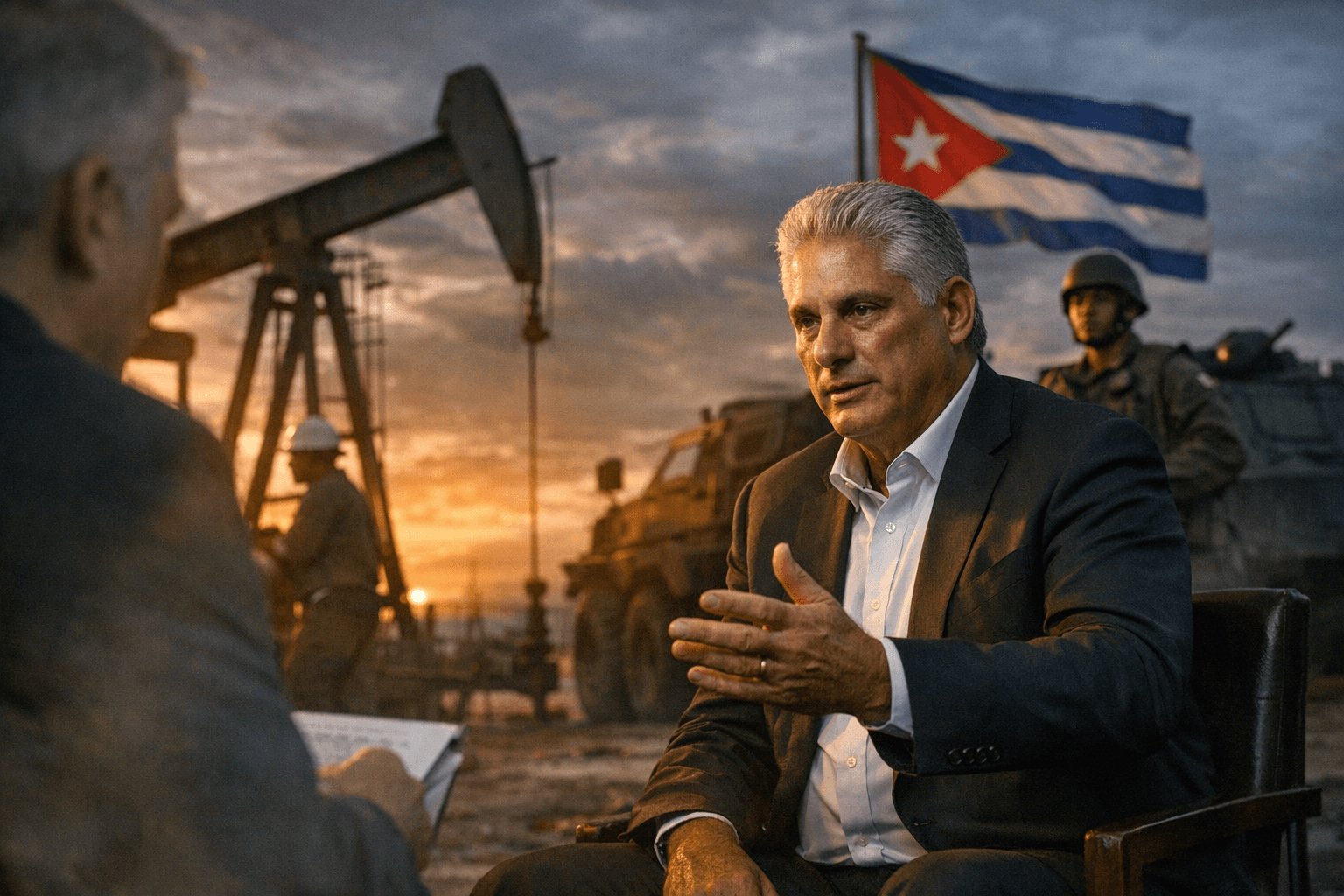
A rare NBC interview put Miguel Díaz-Canel in front of U.S. viewers with two messages that sat uneasily beside each other: Cuba was open to U.S. oil investment, and any U.S. invasion would be met with resistance from the island’s armed forces and people. The Cuban president used the exchange with Kristen Welker, a first for a Cuban leader on U.S. television in decades, to argue for dialogue instead of confrontation while insisting that Washington had no justification for a military attack.
The timing made the invitation harder to ignore. Cuba has been grinding through a severe energy shortage, with fuel deliveries stalled for more than three months and a recent Russian oil shipment described as enough to cover only about a third of the island’s monthly needs. Against that backdrop, Díaz-Canel’s openness to foreign investment in oil exploration and drilling read less like a broad thaw than a search for relief in a crisis that has left the country scrambling for every barrel it can find.
Díaz-Canel also said Cuba was ready to talk with the United States about any issue, but only without preconditions and from a position of respect and equality. At the same time, he rejected U.S. demands tied to political prisoners, multiparty elections, independent unions and a free press, saying those subjects were not under negotiation with Washington. He dismissed the idea that Cuba imprisons anyone simply for speaking against the revolution, calling that narrative false and slanderous.
The political line was reinforced by Ernesto Soberón Guzmán, Cuba’s ambassador to the United Nations, who said removing Díaz-Canel to satisfy Washington was off the table and that any talks should be based on mutual respect. That message matched the one Díaz-Canel delivered from Havana: investment is welcome, pressure is not, and any deal must leave the Cuban system intact.
For Cuba, the contrast is the story. Díaz-Canel is signaling that the island needs energy capital badly enough to court U.S. firms, even as he prepares the country for a hostile confrontation he says it can withstand. Whether that is a real opening or a political message aimed at Washington and at home, the terms are narrow. Cuba wants oil, not regime change, and it is making that distinction as forcefully as it can.
This article was produced by Prism’s automated news system from verified source data, official records, and press releases, then run through automated quality and moderation checks before publishing. The system is built and supervised by the people who set the standards it runs under. Read our full AI policy.
Did this article answer your question?