Cuba's farmers struggle to harvest as crisis, fuel shortages bite agriculture
Artemisa farmers are watching crops rot as fuel, cash and state buying power disappear, turning Cuba’s crisis into a harvest-day loss.

In Artemisa, the breadbasket for Havana, farmers are staring at ripe crops they cannot always afford to cut, move or sell. The problem is not just heat and hard labor. It is the cost of diesel, the shortage of inputs, and a state procurement system that has cut back so sharply that produce can end up rotting in the field before it ever reaches a truck.
That squeeze has been building for years. The World Food Programme says Cuba’s economy contracted by 1.1% in 2024, and it ties the country’s food crunch to persistent inflation, declining fiscal resources and fuel shortages. Limited access to foreign currency has made both domestic and imported food harder to find, while agricultural inputs have become scarcer and more expensive. USDA Economic Research Service data show Cuba’s fertilizer imports falling from $75 million in 2018 to about $47 million in 2019, then hovering around $43 million to $44 million from 2020 through 2022, a sharp drop that has left farmers with less to work with before they even reach the harvest.
The pressure intensified again on January 29, 2026, when Donald Trump issued Executive Order 14380 and declared a national emergency with respect to Cuba. The order set up a framework for tariffs on imports from countries that directly or indirectly supply oil to Cuba. UN human rights experts said in February that the move amounted to a fuel blockade, and the Office of the High Commissioner for Human Rights warned that Cuba’s oil scarcity was putting health, food and water systems at risk nationwide.
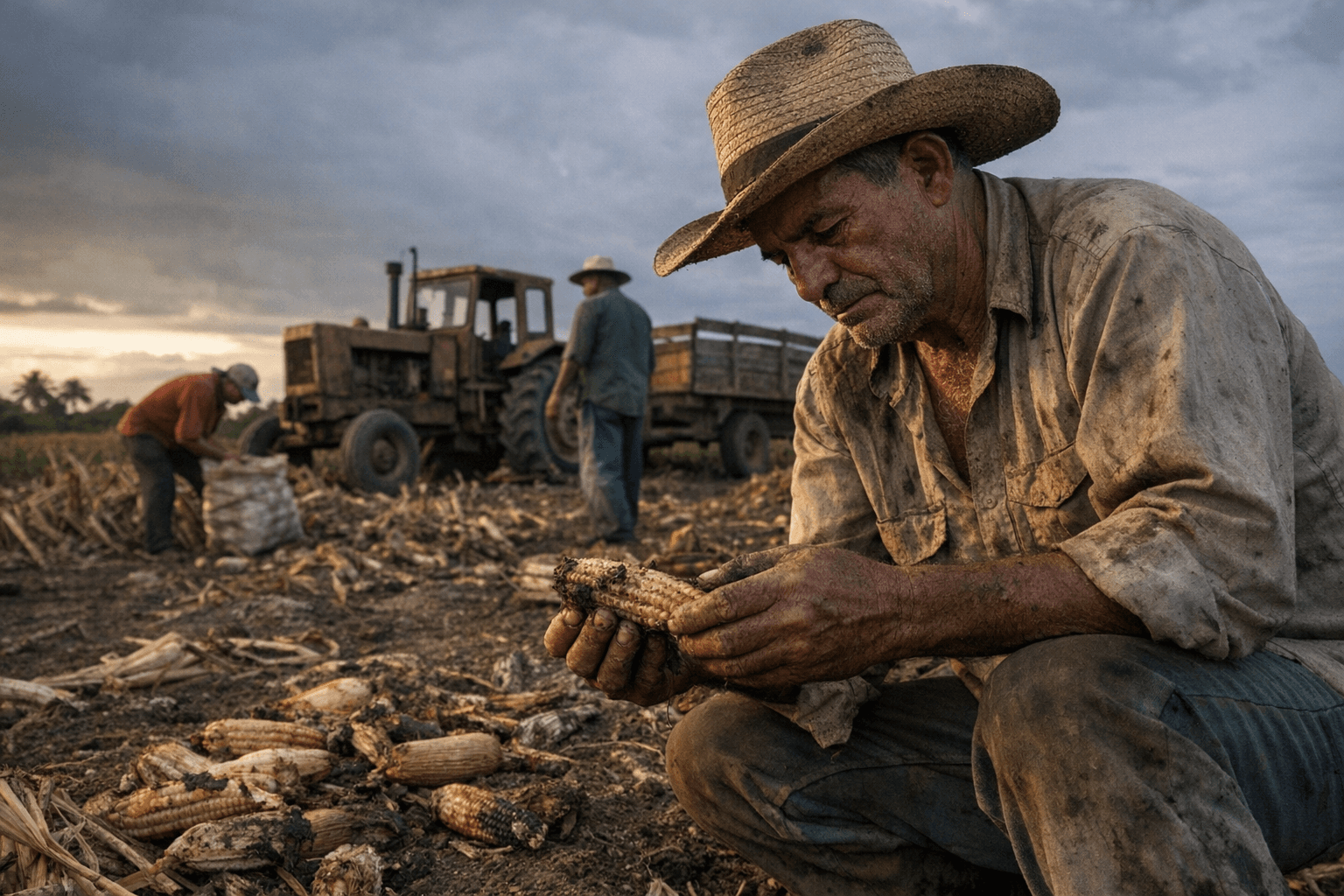
On the ground, that abstract policy fight has turned into a daily calculation. Farmers in Artemisa are weighing whether they can irrigate, whether they can transport a load, and whether it is worth harvesting at all if there is no fuel to keep the chain moving. Some are surviving on meager meals themselves. Others are turning to illegal charcoal trading or leaving for the city or abroad, draining the countryside of labor just when the fields need more hands.
The wider collapse reaches far beyond agriculture. United Nations News said in April that humanitarian needs in Cuba remained acute and persistent and that the energy shock had worsened since the end of March. In March, it reported that more than 50,000 surgeries were postponed in February alone because of energy shortages. In Cuba, the same fuel crunch that stalls a harvest in Artemisa can also delay an operation in Havana, and that is what makes the crisis feel so total now.
This article was produced by Prism’s automated news system from verified source data, official records, and press releases, then run through automated quality and moderation checks before publishing. The system is built and supervised by the people who set the standards it runs under. Read our full AI policy.
Did this article answer your question?