Cuba’s funeral crisis deepens in Matanzas, families face delays and corruption
Jorge’s grandmother died in Matanzas, but the crematorium could not run. The family was left waiting, paying and bargaining through a funeral system that has begun to fail the dead.
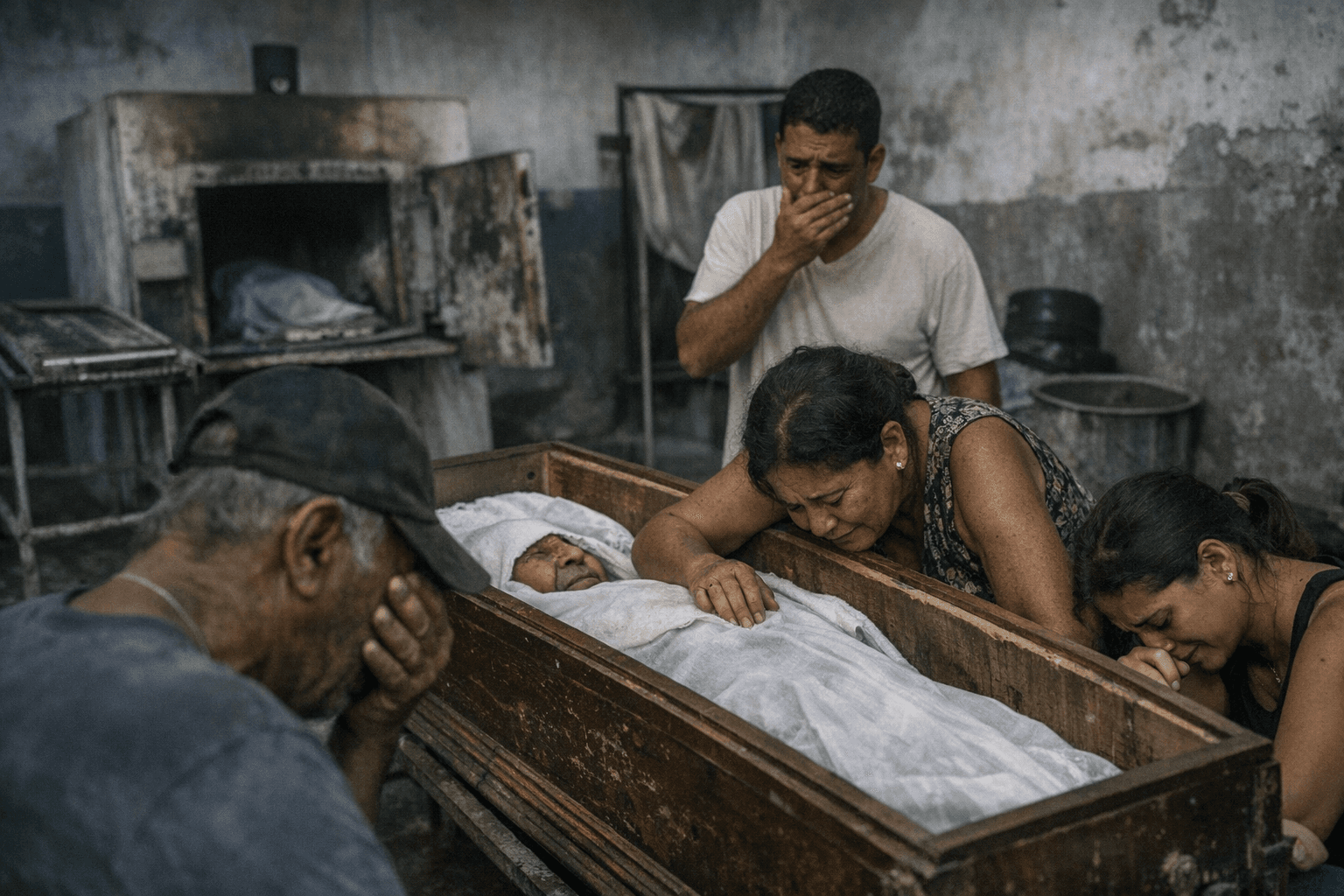
Jorge’s grandmother died in Matanzas, and the family’s grief quickly ran into a crematorium that could not operate. After hours of waiting, the oven still could not be used because there was no liquefied gas or backup diesel, turning a funeral into a fresh round of uncertainty and delay.
The Matanzas cremation oven, inaugurated in 2015, is supposed to reach between 850 and 1,000 degrees Celsius. In practice, it depends on liquefied petroleum gas or diesel, and it also needs stable electricity to keep its ventilation system running and power the mechanical arm that inserts bodies into the oven. When any one of those pieces fails, the whole process stops. In Jorge’s case, the breakdown did not end there. He was told there was only one vehicle for 16 deceased people in the city, and that moving up the queue would cost 3,000 pesos. By the end, he said he had paid 18,000 pesos in total to get the cremation arranged.
What makes the Matanzas case so stark is not only the scarcity, but the way it distorts mourning into a transaction. Families are forced to negotiate with shortages, informal payments and favoritism at the exact moment when they are least able to do so. The result is a funeral system that no longer guarantees speed, dignity or even basic continuity. When the crematorium cannot run and the hearse pool is reduced to a single vehicle for multiple deaths, grieving becomes another bureaucratic survival test.
The breakdown in Matanzas also fits a wider national collapse. On February 26, 2026, UN official Francisco Pichón warned that Cuba’s humanitarian situation was worsening because of fuel shortages, and the UN said the country relies on oil for more than 90 percent of its energy needs. Reuters reporting carried by El País on February 6 said oil shipments had been suspended since December, blackouts were widespread, and state gas stations were limiting gasoline purchases to 40 liters per customer, sold in dollars.
The same pressure is showing up in funeral services outside Matanzas. In San Luis, Santiago de Cuba, a horse-drawn funeral carriage was inaugurated on February 7 because of fuel shortages and a lack of vehicles. A separate report said that in June 2024, only two operational funeral vehicles were serving nearly one million residents in that province. In Matanzas, Radio 26 has said funeral-service deterioration has generated complaints from the population, while also pointing to shortages of flowers for wreaths and coffins in poor condition.
A year earlier, official journalist Guillermo Carmona Rodríguez described fuel shortages and bureaucracy nearly blocking his grandmother’s burial in Matanzas. The new case shows how little has changed. Cuba’s energy crisis is no longer only about power cuts, transport and fuel lines. It is reaching into the final public ritual many families can still expect, and even burial has become part of the island’s daily struggle with scarcity.
This article was produced by Prism’s automated news system from verified source data, official records, and press releases, then run through automated quality and moderation checks before publishing. The system is built and supervised by the people who set the standards it runs under. Read our full AI policy.
Did this article answer your question?