US report says Cuba enabled citizens to fight for Russia in Ukraine
Washington said Cuba may have let thousands of its citizens fight for Russia, but the report stopped short of proving Havana ordered them there.
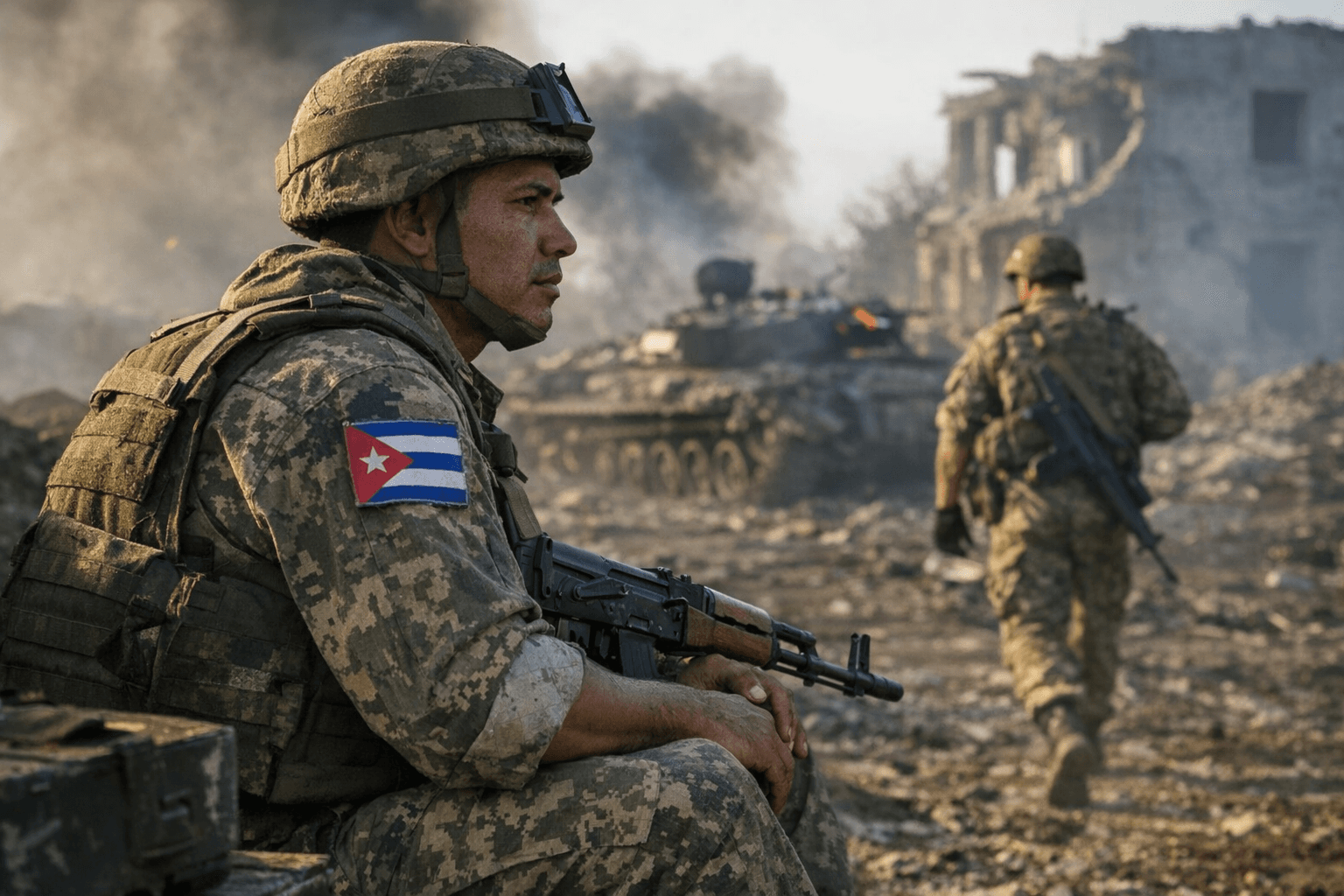
Washington said Cuba may have let thousands of its citizens fight for Russia in Ukraine, a charge that turns on one question with huge stakes for sanctions and diplomacy: did Havana merely fail to stop the pipeline, or did it actively help build it?
A five-page State Department report sent to key congressional committees on April 8 said there were “significant indicators” that the Cuban regime “knowingly tolerated, enabled, or selectively facilitated” the flow of Cuban nationals to support Russian forces. But the same report also drew a line that matters legally and politically: the public record does not prove Havana officially dispatched all Cuban fighters.
Axios reported that the estimate in the report reached as high as 5,000 Cuban fighters on Russia’s side in the war. Ukrainian military intelligence has separately said at least 1,076 Cuban nationals had fought or were fighting for Russia as of October 2025, and that 96 of them were known to have died or gone missing in action. Taken together, the numbers suggest a recruitment network big enough to matter on the battlefield and in Havana’s foreign relations.
The State Department’s 2024 Trafficking in Persons Report had already warned that Cuban citizens were recruited by Russia-affiliated private military companies or by the Russian military through fraudulent employment contracts, then coerced to fight in Russia’s full-scale invasion of Ukraine. That report urged investigation into possible official complicity, putting Havana under a cloud that has only deepened as the war dragged on and more Cuban names surfaced in the fighting.
The distinction between passive tolerance and active support is now central. If Cuba simply failed to block the recruitment of its citizens, the case points to negligence and weak control. If it knowingly facilitated the flow, the issue becomes one of state involvement in a foreign war, raising the pressure for sanctions, diplomatic isolation, and broader scrutiny of Cuba’s ties to Moscow.
That pressure is already building. Ukraine downgraded ties with Cuba and closed its embassy in Havana in October 2025 over alleged Cuban complicity in Russia’s war. In February 2026, a U.S. executive order described the Cuban government as a national security and foreign policy threat, citing its defense, intelligence, and security ties to adversaries. For Miguel Díaz-Canel’s government, the allegation now goes beyond rhetoric: it puts Cuba’s standing in the conflict squarely in play.
This article was produced by Prism’s automated news system from verified source data, official records, and press releases, then run through automated quality and moderation checks before publishing. The system is built and supervised by the people who set the standards it runs under. Read our full AI policy.
Did this article answer your question?