Danzón, how Cuba turned a European dance into a national symbol
Danzón began as a borrowed salon dance, then Cuba remade it into a national marker of identity. Its footprint still shows up in heritage policy and cultural memory.
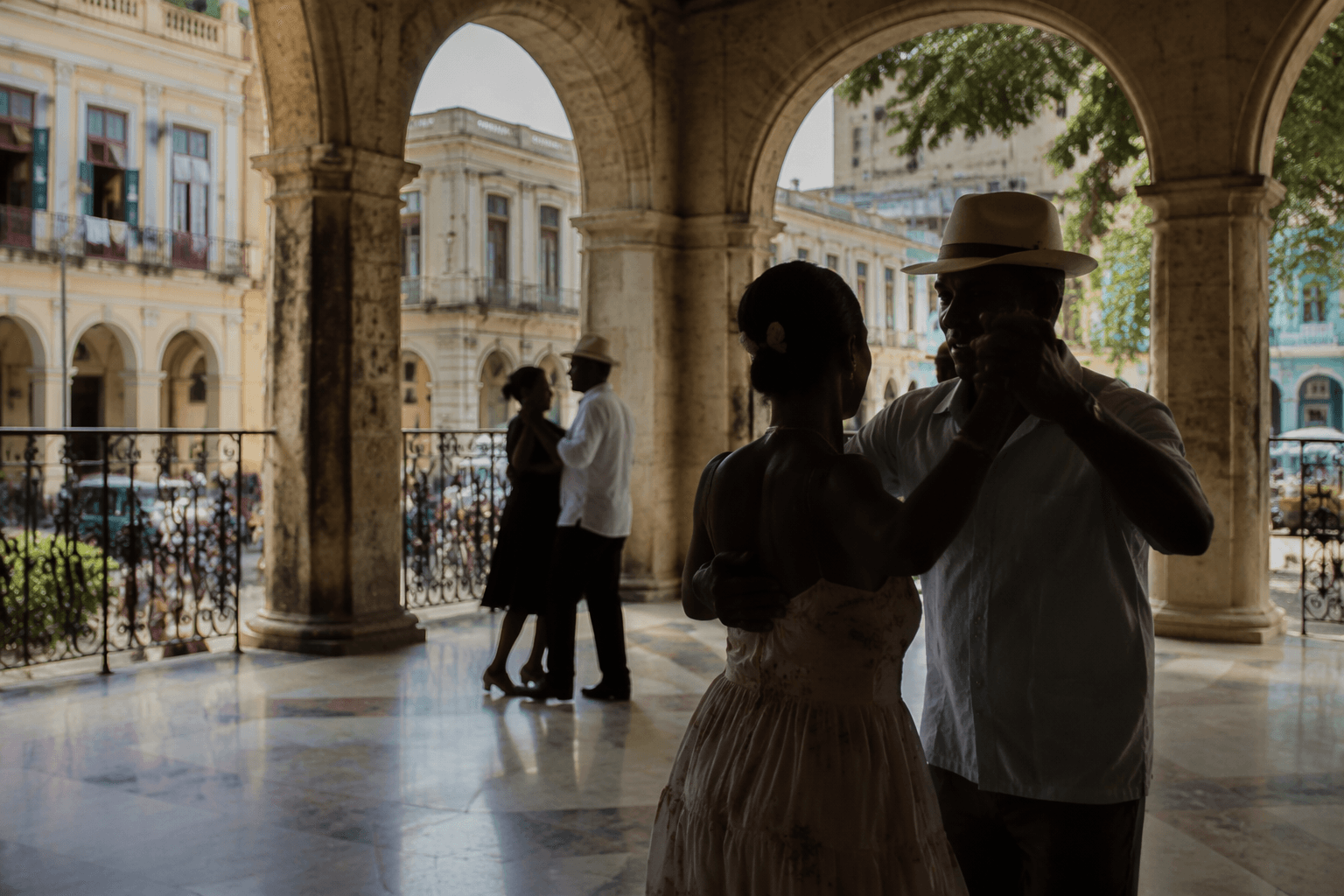
Danzón keeps getting flattened into nostalgia, as if it were just a fancy old dance. That misses the real story: Cuba took a European ballroom form, changed the way it moved and sounded, and used it to define something distinctly Cuban. If you want to understand how the island turned imported culture into national culture, danzón is one of the cleanest places to start.
From salon import to Cuban invention
The first Cuban danzón is credited to Miguel Faílde, the cornet player who composed “Las Alturas de Simpson” in 1879. That date lands at the end of the 19th century, when Cuba was still sorting through the cultural leftovers of colonial life and turning them into something local. Matanzas is the city most closely associated with the birth of the form, and that matters because danzón is not an abstract invention, it comes out of a specific urban environment with its own social codes.
Danzón grew out of the contradanza and related European dance forms, but in Cuba it stopped behaving like a simple import. It became a couple dance tied to salons and dance halls, with etiquette, decorum, and a controlled sense of presentation that set it apart from looser street forms. That polish was not a side effect. It was part of the appeal, and it helped the genre speak to a Cuban urban public that was defining itself through refinement as much as through rhythm.
What changed once it crossed the island
The important correction is that danzón did not stay European just because it kept a formal frame. In Cuba, it picked up a new rhythmic feel, a different social meaning, and a performance style that made it feel native rather than copied. The music settled into a polished ensemble sound, while the dance itself stayed paired and measured, which gave it a very different social presence from the more percussive Afro-Cuban forms people often picture first.
That distinction tells you a lot about Cuban identity. Cuban culture has never been built from one source, and danzón shows that clearly: a colonial salon form, reshaped through local practice, became a marker of national taste. Its elegance is not a contradiction to its Cuban-ness. It is the proof that Cuban identity was being assembled in public, in dance halls, by people deciding what should count as modern, respectable, and theirs.
Not a salsa ancestor, something more specific
It is tempting to file danzón under “old dance that led to salsa,” but that shortcut hides more than it explains. Danzón is its own genre, with its own repertoire, social rules, and performance tradition. The mistake is especially common because later Cuban genres did travel widely, and danzón sits in the line that eventually fed styles such as mambo and cha-cha-chá.
That makes danzón a bridge, but not in the lazy, everything-leads-to-salsa way. It marks a key historical junction in Cuban music, where European-derived dance culture, Afro-Caribbean rhythmic practice, and urban performance codes were being recombined into forms that could move across the Americas. If you want to understand why Cuba became such a strong generator of hemispheric popular culture, danzón is one of the earliest places where the machinery is visible.
Where danzón still shows up now
Danzón is still alive in the places where Cubans decide what deserves preserving. UNESCO’s Intangible Cultural Heritage materials show Cuba with a formal state page for intangible heritage, including elements on the lists, projects, periodic reports, and news. UNESCO also ran the project “Strengthening national capacities for effective safeguarding of intangible cultural heritage in Cuba, Dominican Republic and Haiti,” and one UNESCO news item specifically highlighted safeguarding intangible cultural heritage strengthened in eastern Cuba.
That eastern Cuba piece is not just paperwork. It points to a training in Santiago de Cuba from 11 to 14 February 2014, where bearer communities from six provinces, Las Tunas, Holguín, Granma, Santiago de Cuba, Guantánamo, and Camagüey, were brought into capacity-building work around the 2003 convention. In other words, the dance’s survival is being treated as a living transmission problem, not a museum label.
The form also still has visibility outside Cuba. The Library of Congress marked it in a 2023 Hispanic Heritage Month post titled “Dancing the Danzón,” which is a useful sign that the genre still registers as part of the broader cultural memory of the Cuban diaspora and the hemisphere. That matters because danzón is not only something to archive. It is still a way of reading Cuban taste, urban life, and the country’s habit of turning borrowed forms into national symbols.
Seen that way, danzón is not a relic that survived by accident. It is the moment Cuba made a formal imported dance do local work, and that is why it still matters whenever Cuban identity is being explained in music, performance, or heritage policy.
This article was produced by Prism’s automated news system from verified source data, official records, and press releases, then run through automated quality and moderation checks before publishing. The system is built and supervised by the people who set the standards it runs under. Read our full AI policy.
Did this article answer your question?