Díaz-Canel expands talks with farmers as Cuba battles food shortages
Díaz-Canel met 100 farmers as Cuba’s shortages bite, but the real test is whether fuel, transport, and market access change for growers.
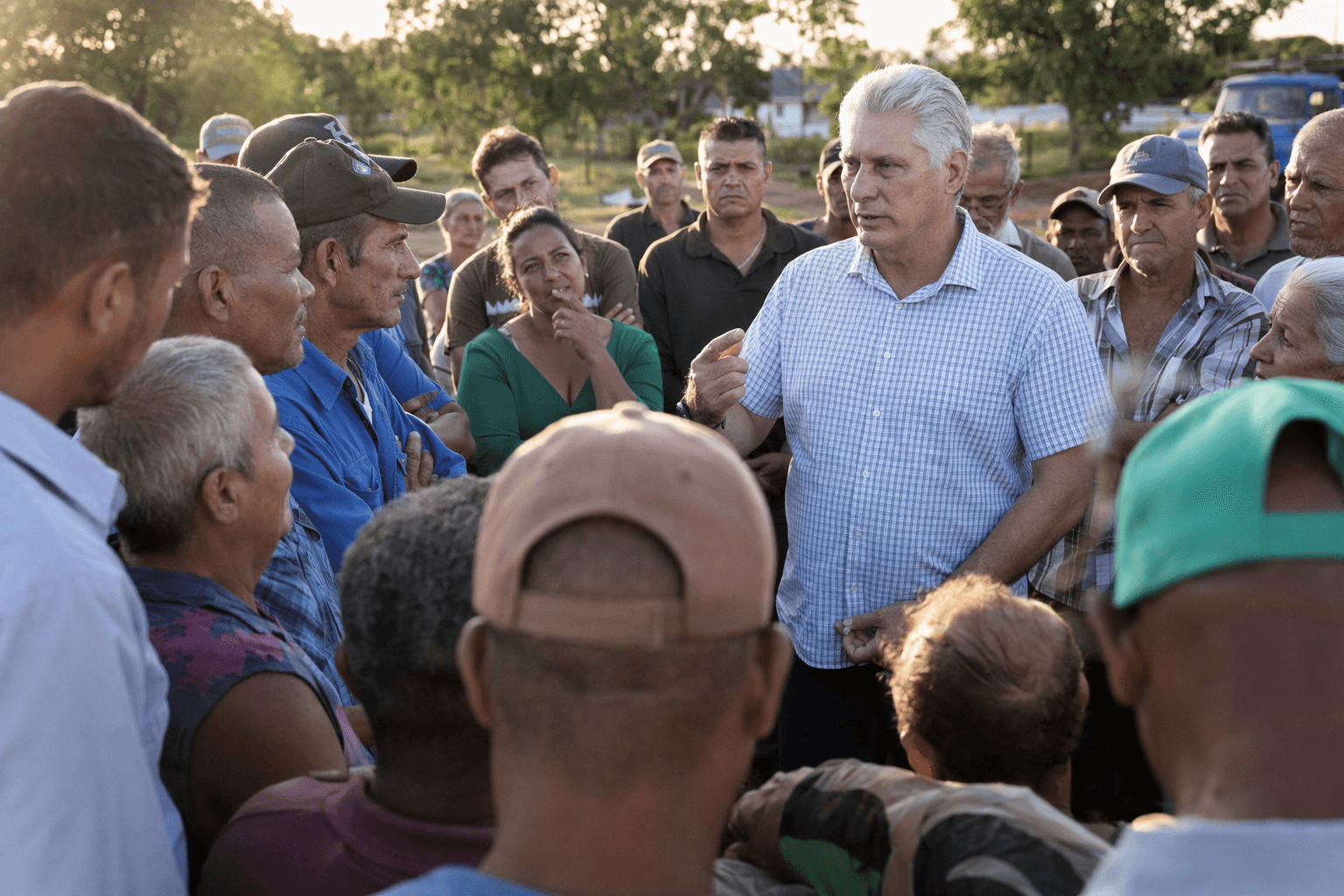
Miguel Díaz-Canel Bermúdez met with 100 farmers from across Cuba on May 13, widening the government’s dialogue with peasants at a moment when food shortages have become a daily policy crisis. The pitch was familiar, but the pressure behind it was harder to ignore: better local productive systems, fewer food imports, an energy transition in the countryside, fewer bureaucratic obstacles, and more social responsibility in the communities that feed the island.
The timing was loaded. The meeting was tied to the centennial of Fidel Castro’s birth and the 65th anniversary of the National Association of Small Farmers, ANAP, and it came with the presentation of Fidel, ANAP and the Cuban Peasantry, a book compiled by historian Elier Ramírez Cañedo. That symbolism may matter in Havana, but the practical question is sharper in the fields: does more dialogue change anything about inputs, pricing, transport, fuel, and the freedom to sell?
Farmers at the meeting described production conditions shaped by energy restrictions and a scarcity that keeps squeezing every stage of the harvest. That complaint matches what growers have been saying across the island for weeks: fuel is short, blackouts interrupt irrigation and processing, water outages hit crops, and transport problems keep produce from moving when it is ready. In Las Minas, where 65 farmers work with only 18 oxen, the lack of fuel has left machinery idle and land clearing slowed to a crawl.
Cuba’s food policy framework already says the state knows the stakes. The constitution was amended in 2019 to enshrine the right to food, and a food sovereignty and food security law followed in 2022. But the World Food Programme says serious food security and nutrition problems remain, because the pandemic-era economic crisis, inflation, reduced purchasing power, trade restrictions, and recurrent disasters have all combined to choke imports and domestic production. Average diets, it says, are often inadequate and not diverse enough.
ANAP has also pushed the blockade argument harder, saying on April 15 that U.S. economic and financial restrictions are damaging cooperative production and the application of peasant-rights rules. That line fits the government’s broader message, but it does not answer the practical test now in front of Cuba’s food system. The next signals worth watching are simple: whether market stalls show more supply, whether prices ease, and whether harvests actually reach delivery points instead of stalling on the road. If those numbers do not move, the meeting with 100 farmers will be remembered as another promise made while the island was still short of the fuel, transport, and inputs that make food sovereignty real.
This article was produced by Prism’s automated news system from verified source data, official records, and press releases, then run through automated quality and moderation checks before publishing. The system is built and supervised by the people who set the standards it runs under. Read our full AI policy.
Did this article answer your question?