Havana ration store empties as private market thrives beside it
The ration store at 19 and B in Vedado had little left but baby food jars. Next door, private vendors sold produce at prices most Havana families cannot touch.
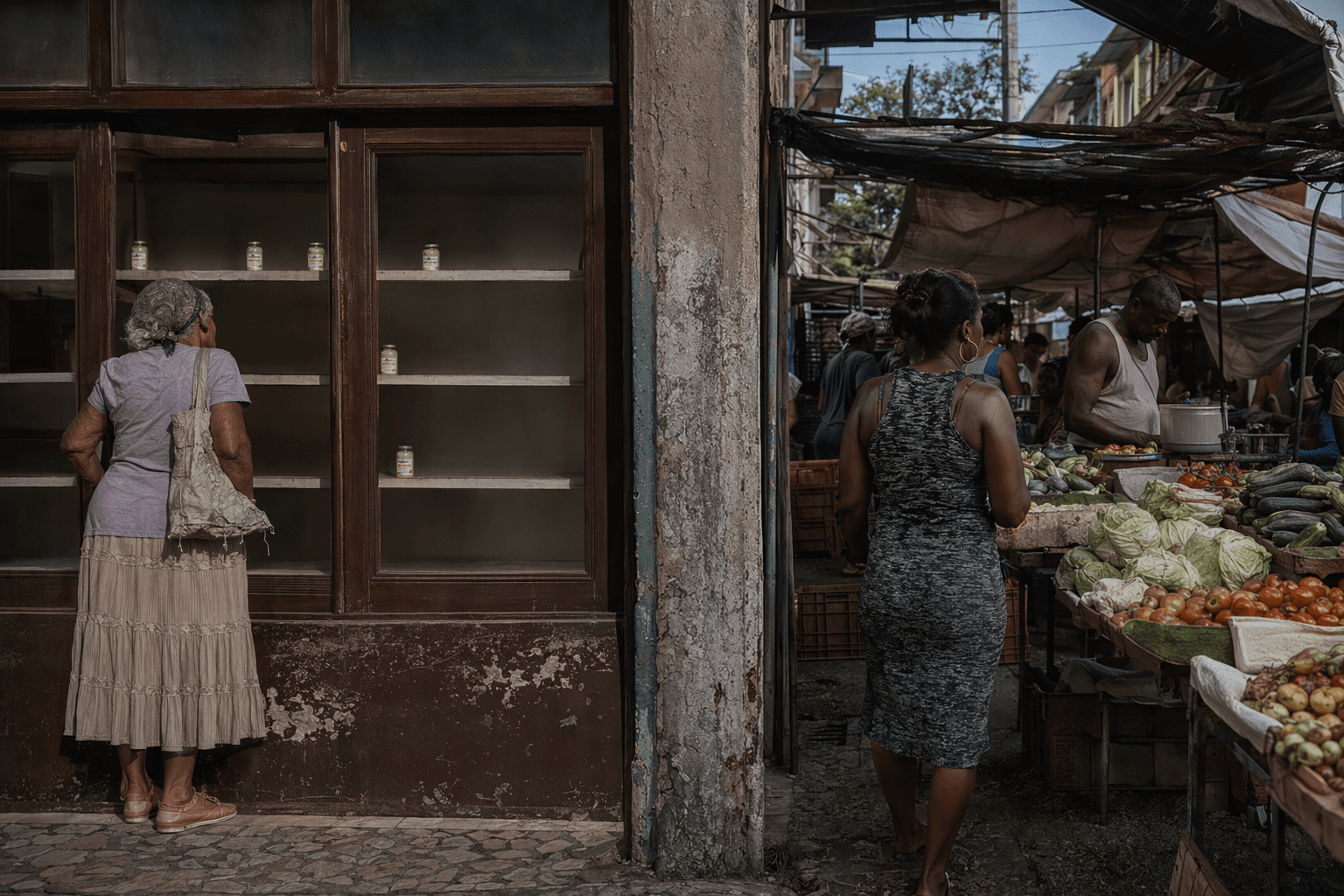
The ration store at 19 and B in Vedado looked stripped bare, with almost nothing left on the shelves except a small stock of baby food jars for children under two. Across the counter, state slogans about continuity and thinking as a country were still painted in place, but the words only made the emptiness sharper.
That storefront now tells the story of Cuba’s split economy in one glance. At the end of December 2023, the private home-delivery business Zona K’liente took over part of the premises, and the old bodega has since sat beside a much livelier private market. One side still carries the symbols of the state ration system. The other keeps moving product.
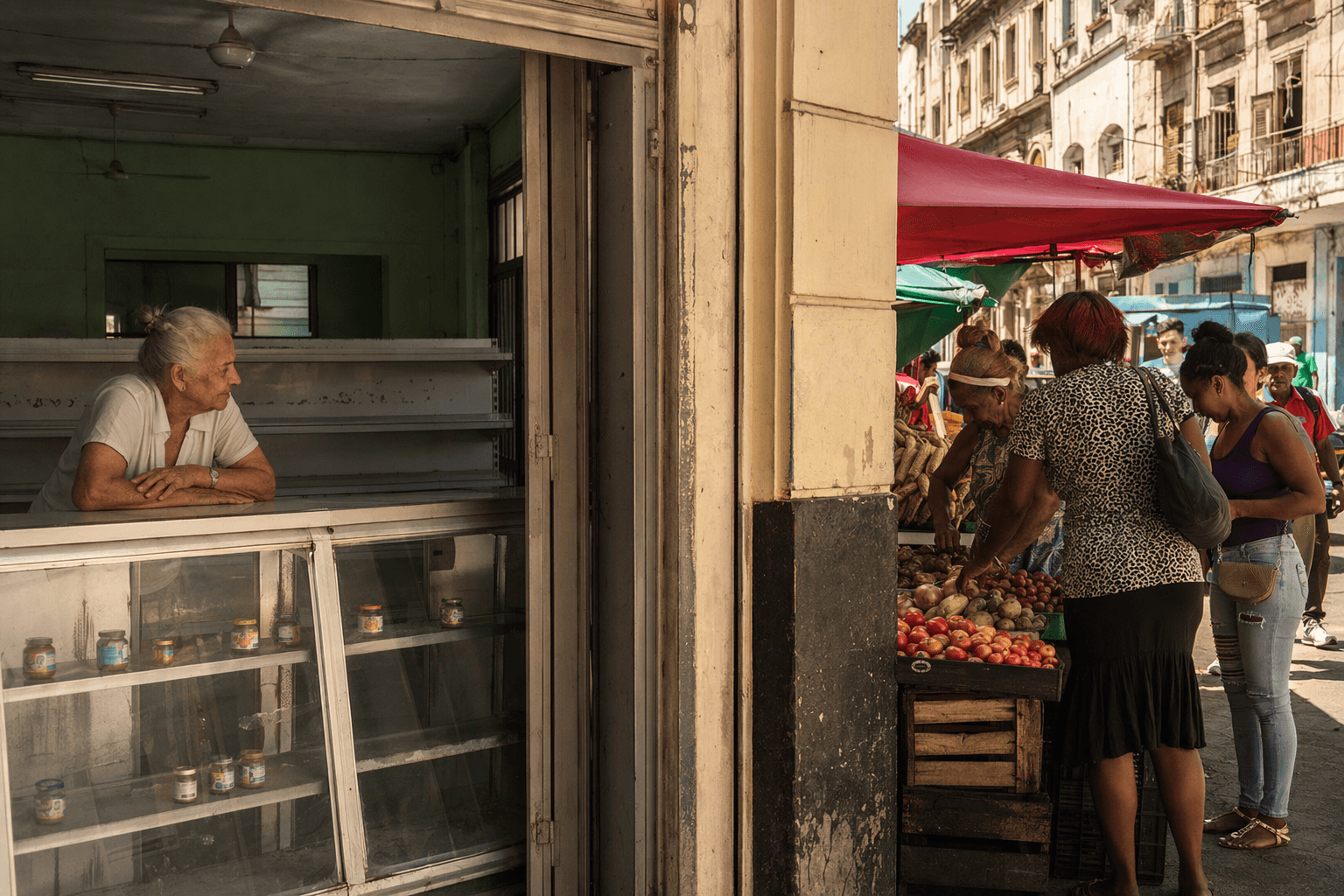
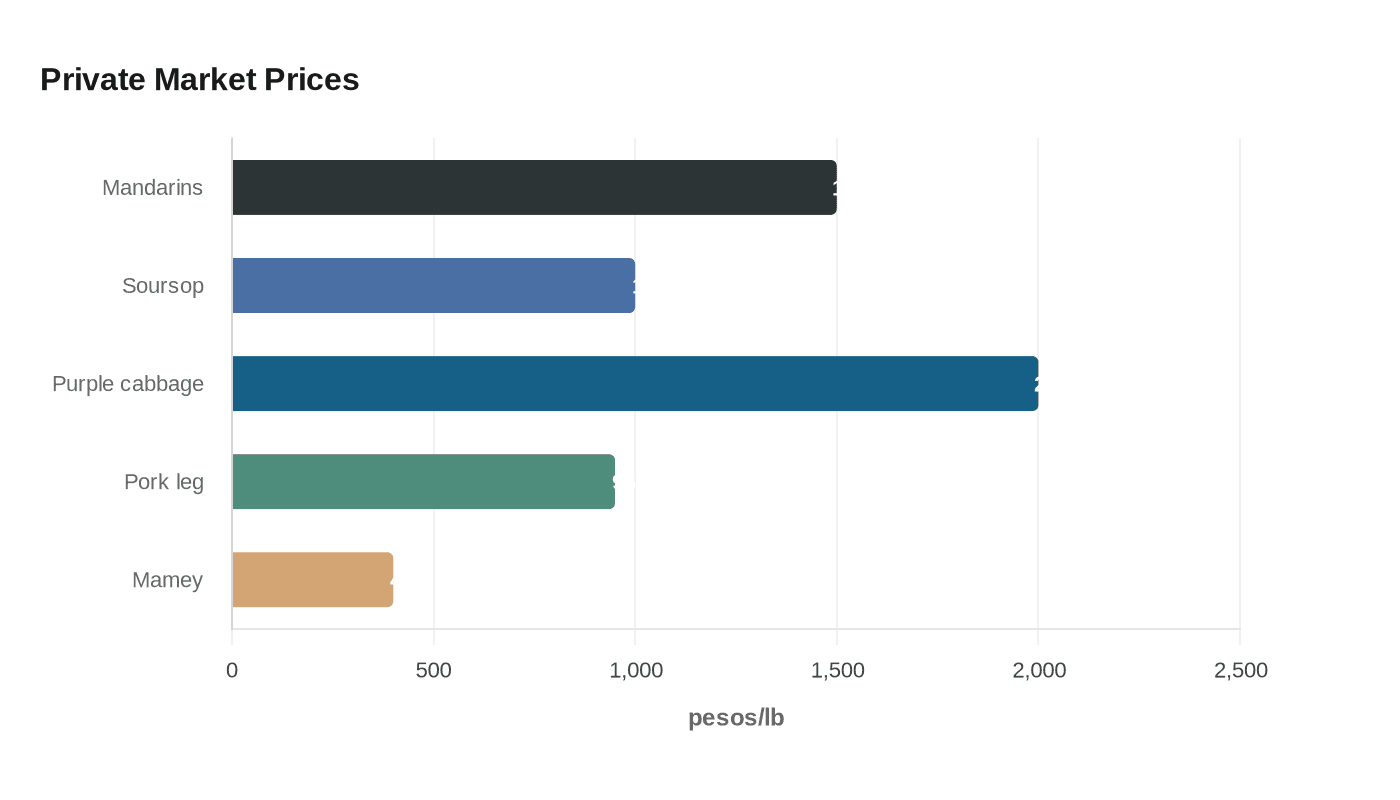
The contrast is brutal. In the market next door, private vendors still had produce and meat, but at prices that put them out of reach for most households. Imported mandarins were marked at 1,500 pesos per pound, soursop at 1,000, purple cabbage at 2,000, pork leg at 950 and a single mamey at 400. Access still exists, but only for customers with cash in hand.
That is where the libreta, introduced in the early 1960s under Fidel Castro, has fallen short. The ration book was built to guarantee heavily subsidized staples through state bodegas, but recent reporting shows it no longer reliably covers a month of food and in many stores has shrunk to a few items such as rice, sugar and split peas. José Luis Amate López, the bodega worker there, said he had gone almost two weeks without a customer. It is a small sign, but a revealing one: the ration shop is no longer the daily anchor it was meant to be.
The pressure on households has only deepened. Cuban officials said in 2024 that families were spending more than 70% of their income on food, while Betsy Díaz Velázquez, the minister of domestic trade, said rice had not been delivered since December in nearly half the country. Government reporting in December 2024 also acknowledged shortages and delays in rice, sugar, oil and chicken deliveries.
Fuel shortages have made the breakdown worse by disrupting transport and distribution, and recent reporting says more basic goods are increasingly sold in U.S. dollars. Food Monitor Program has argued that state control over imports and distribution leaves people without reliable access to basic goods and that the ration book does not ensure adequate nutrition. At 19 and B, that failure was visible without explanation: one storefront painted with promises, the other with prices, and most families forced to choose neither.
This article was produced by Prism’s automated news system from verified source data, official records, and press releases, then run through automated quality and moderation checks before publishing. The system is built and supervised by the people who set the standards it runs under. Read our full AI policy.
Did this article answer your question?