Havana turns shipping containers into homes for regime supporters
Havana’s container homes look fast and neat, but they expose how little housing policy can do when the state controls the units, not the market.
A fast-build answer to a slow-motion collapse
In Nuevo Vedado, Havana is testing a housing fix that is as political as it is practical: shipping containers turned into homes, handed over in 12 days, with President Miguel Díaz-Canel Bermúdez at the delivery. The pitch is simple enough, but the real story is harder to ignore. These units are not a broad solution to Cuba’s housing crisis. They are a stress test of how far the state can stretch scarcity before the limits show.
The first two homes went to Alina Hinojosa Cardona and Nerelys Madan Catala, both presented officially as young working women and mothers in need of decent shelter. That framing matters, but so does the backstory. One had been living in a small room. The other had spent more than 13 years in a shelter. These are not novelty buyers upgrading into an experimental prefab unit. They are people pulled out of prolonged precarity and dropped into one of the few visibly new housing gestures the state can point to.
What the homes actually look and feel like
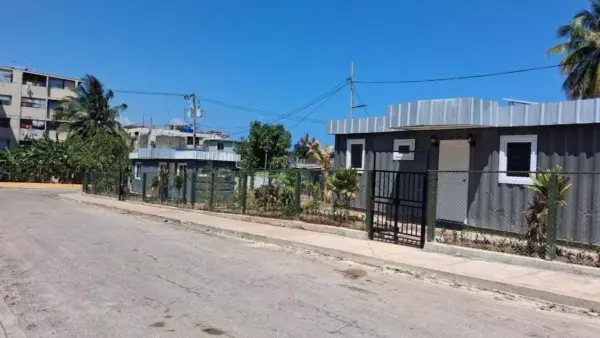
The units sit in a relatively good part of Havana, near Calle 26 and Avenida Tulipán in Nuevo Vedado. That location alone tells you a lot about how carefully the state is staging this project. The homes are not being dropped into the city’s most degraded housing stock, but into a neighborhood where the setting can help the project read as modern and orderly.
On paper, the homes have a rear patio-garden, a wash area, rooftop solar panels, brand-new finishes, and appliances. A neighbor described them as beautiful inside, and the 12-day installation is being used as proof that Cuba can still build quickly when it wants to. But a quick build is not the same thing as a durable home. The metal container walls have not been insulated, and the units appear to lack air-conditioning, which makes habitability a serious question in Havana’s heat. A shelter that looks polished in a handover photo can still feel punishing in daily use.
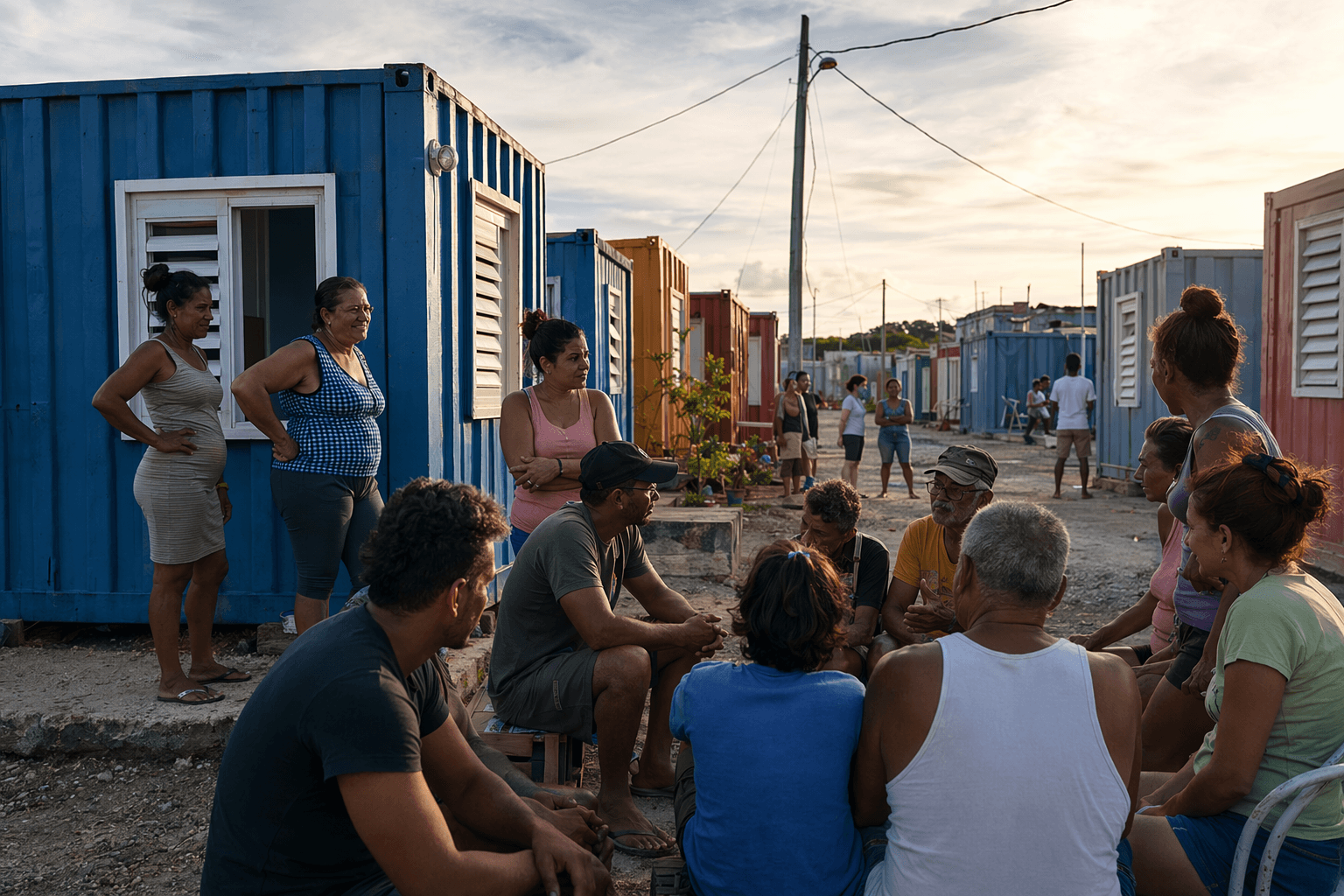
That gap between appearance and livability is the core issue here. These are small, permanent-looking structures that may provide real relief, but they also risk becoming a visual workaround for a much larger failure in urban housing.
The politics built into the keys
The state handed these homes over in usufruct, which means the Cuban state keeps ownership. That detail is not a footnote. It defines the entire political logic of the project. The residents gain shelter, but not full property rights, which leaves the state in control even as it presents itself as provider and rescuer.
That arrangement fits the way housing has long worked in Cuba, where access is often mediated through allocation rather than open ownership. It also raises the sharper question in this case: are these homes being distributed primarily by need, loyalty, or both? The reporting around the project says the first beneficiaries were regime supporters, which makes the handover more than a housing event. It becomes a display of who gets relief first when resources are scarce and politically filtered.
Díaz-Canel’s presence at the handover only reinforced that message. This was not a quiet municipal pilot. It was a politically important moment, wrapped in official optimism and meant to show that the system can still deliver something concrete.
How the project was assembled
The material story behind these homes is almost more revealing than the homes themselves. The project drew on leftovers from tourism investment processes, technologies developed by the Fuerzas Armadas Revolucionarias, and shipping containers fitted with parts imported from China. That combination says a lot about contemporary Cuban construction: tourism residue, military engineering, renewable-energy hardware, and imported components all mashed into a modest housing response.
This is not a private-sector prefab boom or a freely financed public works program. It is improvisation under constraint. The container homes are a collage of whatever the system can still marshal, which is why they feel both inventive and inadequate. Cuba is not building from abundance here. It is building from leftovers, state technical capacity, and foreign parts that can be stitched together into something habitable, at least on paper.
Why this is bigger than one neighborhood
The Nuevo Vedado units are not isolated. Independent reporting says the container-home approach is being extended to other provinces, including Holguín, Las Tunas, Sancti Spíritus, and Guantánamo. That spread matters because it shows the project is being treated less like an experiment and more like a template. The state is trying to replicate a model that looks manageable, quick, and politically legible.
But the scale of the crisis dwarfs the scale of the response. Cuba’s housing deficit has been reported in the range of about 800,000 to more than 900,000 homes. In 2025, Cuba reportedly had 110,647 housing units under construction, but only 3,185 were built by the state. The rest, 107,462, came from private self-help construction. In La Habana, the picture was even starker: only 277 completed homes, near the bottom of provincial output.
Those numbers matter because they strip away the symbolism. A few modular houses in the capital cannot compensate for a formal housing sector that is barely functioning.
What the policy backdrop says about the limits
The economic context is brutal too. In Havana, the average price of a bag of cement was reported at about 13,000 pesos, plus roughly 2,000 pesos for transport. That makes ordinary construction brutally expensive before you even get to labor, permits, or materials scarcity. When building basic housing is that costly, a container unit starts to look less like a breakthrough and more like a workaround for a market that cannot function normally.
The government says it is discussing a new housing law aimed at modernizing ownership and financing rules. That discussion matters because the container homes are being delivered in usufruct rather than private ownership, which shows how far the current legal framework still leans toward state control. Cuba’s official statistics are now being published in the Oficina Nacional de Estadística e Información’s Anuario Estadístico de Cuba 2024, which should give policymakers a clearer baseline for the scale of the problem, even if the politics of solving it remain unchanged.
In the end, the Nuevo Vedado containers are exactly what they look like: quick shelter built from scraps, handed to families who needed relief years ago, and wrapped in the language of state competence. The question is not whether they are better than a shelter room or a collapsing house. They are. The question is whether 12-day container homes in Havana are a housing policy or just the most polished face of a system still failing to build enough of anything permanent.
This article was produced by Prism’s automated news system from verified source data, official records, and press releases, then run through automated quality and moderation checks before publishing. The system is built and supervised by the people who set the standards it runs under. Read our full AI policy.
Did this article answer your question?