Havana bank errand exposes Cuba's growing digital payment hardship
A simple Transfermóvil setup in Havana becomes a lesson in Cuba's hidden banking tax, where blackouts, cash caps and app barriers eat time and money.
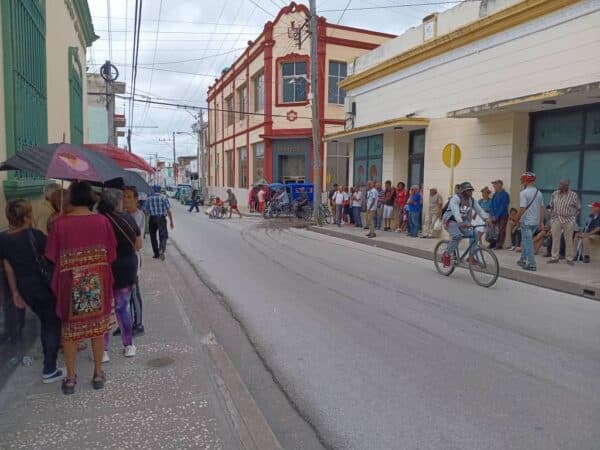
A bank trip that starts with a phone and ends with a queue
A routine errand in Havana now needs the same things as a small logistics operation: a charged phone, a working grid, the right bank card, and enough patience to get through the line. What should have been a quick setup for a basic payment app turns into a full portrait of how ordinary money movement in Cuba has become slower, more technical, and more fragile.
The memory that frames the errand is simple enough. A friend’s niece sold an inherited house in Havana, left for the United States, and ended up a reminder that practical know-how now matters as much as income. That is the point of the story: in Cuba, being able to use the right app at the right moment can decide whether a payment goes through, whether a bill gets settled, and whether a day is lost to bureaucracy.
Transfermóvil is no longer optional
The center of the errand is Transfermóvil, the official app Cubans use for paying services, making online purchases, completing banking procedures, and managing telecom services. ETECSA lists the current version as 1.260416, updated on April 28, 2026, which shows that the platform is still being maintained and pushed as a core part of everyday transactions.
But the app is only useful if the rest of the system cooperates. Official Cuban reporting has said Transfermóvil requires an Android phone and a matrix card from Banco Metropolitano, Banco de Crédito y Comercio, or Banco Popular de Ahorro. That alone creates a barrier for anyone who is not comfortable with smartphones, does not have the right bank setup, or has to rely on help from someone else just to get started.
The bigger reason the app matters is the state’s bankarization push. Resolution 111/2023, published in the Official Gazette, set banking rules for cash collections, payments, deposits, withdrawals, and holdings in national currency. Coverage of the rule made clear what many Cubans felt immediately: cash operations for economic actors were capped at 5,000 CUP, and larger transactions were nudged toward electronic transfers.
That makes digital banking less like a convenience and more like a requirement. In practice, it means people are being pushed toward platforms like Transfermóvil even when the infrastructure underneath them is uneven.
The grid now controls the banking day
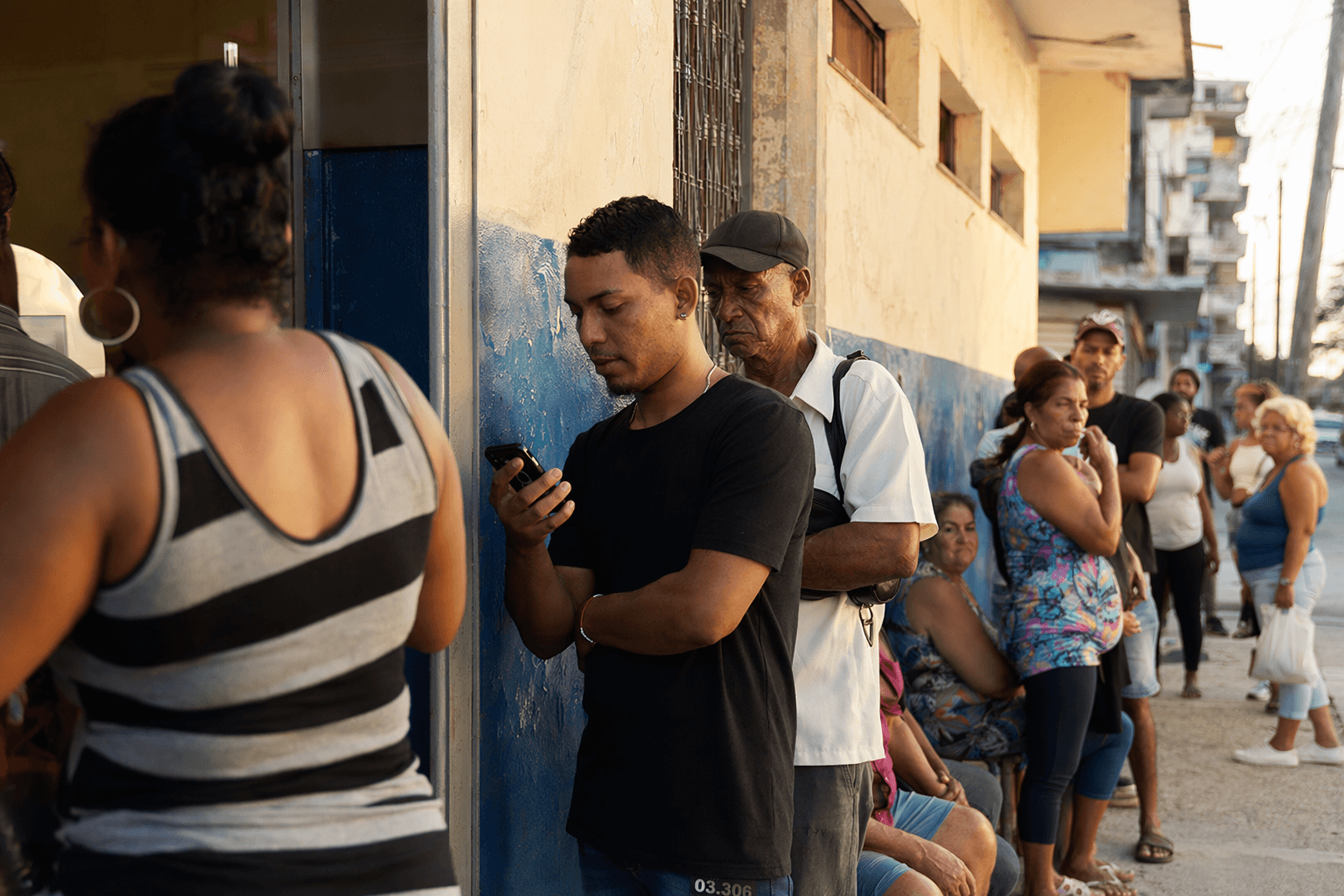
The Havana errand becomes difficult almost immediately because electricity shapes the route. The narrator heads out during a blackout window, but the power schedule at home does not match the one downtown in the bank district. That mismatch matters, because a phone that cannot stay charged or an app that cannot be opened at the right moment can stop the transaction before it starts.
Even the weather does not help. The line at the branch is still long, despite the bad conditions, which says a lot about how few alternatives people have when a bank visit becomes necessary. The request is simple, but the procedure is not; in Cuba, simplicity does not shorten the queue.
This is where the bank scene stops being a private inconvenience and starts looking like a national pattern. Reuters reported in May 2025 that Havana was already living with daily blackouts averaging four hours or more, while outages in rural parts of Cuba could last much longer. By April 2026, United Nations reporting said fuel shortages and repeated grid failures were disrupting water delivery, health care, and other essential services across the island.
That matters for banking because the whole digital shift depends on power. A country can promote app-based payments, but if the lights go out, the phone battery dies, or the branch cannot function smoothly, the payment system becomes another line of uncertainty.
Who pays the hidden tax
The harshest effect is not just technical, it is social. Older Cubans are more likely to struggle with app installation, card management, and the sort of smartphone navigation Transfermóvil assumes. Families receiving remittances often need to turn transfers into usable balance quickly, which means any delay in the banking chain becomes a delay in rent, food, or medicine.
Small informal sellers are hit in a different way. They need payments to clear fast, but they also have to work around cash shortages, unstable card access, and the reality that customers may not all be able to pay the same way. What looks like a minor bank errand from the outside becomes lost selling time, extra travel, and sometimes a missed income window altogether.
The deeper problem is that Cuba has been tightening the noose around cash for years. In 2022, Reuters reported that the Central Bank barred businesses from using ATMs and limited cash transactions between them. That earlier move, combined with the later cash ceiling and the present push toward electronic transfers, has made access to money feel less like a simple withdrawal and more like a test of whether the system is working at all.
How an ordinary payment turns into an ordeal
A basic transaction in Cuba now tends to move through a chain of fragile steps:
- first, the phone has to be usable and charged
- then the app has to install or open correctly
- then the user has to have the right bank card and the right bank access
- then the branch has to be open, reachable, and functioning despite the blackout schedule
- then the line has to be endured before staff can help with the procedure
None of those steps is unusual on its own. Together, they create a kind of financial obstacle course that takes time out of the day and money out of the household.
That is why this bank errand lands so hard. It is not just about one app or one branch in Havana. It shows how a state-led digital transition is colliding with chronic electricity shortages and a financial system that asks people to be technical, patient, and lucky all at once. In Cuba today, the cost of moving money is measured not only in pesos, but in hours, battery life, and the chance that the power stays on long enough to finish the job.
This article was produced by Prism’s automated news system from verified source data, official records, and press releases, then run through automated quality and moderation checks before publishing. The system is built and supervised by the people who set the standards it runs under. Read our full AI policy.
Did this article answer your question?