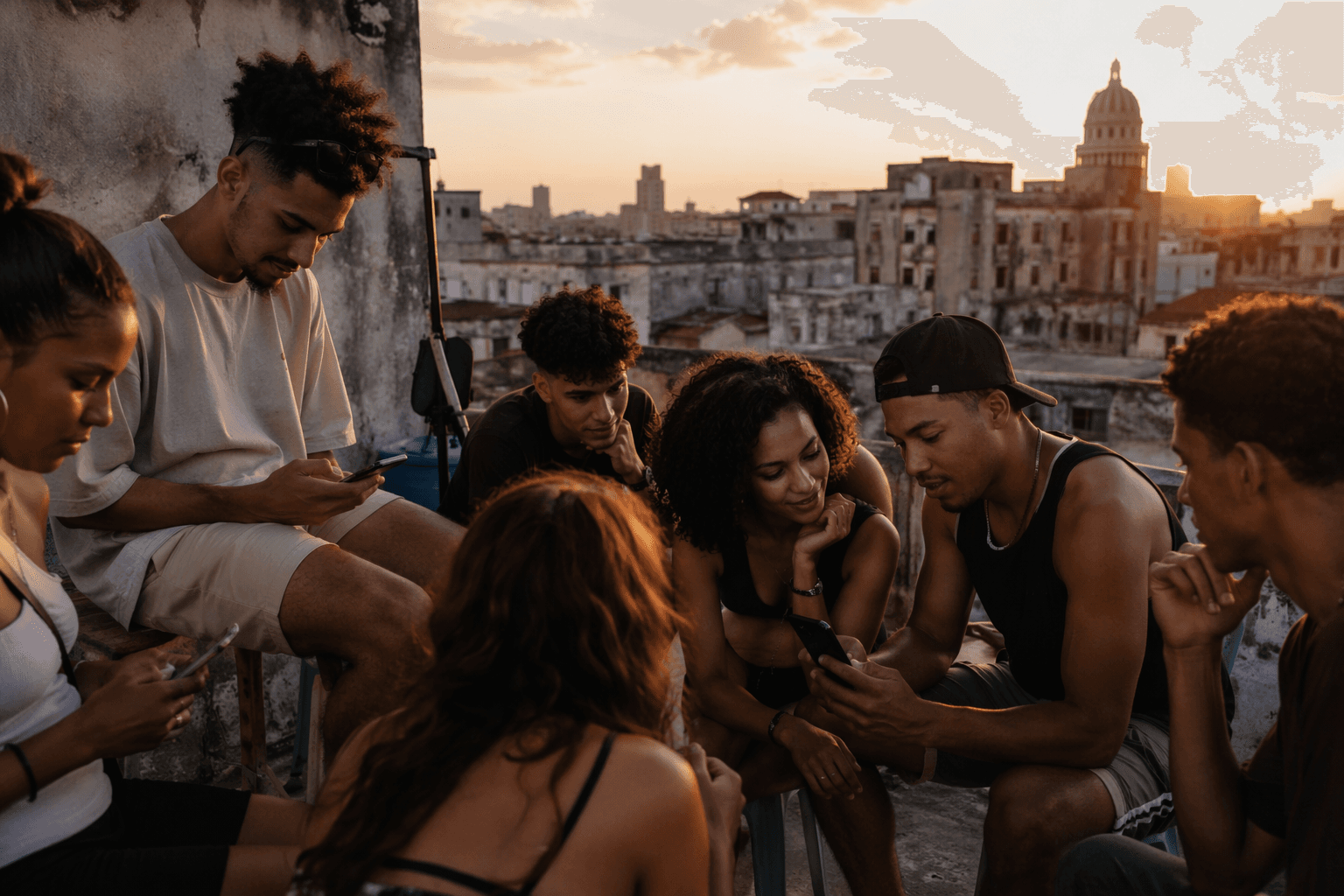
May Day in Havana Reveals Weariness, Hunger, and Fading Loyalty
Havana’s May Day march looked grand on paper, but hunger, blackouts and fear of punishment showed how far Cubans’ tolerance has fallen.

A ritual of loyalty, met by a quieter kind of refusal
May Day in Havana still carries the full weight of state theater: flags, slogans, choreographed unity, and the familiar demand that workers show up and demonstrate belief. But the contradiction was impossible to miss this year. The government asked for sacrifice in the language of revolution while ordinary Cubans were measuring each day in food, power cuts, medicine, and exhaustion.
That tension defined the capital’s mood. Raúl Castro, now 94, joined thousands in the International Workers’ Day march that crossed the Havana waterfront and passed by the U.S. embassy, a route heavy with political symbolism. Yet the symbolism landed differently for many people on the street. The march still projected revolutionary legitimacy, but in neighborhoods across Havana, silence and absence told a different story: a growing number of people simply stayed home rather than perform enthusiasm for a state they felt was asking too much from bodies already stretched thin.
What changed: tolerance has become harder to manufacture
The old bargain in Cuba depended on endurance. Show up, keep your head down, accept the shortages, and the system would at least promise belonging. That bargain is fraying. Workers and residents describe a daily life narrowed by hunger, fatigue, and fear of punishment, with public mobilization now feeling less like a civic rite than a test of obedience.
The pressure to attend remains real. People can lose salary, work standing, or invite the disapproval of managers and officials if they do not take part in the annual march. But the emotional calculus has shifted. Several interviewees described the same blunt conclusion: patriotism is harder to summon when you are already struggling to find food, medicines, and the energy to keep moving.
A Havana epidemiologist put that reality in the plainest terms. She said she would not attend because she could not make the walk while starving and needed to conserve strength. That one refusal captures the broader change in public tolerance. The issue is no longer just whether Cubans agree with the government’s message. It is whether they can afford the physical effort of pretending to agree.
Hunger, medicine scarcity, and the cost of getting through the day
The most telling May Day testimony came not from a speech, but from ordinary survival. A taxi driver said most people were not in a celebratory mood because they were fed up, and he recalled a hospital visit where antibiotics only appeared after money changed hands. That detail matters because it shows how the crisis is no longer abstract. It is a system of favors, payments, and improvisation that turns basic care into a transaction.
The health backdrop is severe. The Pan American Health Organization reported that 385 health facilities in Cuba suffered different levels of damage after Hurricanes Oscar and Rafael and two earthquakes in late 2025. It also said seven provinces faced severe water shortages, with Artemisa at 83 percent and Havana at 80 percent most affected. In parallel, the World Health Organization has long treated shortages and stock-outs of essential medicines as a major barrier to access, and the Cuban scene now looks like a local version of that global problem, only sharpened by scarcity and infrastructure strain.
Oropouche fever adds another layer of pressure. PAHO’s August 2025 update counted 28 confirmed cases in Cuba, and the island’s health system has had to cope while facilities, utilities, and supply chains all remain under stress. In that context, a missing antibiotic is not a minor inconvenience. It is part of a broader pattern in which care depends on improvisation, personal contacts, or money.

Blackouts, fuel shortages, and the energy shock behind the fatigue
The exhaustion is not only nutritional. Cuba’s energy shock has deepened since late March 2026, and the country’s humanitarian picture has worsened with it. The United Nations’ resident coordinator said humanitarian needs remain “quite acute and persistent,” a reminder that the shortages are not a short-term inconvenience but a continuing crisis.
Fuel shortages have also tightened the knot around daily life. The United Nations has said the shortages worsened after Washington took measures at the end of January to block oil supplies from entering Cuba. That squeeze ripples outward fast: blackouts disrupt refrigeration, transportation, hospital care, and the basic routines that let a household function. Even when the power comes back, the uncertainty does not.
The World Food Programme describes Cuba as one of the Caribbean countries most exposed to hurricanes, droughts, and unseasonal rains. It also points to low agricultural productivity and high post-harvest losses as persistent challenges. Those structural weaknesses help explain why rationing has become even more central. Reporting in early May showed Cubans increasingly relying on ration books even as the products available through them dwindle.
The practical effect is visible everywhere: a nation asked to perform collective strength while the systems that sustain strength are wobbling.
Why May Day still matters to the state, and why that matters less to many Cubans
The government continues to treat May Day as a political stage. Fidel Castro understood its power early, turning the José Martí Anti-Imperialist Platform into a scene of confrontation with Washington and building a ritual that fused labor, nationalism, and defiance. That memory still hangs over Havana, where revolutionary imagery remains part of the official language of legitimacy.
Miguel Díaz-Canel leaned into that language again the day before the march, telling workers it was essential to resort to “creative resistance.” The phrase fits the state’s style: it asks for resilience without offering much relief. But the gap between message and material life is widening, and that gap is exactly what makes this year’s May Day feel different.
The historical frame also matters. Fidel Castro’s rebels took power on January 1, 1959, and the United States banned exports to Cuba in October 1960, except for food and medicine. Those milestones shaped decades of confrontation, and the confrontation still offers the government a useful explanation for hardship. Yet explanations have limits when the shortages are visible on the street, in the clinic, and in the grocery line.
That is why the ordinary scenes are more revealing than the slogans. A city that once rallied reflexively now hesitates. A worker chooses rest over marching. A taxi driver talks about buying antibiotics. A public ritual built to display unity instead reveals weariness, hunger, and the shrinking force of loyalty. In Havana, May Day no longer just shows the power of the state. It shows how much harder it has become to ask Cubans to carry it.
This article was produced by Prism’s automated news system from verified source data, official records, and press releases, then run through automated quality and moderation checks before publishing. The system is built and supervised by the people who set the standards it runs under. Read our full AI policy.
Did this article answer your question?