Trump Says Cuba Deal Possible, Warns of Action if Talks Fail
Trump says a Cuba deal "would be made very easily" but warns action follows if talks fail, as Díaz-Canel confirms secret negotiations amid a crippling fuel blockade.

Cuba's President Miguel Díaz-Canel broke weeks of official silence on Friday, publicly acknowledging that "Cuban officials have recently held talks with representatives of the United States government" — a confirmation that landed as the island grapples with an energy crisis severe enough to knock out traffic lights across Havana.
Trump, speaking publicly about the negotiations, said he had charged Secretary of State Marco Rubio with leading the discussions and remained blunt about his expectations. "They have no money. They have no anything right now," Trump said, adding: "Maybe we'll have a friendly takeover of Cuba." He also told reporters he believed "a deal would be made very easily with Cuba," while warning that if diplomacy fails, Washington will take necessary action. That action, in Trump's framing, may come after higher-priority foreign policy business: he said earlier this month that after Iran's regime is toppled, "Cuba's going to fall, too."
The White House has provided few specifics on the state of the negotiations, but the shape of the talks is coming into view. Rubio, the son of Cuban immigrants and a long-standing champion of regime change on the island, has been negotiating with Raúl Rodríguez Castro, the grandson of former Cuban leader Raúl Castro, as his main counterpart. Díaz-Canel, in a 90-minute news conference broadcast by state media, said talks were aimed at finding solutions to the political differences between the two countries and were needed "to determine the willingness of both sides to take concrete actions." Cuba's Foreign Minister Bruno Rodríguez Parrilla posted a readout on social media confirming the conversations were "aimed at seeking solutions, through dialogue, to bilateral differences that exist between the two nations."
What is firmly off the table, according to Havana, is any restructuring of Cuba's political system. Lianys Torres Rivera, Cuba's chief of mission in the United States, told Politico in an interview that changes to Cuba's political system are off limits — a position that sits in direct tension with Trump's public prediction that the regime is "going to fall pretty soon" and Rubio's own record of advocating for regime change.
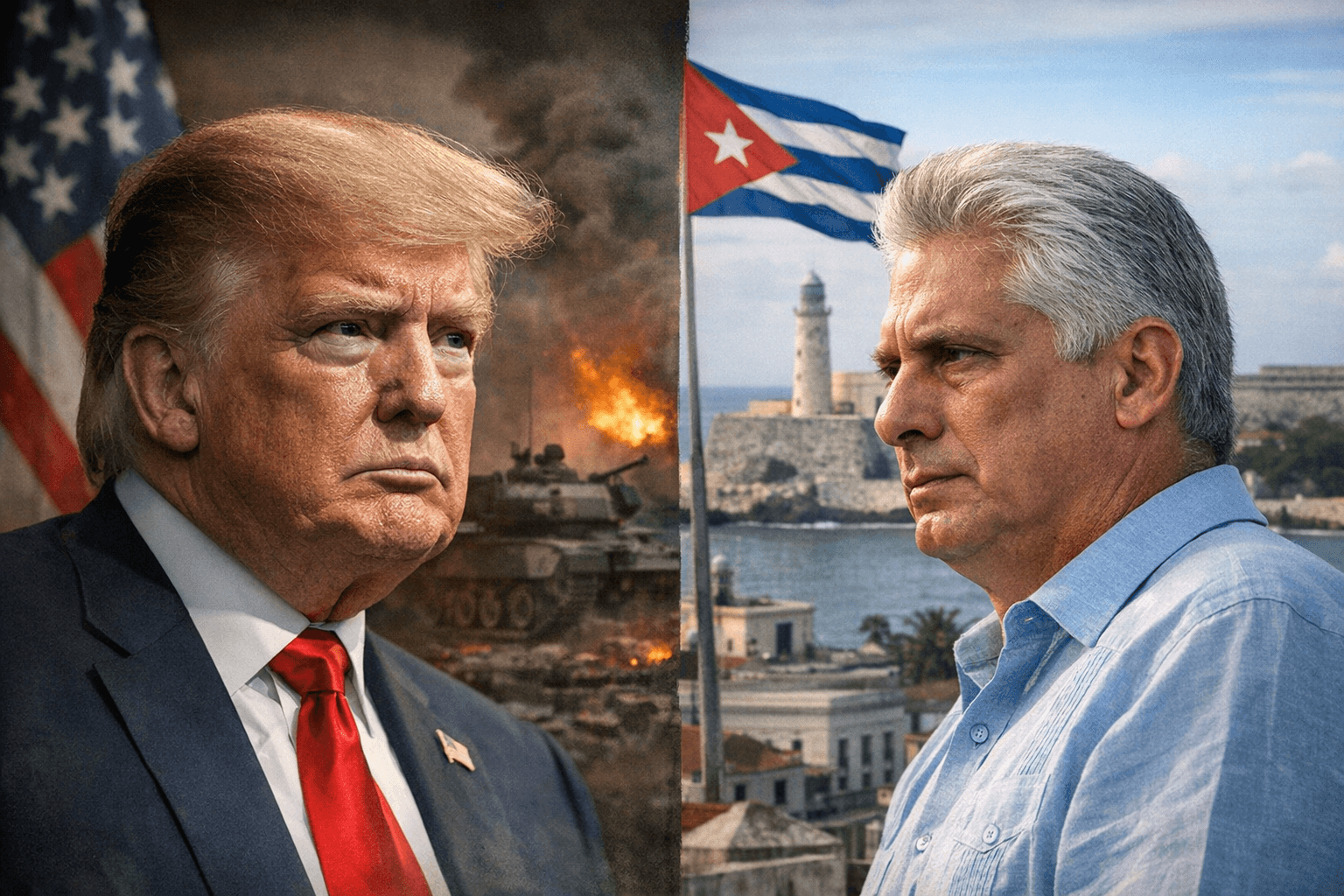
The backdrop to all of this is a worsening humanitarian situation. The Trump administration has been running what amounts to a fuel blockade against Cuba since the end of January. Díaz-Canel stated on Friday that no fuel shipments have reached the island in over three months. In January, Trump had already declared a national emergency via executive order, accusing the Cuban regime of aligning with hostile foreign powers and terrorist groups. Millions have lost power across the island as the crisis deepens.
Ted Piccone, a nonresident senior fellow at the Brookings Institution's Strobe Talbott Center for Security, Strategy, and Technology, sees the pressure campaign producing something more measured than a sudden collapse. "I think some in that community want something that's more managed — not a total collapse and breakdown," he said. "So I think this is going to be a more gradual process." Piccone also suggested a potential off-ramp on the energy crisis: if the Trump administration establishes a pathway to deliver fuel directly to Cuba's private sector, bypassing the government, it could buy the negotiations more time to play out.
Florida officials have moved Cuba policy to the top of their agenda as the crisis escalates, and Cuban-American communities in Miami held protests against the Havana government as recently as February 28. Friday marked the first time the Cuban government formally acknowledged talks with Washington, making Díaz-Canel's televised address a significant shift in posture, even as both sides remain far apart on the central question of what a deal would actually require.
This article was produced by Prism’s automated news system from verified source data, official records, and press releases, then run through automated quality and moderation checks before publishing. The system is built and supervised by the people who set the standards it runs under. Read our full AI policy.
Did this article answer your question?