UN Launches $94 Million Plan to Counter Cuba's Deepening Energy Crisis
Cuba's grid collapsed entirely on March 16. The UN's revised $94M plan has only $26M secured, leaving a $68M gap as hospitals postpone thousands of surgeries.
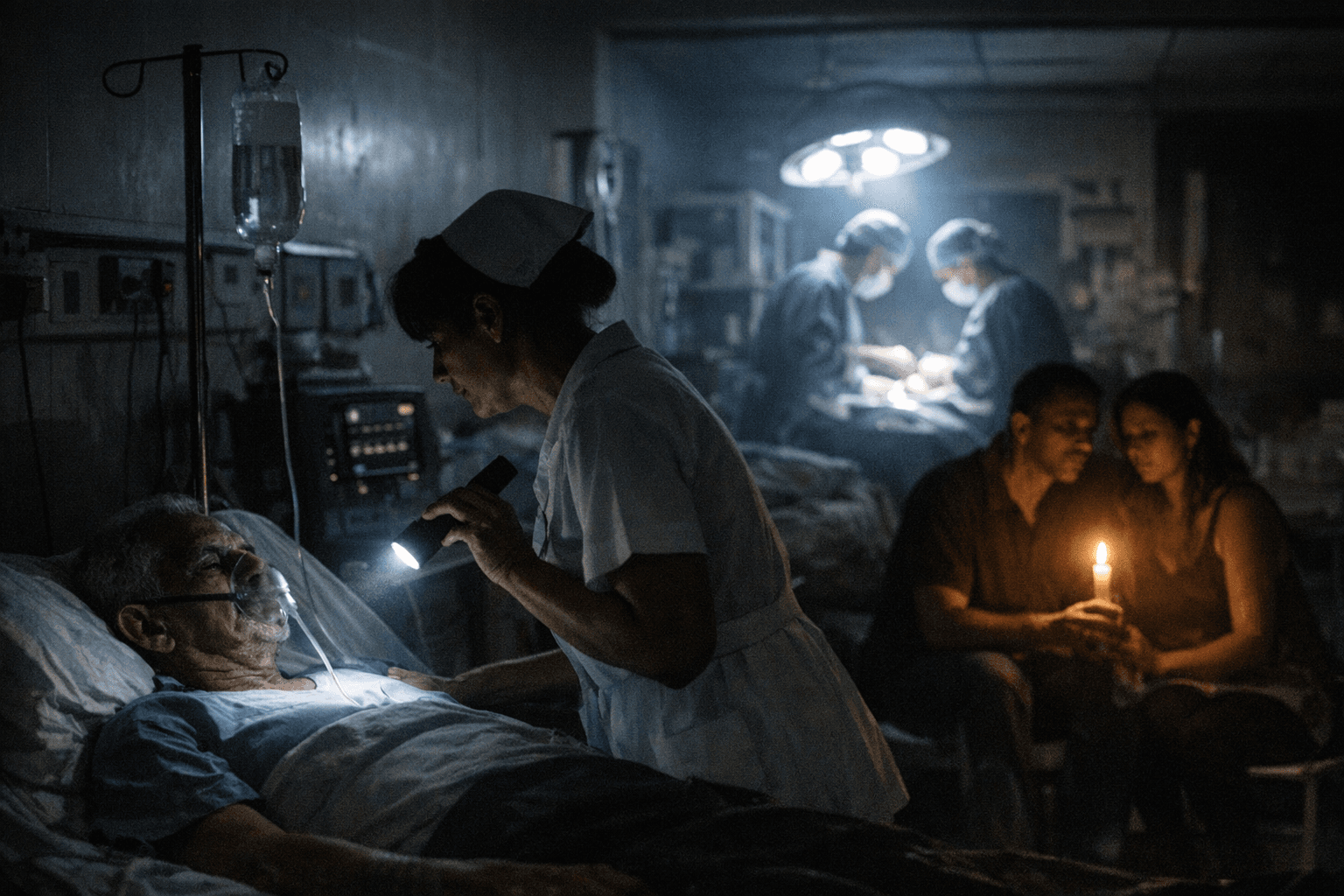
Cuba's national grid went dark entirely on March 16. By the time OCHA published its revised $94 million Plan of Action on March 27, the island was running on fuel stocks covering just 40% of its needs, Havana's garbage trucks sat idle for lack of diesel, and hospitals had suspended most non-emergency procedures. The plan is the international community's formal answer to that collapse. It was 72% unfunded at launch.
The crisis that forced the revision was not one event but a cascade. Venezuela's supply of 26,000 to 35,000 barrels of oil per day disappeared on January 3, when the US captured Nicolás Maduro, severing Cuba's most critical petroleum lifeline. Mexico halted its own shipments days later under Washington's pressure, leaving Cuba with reserves estimated to last 15 to 20 days. A shutdown at the Antonio Guiteras Power Plant on March 4 triggered cascading outages across the western provinces. The March 16 grid collapse was the logical end point of two months of accumulating pressure, but it hit a population already living through rolling blackouts, closed schools, and fuel lines stretching around city blocks.
OCHA's plan was originally a $74 million framework built around Hurricane Melissa, which struck in October 2025, displaced more than 735,000 people across Cuba's western provinces, and left 2.2 million in need of assistance. The energy emergency that erupted in January outpaced that framework almost immediately. The revised plan now targets 2 million of the 4.2 million Cubans the UN identifies as acutely affected by the combined crises, coordinated by OCHA in partnership with WHO, WFP, UNICEF, and PAHO.
The funding gap tells the story of what actually gets delivered. Of $94 million sought, $26 million had been secured at the plan's publication, leaving $68 million outstanding. That gap is not an abstraction. It is the difference between hospital generators running through the night and going dark at 2 a.m., between water pumping stations restoring service to provinces without running water for weeks, and between WFP trucks reaching inland communities now inaccessible by road. WHO Director-General Tedros Adhanom Ghebreyesus warned that "thousands of surgeries have been postponed during the last month and people needing care...have been put at risk," and insisted that "health should be protected at all costs and never be at the mercies of geopolitics, energy blockades and power outages." Without the missing $68 million and a reliable fuel supply, that backlog only deepens.
Fuel is the operational prerequisite for every one of the plan's six sectors: logistics and energy, health, water and sanitation, food distribution, education, and protection for displaced families. OCHA's update named fuel availability as the central constraint on delivery. Humanitarian partners need diesel to run hospital generators, power water-treatment plants, keep food cold, and move staff to affected provinces. The same shortage grounding Havana's trash trucks is the one preventing WFP field teams from reaching Guantánamo and Granma. Francisco Pichon, the most senior UN official in Cuba, warned that the humanitarian situation would "worsen, and if not collapse, if its oil needs go unmet."
President Miguel Díaz-Canel addressed the crisis in a nationally televised press conference, acknowledging the depth of the problem while insisting that authorities were seeking solutions. The Cuban government closed schools and universities and limited public transport, and garbage accumulated throughout Havana and other cities due to the lack of fuel for trash trucks. Those were not background conditions for the plan's authors. They were the daily experience of a country trying to absorb two simultaneous disasters on 40% of the energy it needs.
The plan's most consequential unresolved variable is not donor generosity but diplomatic geometry. The UN entered formal negotiations with Washington to establish a fuel traceability mechanism, a system designed to verify that any oil entering Cuba goes exclusively to humanitarian operations without violating the existing sanctions regime. OCHA said it was actively pursuing supply solutions with member states. If that mechanism gets approved and fuel channels open, the plan's health, water, and food sectors can begin operating at something approaching their designed scale. If it does not, the $94 million figure stays a ceiling that delivery capacity cannot reach.
With peak hurricane season six weeks out, the window for pre-positioning supplies across the five provinces hit hardest by Melissa is narrowing. A funded, fuel-supplied plan means hospitals with backup power, water systems with maintained pumps, and stockpiles staged before June. A plan with a $68 million hole in it means Cubans navigating the next storm from the same degraded baseline they are standing on today.
This article was produced by Prism’s automated news system from verified source data, official records, and press releases, then run through automated quality and moderation checks before publishing. The system is built and supervised by the people who set the standards it runs under. Read our full AI policy.
Did this article answer your question?