University of Miami Seminar Spotlights New Cuban and Diaspora Scholarship
A University of Notre Dame scholar presents on Cuba-Angola biopolitical identity today as UM's Cuban Heritage Collection hosts its third annual diaspora seminar series.
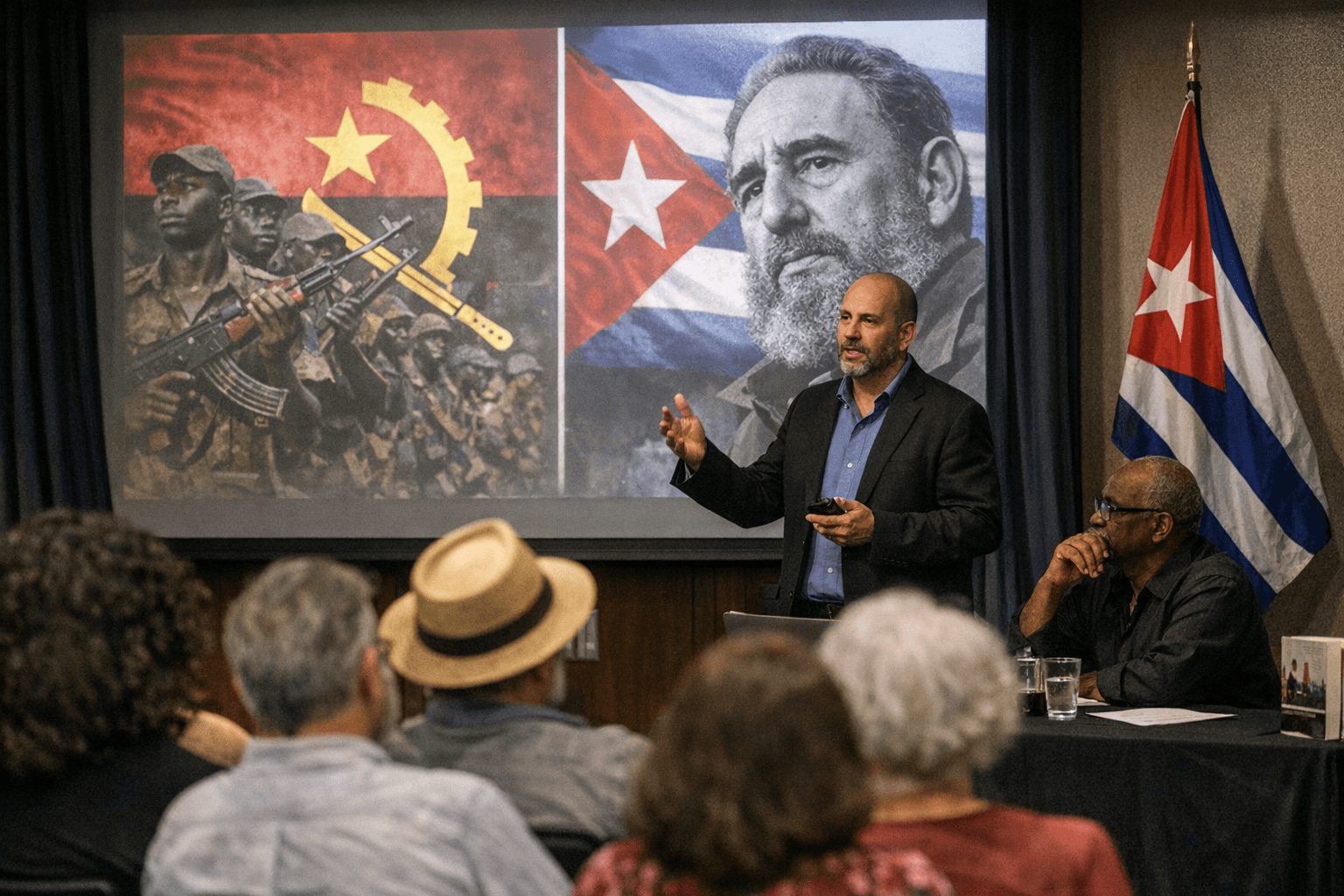
Today's session of the Cuban Heritage Collection's Seminar in Cuban and Cuban Diaspora Studies brings together scholars from across the hemisphere for a paper that pushes the field into rarely charted geopolitical territory. Magdalena López, Ph.D., Visiting Associate Professor at the Kellogg Institute for International Studies at the University of Notre Dame, is presenting "Cuba y Angola: Una crítica biopolítica a la identidad 'latino-africana,'" with Andy Alfonso, Ph.D., Teaching Transfer Associate for Community College Engagement at Princeton University's McGraw Center for Teaching and Learning, serving as discussant.
The Cuban Heritage Collection at the University of Miami Libraries is in its third iteration of the Seminar in Cuban and Cuban Diaspora Studies, running Fall 2025 through Spring 2026. Michael J. Bustamante of the University of Miami serves as lead organizer, with members of the Cuban Heritage Collection's Academic Advisory Committee assisting in the selection of participants. The program is made possible by support from the Wilbur L. and Jean L. Morrison Endowment for Cuban Studies at the University of Miami.
The seminar provides a virtual forum for works-in-progress that explore issues in Cuban and Cuban diaspora studies, irrespective of period, discipline, or approach, with a welcome for comparative and interdisciplinary topics, and is open to faculty members, graduate students, and independent scholars. The format is deliberately discussion-forward: papers are circulated electronically in advance, each session begins with brief opening remarks from the paper author and comments from an invited discussant, and conversations are held in English and Spanish, in accordance with the language in which the pre-circulated paper is authored.
The current series has built a schedule that spans musicology, history, and now biopolitical theory. The fall opened in September with Michael Levine, Ph.D., Assistant Professor of Musicology at Christopher Newport University, presenting on the birth of the reparto music industry, and continued in November with Aaron Coy Moulton, Ph.D., Associate Professor of Latin American History at Stephen F. Austin State University, examining the U.S. conspiratorial right and Cuban exiles. The spring schedule closes May 15 with Simon Fagour, a Ph.D. candidate in Contemporary History at New Sorbonne University in France, presenting on the Cuban Revolution and Caribbean nationalism in French and British colonial territories from 1959 to 1964.
The series has a useful precedent to point to for anyone wondering about the typical quality of sessions. In spring 2025, Laurine Chapon, a Ph.D. candidate at Université Sorbonne-Nouvelle, presented "Una casa en Cuba: Vivienda y migración en un contexto de crisis," with Denisse Delgado Vázquez, Ph.D., of the University of Massachusetts Boston as discussant — a session that drew on transnational housing and migration scholarship to read Cuba's crisis through a comparative lens.
The seminar meets via Zoom on select Fridays from 2 to 3:30 p.m. EST/EDT. Register for the entire series or for individual sessions through the Cuban Heritage Collection's library page; papers are circulated electronically two weeks in advance. Direct questions to chc@miami.edu.
This article was produced by Prism’s automated news system from verified source data, official records, and press releases, then run through automated quality and moderation checks before publishing. The system is built and supervised by the people who set the standards it runs under. Read our full AI policy.
Did this article answer your question?