U.S. delegation meets Cuban officials in Havana amid renewed tensions
U.S. officials flew into Havana for the first time since 2016, but the real test is whether the talks move prisoners, sanctions, internet access, or migration.
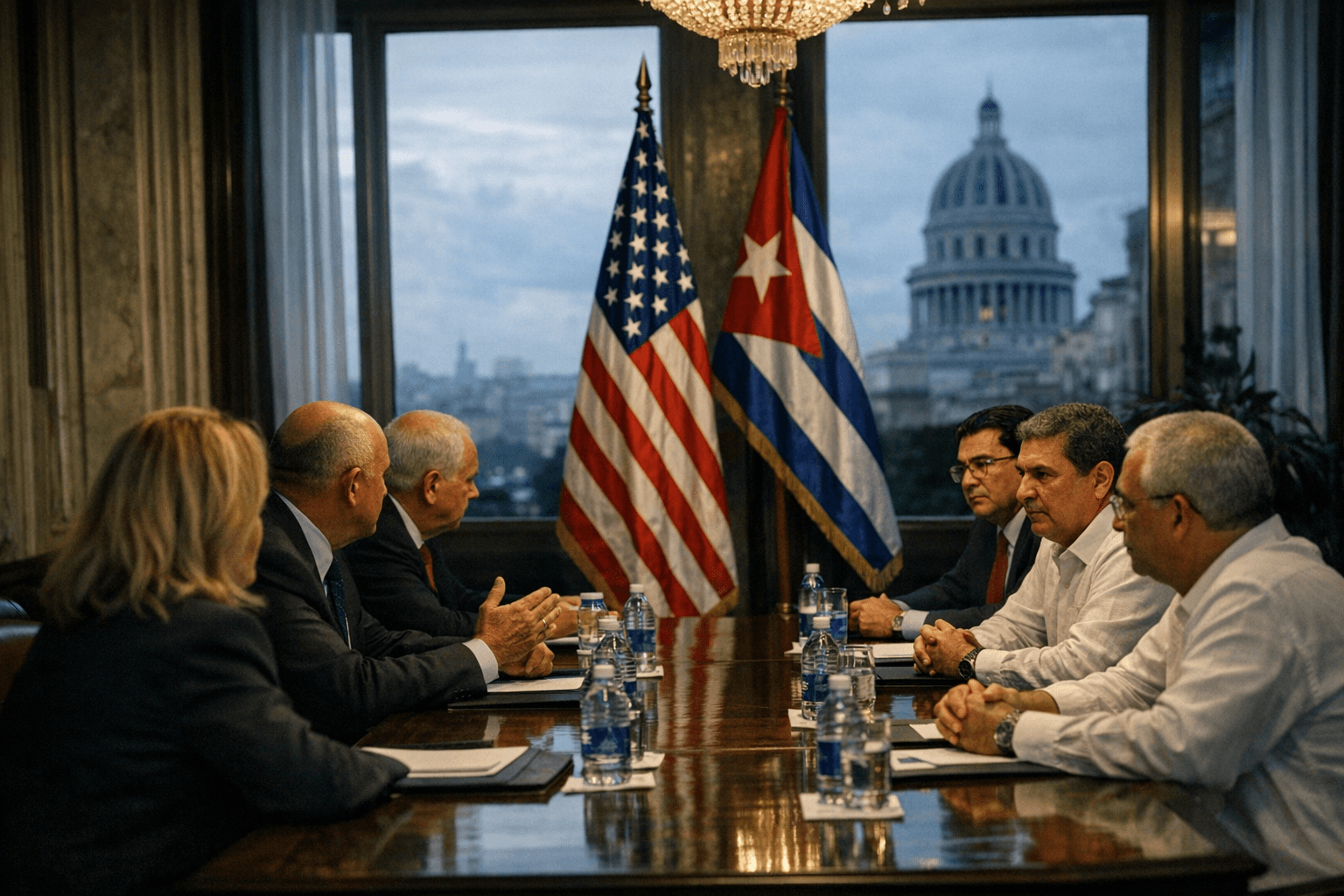
A U.S. government plane touched down in Havana and carried Washington back into direct contact with Cuba in a way that felt rare, loaded, and unmistakably political. Senior State Department representatives met with Raúl Guillermo Rodríguez Castro, the grandson of Raúl Castro, and the visit marked the first U.S. government flight to land in Cuba since Barack Obama’s 2016 trip, a symbolic break from years of chill that now has to prove it can become something more than a photo-op.
That is the central question hanging over the outreach. The Trump administration has spent this year tightening pressure, not loosening it. On January 29, Donald Trump issued an executive order declaring Cuba an unusual and extraordinary threat to U.S. national security and invoked the International Emergency Economic Powers Act to target foreign countries that sell oil to the island. A Congressional Research Service brief says the campaign has also included cutting off Cuban oil imports from Venezuela, Cuba’s main supplier since the early 2000s, a move that deepened the strain on an economy already battered by shortages and disruption.
Inside the Havana talks, the agenda was not ceremonial. CBS News reported that the delegation discussed political and economic reforms, the release of political prisoners, and a possible Starlink internet offer. That is the clearest sign yet that Washington is trying to tie any easing of pressure to visible changes inside Cuba, especially on repression, connectivity, and the broader economic model. One U.S. official said Cuba’s ruling elites had a small window to act before conditions worsened irreversibly.
The meeting also landed in the middle of a tense prisoner dispute. On April 3, the Cuban government said it had pardoned and released 2,010 prisoners, though it was not immediately clear how many were political prisoners. Prisoners Defenders has counted 1,211 political prisoners in Cuba, a number that keeps the issue at the center of any serious negotiation. If the talks are going to matter, this is where they will have to show results first.
Miguel Díaz-Canel has responded with defiance. On Meet the Press, he said he had “no fear” of Trump and insisted Cuba did not want war, even as he warned that any U.S. military aggression would bring fighting and very high costs. That hard line frames the diplomatic opening as something narrow and fragile, not a thaw.
There is still room for leverage, and still plenty of skepticism. POLITICO reported that Cuba briefly slid down Washington’s priority list because the Iran war was consuming attention and a confrontation with Russia over Cuba could prove costly. At the same time, the State Department has kept humanitarian pressure in view, including $3 million in disaster assistance for Cuba after Hurricane Melissa and broader regional aid that also covered the island. The pattern is familiar: Washington reaches for pressure, Havana reaches for survival, and both sides test whether a back channel can produce anything measurable before the window closes again.
This article was produced by Prism’s automated news system from verified source data, official records, and press releases, then run through automated quality and moderation checks before publishing. The system is built and supervised by the people who set the standards it runs under. Read our full AI policy.
Did this article answer your question?