U.S. Embassy warns Americans of May Day restrictions near Havana mission
Streets near the U.S. Embassy in Havana were set to close before May Day, squeezing traffic around the Malecón and putting travelers on alert for detours and police checks.
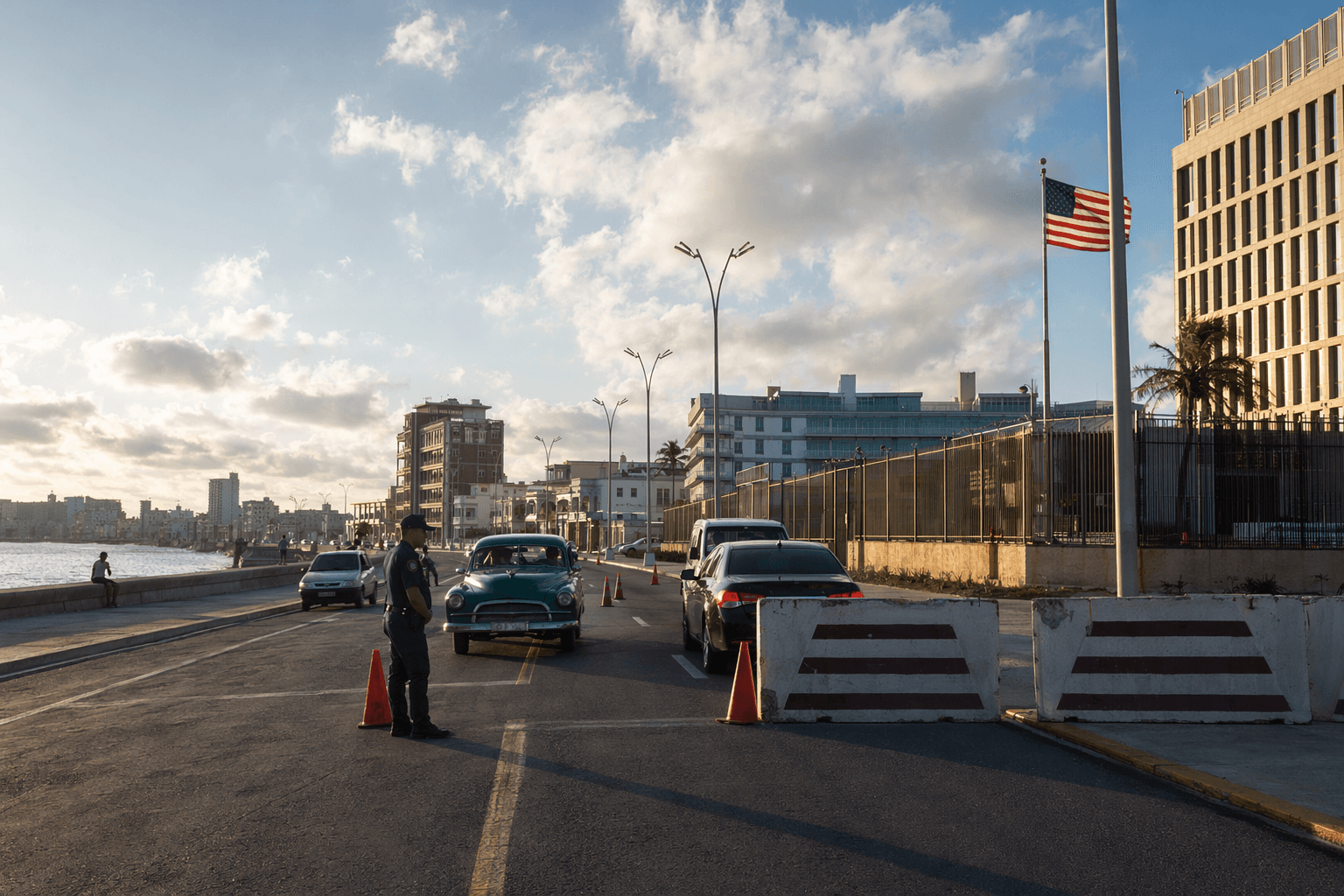
Streets around the U.S. Embassy in Havana were set to close as early as Thursday evening, April 30, a move that warned drivers, pedestrians, and anyone crossing the city that the area could turn into a traffic choke point before May Day even began. The embassy said the Cuban government planned an event for about 8:00 a.m. Friday in the plaza directly in front of the mission, with increased police presence, detours, and travel disruptions likely around one of Havana’s most watched corners.
The practical problem was simple: if you had plans near the embassy, the Malecón, or anywhere trying to cut through central Havana, the usual route could be gone. The embassy also said it would be closed on May 1 for the local holiday, and it urged Americans to avoid demonstrations and crowds, stay aware of their surroundings, check local media, and be ready to change plans. For U.S. citizens caught in the area, the emergency number was +53-7-839-4100.
The warning landed in the middle of a broader pattern that Havana travelers know well. Cuba’s U.S. travel advisory has been blunt about the country’s increasingly unstable electrical grid, with power outages described as a daily occurrence across the island, including Havana. It also points to fuel shortages and long lines at gas stations, which makes any added road closure or security cordon more painful than it would be in a city with reliable transit and backup options. In Havana, one blocked stretch can ripple into missed taxis, longer rides, and a lot more waiting.
The politics of the location mattered as much as the logistics. Cuban authorities moved the main International Workers’ Day rally from Plaza de la Revolución to the José Martí Anti-Imperialist Tribune on the Malecón, directly opposite the U.S. Embassy. The Tribune, inaugurated in April 2000 during the Elián González crisis, has long served as a stage for anti-U.S. messaging and was described as able to hold very large crowds. Raúl Castro, 94, appeared at the May 1 rally, and Miguel Díaz-Canel also took part. In that setting, the embassy alert was less a routine notice than a heads-up that one of Havana’s most sensitive political spaces was about to swallow normal city movement for a day.
This article was produced by Prism’s automated news system from verified source data, official records, and press releases, then run through automated quality and moderation checks before publishing. The system is built and supervised by the people who set the standards it runs under. Read our full AI policy.
Did this article answer your question?