U.S. Threats to "Take" Cuba Examined Amid Deepening Humanitarian Crisis
Trump said he expects "the honor of taking Cuba" as the island's grid has collapsed multiple times; PolitiFact examined what the U.S. actually stands to gain.
President Donald Trump threatened to "take" Cuba after imposing an oil blockade that has pushed the country's economy to the point of collapse. PolitiFact published an analysis on March 25 examining what the U.S. actually stands to gain, economically and politically, if Trump acts on that threat.
"I do believe I'll be having the honor of taking Cuba," Trump said on March 16. "They have to get new people in charge," Secretary of State Marco Rubio elaborated the next day. Trump had told reporters: "Whether I free it, take it, think I could do anything I want with it. You want to know the truth. They're a very weakened nation right now."
Since the U.S. government captured Venezuelan leader Nicolás Maduro in January, the U.S. has blocked oil shipments from Venezuela to Cuba. Venezuela was previously Cuba's main petroleum supplier, and Trump has threatened other countries with tariffs if they sell fuel to Cuba. According to President Miguel Díaz-Canel, Cuba has not received oil from foreign suppliers for three months, and the country produces barely 40 percent of the fuel it needs to power its economy.
The island has spiraled into a worsening humanitarian crisis, with electrical grid failure, hospitals canceling surgeries, and schools and businesses closing. The island's national electrical grid has already collapsed three times this month, with one blackout lasting more than 29 hours. Due to the lack of fuel, blackouts are longer, patients are unable to reach healthcare centers, children can't get to school, prices are rising, and the food supply chain has been disrupted.
A 2025 survey by the Food Monitor Program, a Cuban organization monitoring food insecurity, found that 78% of the roughly 2,500 people polled said the current crisis has been the worst in terms of food. The Cuban Observatory of Human Rights reported that seven out of ten Cubans skipped at least one meal last year due to lack of money or food shortages.
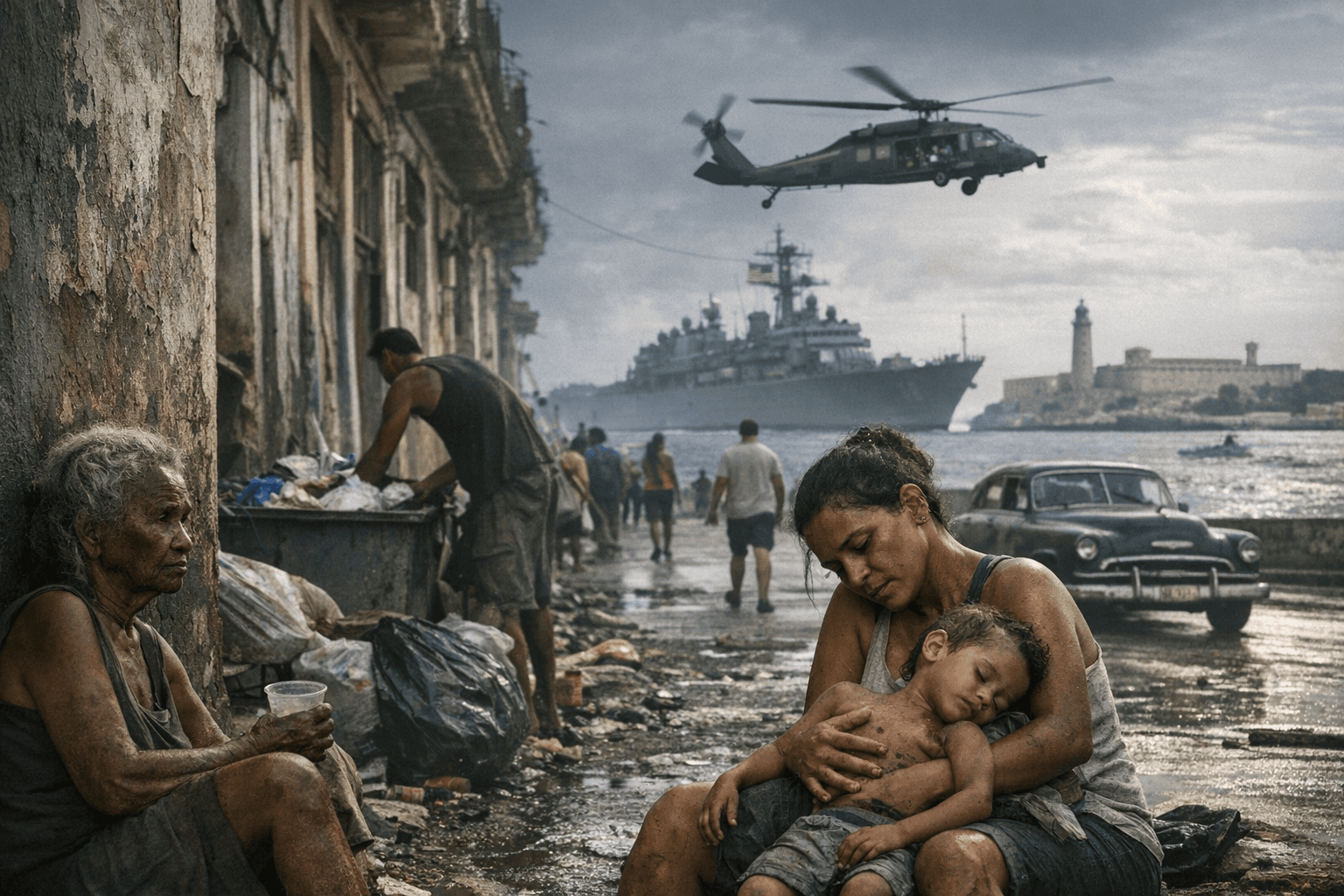
The PolitiFact analysis drew on Cuba scholars to weigh the strategic logic behind the takeover rhetoric. Regime change could lead to the resolution of decades-old property claims from Cubans who fled after the communist takeover, a dispute valued in the billions of dollars. However, some experts argue the potential U.S. gains are overstated. Theodore Henken, a sociologist and anthropologist at Baruch College, noted that "the fact is that today, Cuba is relatively unimportant geopolitically."
For the U.S., the biggest direct impact from an intensifying humanitarian crisis would be instability or state collapse leading to mass emigration, which would run counter to the Trump administration's high-priority effort to curb illegal immigration and would most directly burden Florida, Trump's home state. Jorge Duany, former director of Florida International University's Cuban Research Institute, warned that the sudden fall of the Cuban government might "create a chaotic power vacuum, which could provoke a prolonged, bloody, and expensive U.S. intervention."
United Nations Secretary-General António Guterres stated that he is "extremely concerned" about the humanitarian situation in Cuba, warning it "will worsen, or even collapse" if the country's oil needs are not met. UN experts have condemned the fuel blockade as "a serious violation of international law and a grave threat to a democratic and equitable international order."
On March 13, Díaz-Canel publicly confirmed for the first time that his government was engaged in diplomatic talks with the United States aimed at addressing the severe oil and energy blockade. In March, the Cuban government also announced it would release 51 political prisoners in the coming days. Whether those concessions are enough to satisfy an administration that has made regime change an explicit goal before year's end remains the defining question hanging over the island.
This article was produced by Prism’s automated news system from verified source data, official records, and press releases, then run through automated quality and moderation checks before publishing. The system is built and supervised by the people who set the standards it runs under. Read our full AI policy.
Did this article answer your question?