Carolina Crown’s 2026 show explores perception through music and imagery
Crown’s 2026 show looks less like a theme package and more like a percussion roadmap, with Baroque restraint giving way to a wider, stranger sound world. The battery will tell the truth.
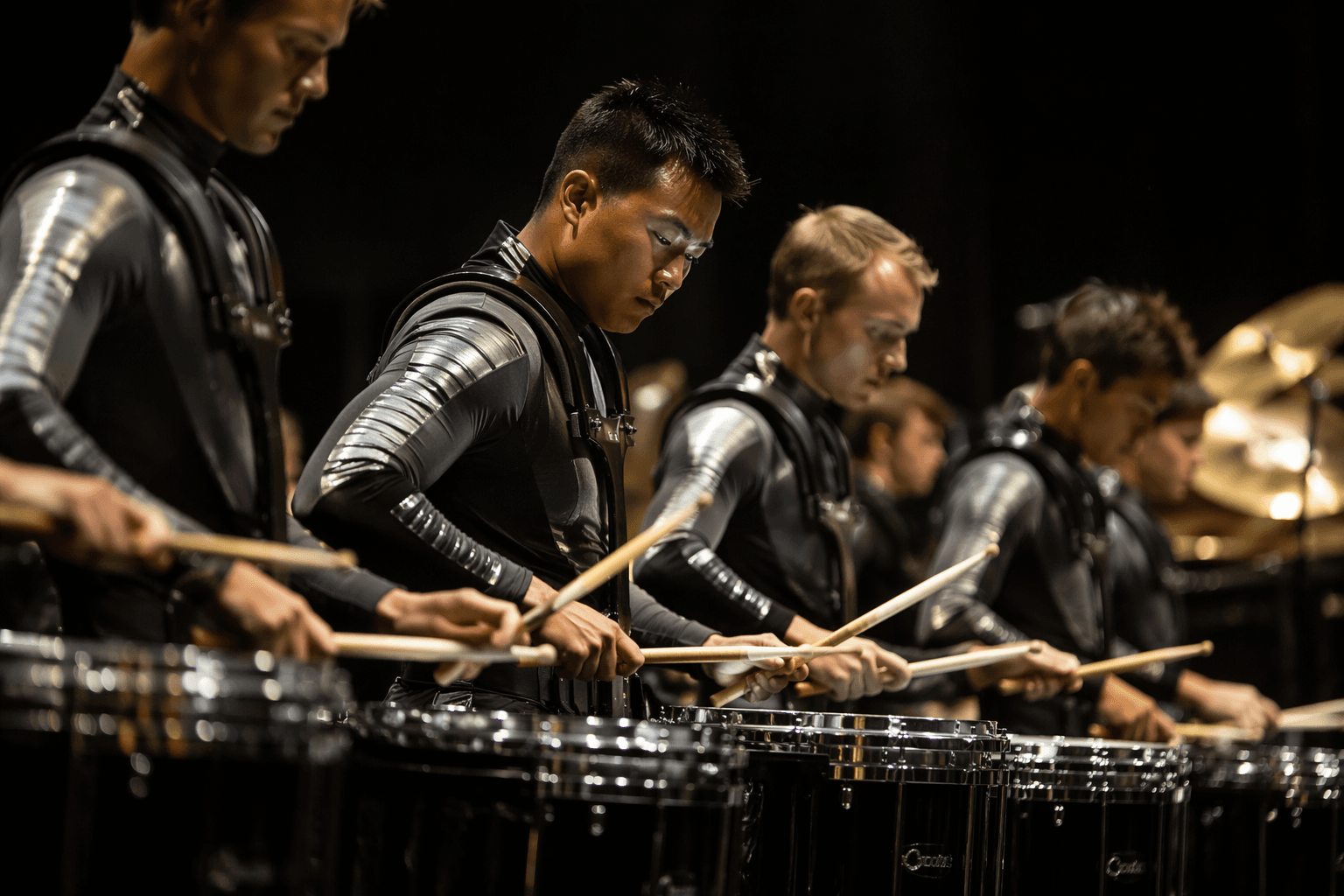
Carolina Crown’s 2026 production is titled The Doors of Perception, and it sounds like a show built to change shape in front of you, not just decorate a philosophical idea with brass and visuals. The production moves from ordinary consciousness toward something more immersive, connected, and expansive. For drummers, that points to a program built on contrast: controlled at the start, broader and more open as it unfolds. If Crown lands this the way the concept suggests, the percussion book will be the mechanism that makes the story feel real.
The concept behind the doors
Crown’s title carries more baggage than a typical DCI show name, and that is part of the appeal. The phrase behind The Doors of Perception is tied to William Blake’s writing in The Marriage of Heaven and Hell, while Aldous Huxley’s The Doors of Perception, published in 1954, gave the idea its modern psychedelic and philosophical weight. That gives Crown a built-in tension between filtered perception and unfiltered experience, which is exactly the sort of framework a good drum corps can translate into pacing, texture, and release.
The production is described as moving toward “deeper spiritual enlightenment and existential totality.” In drum corps, that only works if the arranging earns it. A show like this needs the percussion section to define the transition from rigid to liberated, from measured to expansive, and from surface color to something more elemental.
What the writing should sound like
The program begins with the order and restraint of Renaissance and Baroque influences before opening into more contemporary sound worlds. That is the most important musical clue in the whole announcement, because it suggests a structural reset rather than a random playlist of moods. In battery terms, that usually means the opening needs clarity, not clutter: tighter figures, more disciplined unison writing, and a sense that every accent has a job.
From there, the best-case version of this concept would let the percussion writing breathe wider as the show opens up. Listen for whether the inner voices get busier, whether the front ensemble starts carrying more harmonic weight, and whether the cadence language moves from square and contained to something less obvious.
A few practical clues will tell you quickly whether the design is doing real work:
- The opening battery language should feel controlled, almost architectural, if the Renaissance and Baroque idea is more than a costume.
- The front ensemble should help widen the sound picture as the show develops, not just provide background color.
- The pacing should feel like a gradual unlocking, with transitions that change the listener’s sense of space, not just the dynamics.
- If the show’s emotional arc is working, the percussion will stop sounding like accompaniment and start sounding like a viewpoint.
Why the repertoire matters
The named material gives the concept another layer of intent. People Are Strange, by Jim Morrison and Robby Krieger, is not a random crowd-pleaser dropped into a setlist. It fits the title’s concern with altered perception, outsider perspective, and the feeling that familiar ground can suddenly look unfamiliar. Pairing that with original music from Michael Klesch, Clif Walker, Joe Hobbs, and Michael Martin suggests a designed arc rather than a greatest-hits collage.
That creative lineup also tells you where the percussion identity may come from. Carolina Crown previously said Walker and Hobbs would focus on percussion design and orchestration, which puts the drum book right in the center of the concept’s execution.
For drummers, the most telling moments will not necessarily be the loudest ones. The giveaway will be how the book handles transitions between styles, especially if the material really does move from strict historical references into something more contemporary.
CrownLIVE is the first real test
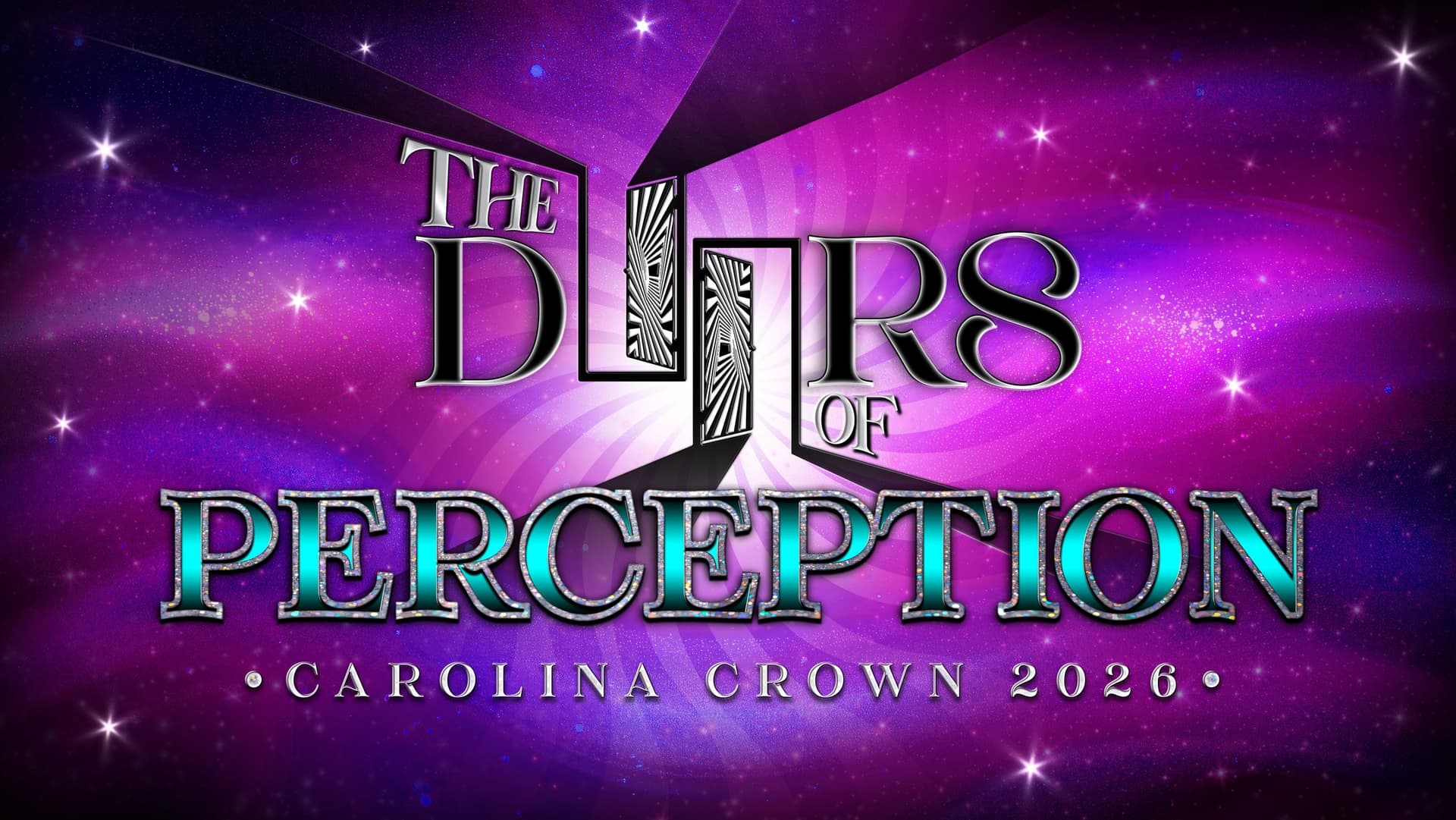
The first public look arrives at CrownLIVE, set for Saturday, June 20, 2026 at Gardner-Webb University’s Spangler Stadium in Boiling Springs, North Carolina. Gates open at 6:30 p.m., with performance at 8:30 p.m. CrownLIVE has been held annually since it launched in 2021, and it serves both as the unveiling of the corps’ newest production and as a fundraiser.
It is the first chance to hear whether the percussion design actually follows the concept’s promise of movement from ordinary awareness to something larger. In a corps setting, the book often reveals the truth faster than the visual package does. If the battery has a clear progression of touch, density, and release, the show is probably built on a serious rhythmic idea.
The bigger competitive frame
This reveal also lands in the middle of a real organizational reset. On April 22, 2026, Carolina Crown named Dr. Chester B. Phillips as its next chief executive officer, describing him as a DCI adjudicator, conductor, and designer of more than 200 productions.
The competitive baseline is strong too. Carolina Crown finished fifth at the 2025 DCI World Championship Finals in Indianapolis, Indiana, with a score of 94.800, behind Boston Crusaders, Bluecoats, Santa Clara Vanguard, and Blue Devils. The corps won its first DCI World Championship in 2013, and Crown became the first corps in the activity’s 41-year history to win championships in both the former Division II/Open Class and World Class eras.
This article was produced by Prism’s automated news system from verified source data, official records, and press releases, then run through automated quality and moderation checks before publishing. The system is built and supervised by the people who set the standards it runs under. Read our full AI policy.
Did this article answer your question?