How the Modern Drum Set Evolved Into a Jazz Essential
The modern kit was built to let one drummer cover an entire band’s timekeeping job, and that origin still shapes every familiar 5-piece setup today.
The drum set became modern the moment one player could do the work of three
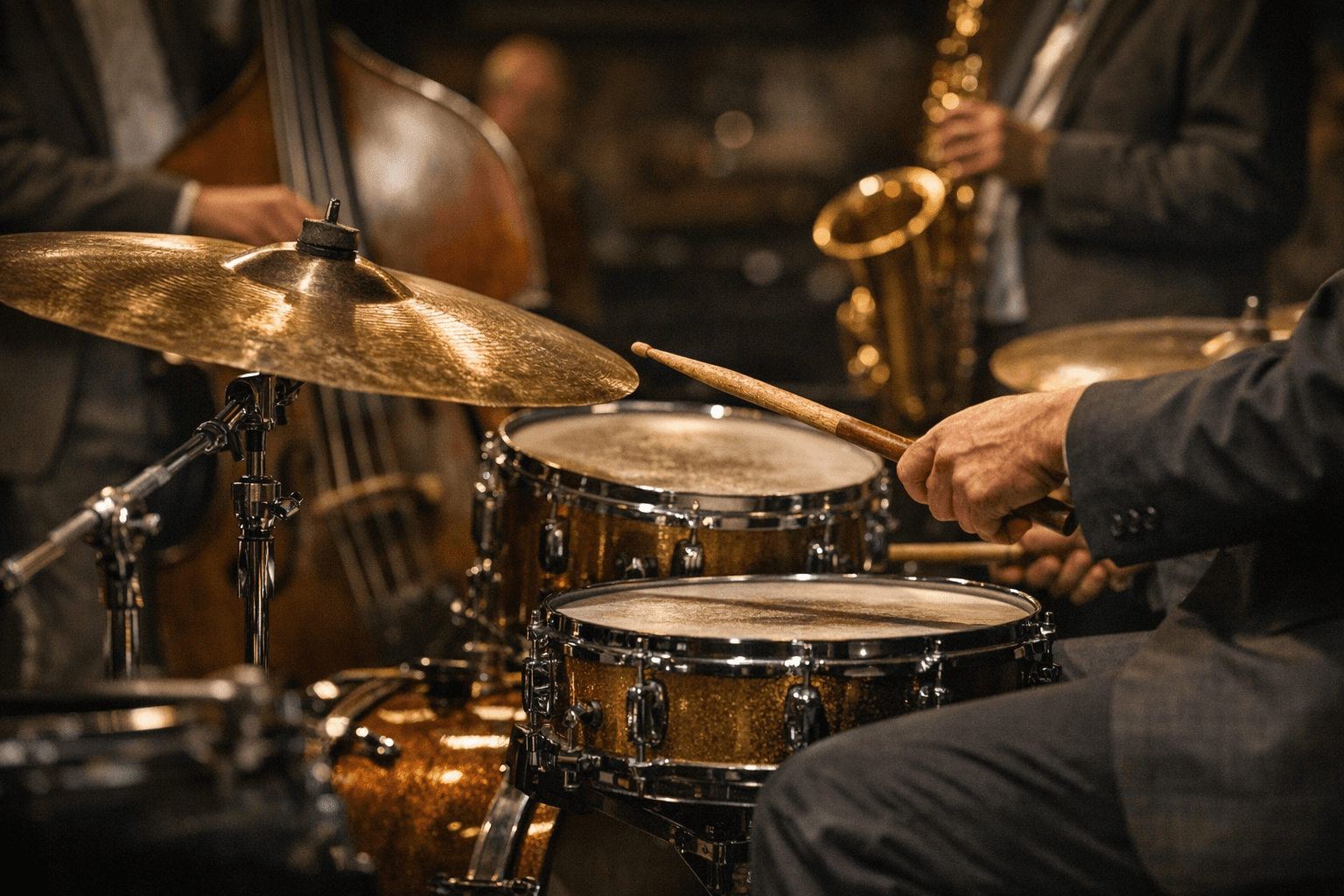
The modern drum set did not begin as a fixed instrument. It took shape in the early 20th century when manufacturers like Ludwig and Gretsch developed the hardware that made seated, one-person playing possible, especially the bass drum pedal and the snare stand. That shift solved a practical problem: instead of hiring separate players for snare, bass, and cymbal parts, one drummer could cover the whole job from a single throne. By the 1940s, that efficiency had made the drum kit a staple of popular music, and within a few decades of its birth it had become the lynchpin of jazz ensembles.
Smithsonian Music places that story in a broader cultural frame. The drum set was a hybrid instrument, drawn from traditions around the world, including European military snare and bass drums and Chinese percussion traditions that met in port cities like New Orleans. That is why modern kits still feel so familiar across genres and price points: they are built from a design that was always about combining roles, not just collecting drums.
Why the standard layout looks so familiar
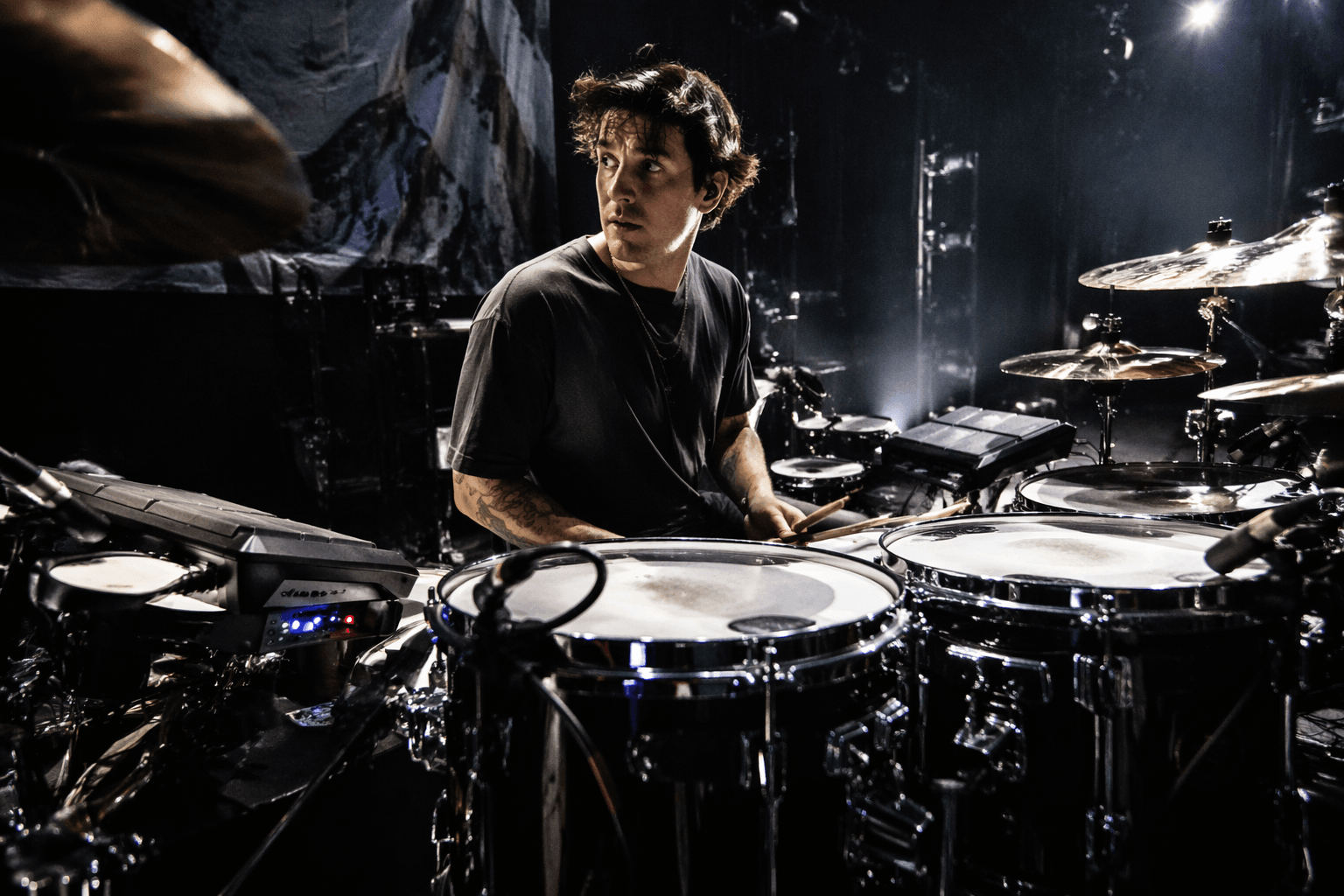
The kit most players recognize today usually centers on a bass drum, snare drum, two rack toms, and a floor tom, with cymbals such as hi-hats, a crash, and a ride completing the setup. Some beginner guides describe a 5-piece kit as bass drum, snare drum, three toms, and cymbals, which is why the term can cause confusion at the store. In practice, a 5-piece kit usually means five drums only, with cymbals and hardware not counted in that number.
That difference matters for shopping, setup, and learning. A player buying a “5-piece” is usually choosing a core shell package, not a complete workstation with all the metalwork included. The variety you see in modern drum rooms, from compact jazz rigs to bigger rock setups, still sits on that same foundation: one drummer, a compact footprint, and separate voices for pulse, backbeat, and fill.
The kick and snare still define the language of the kit
At the center of the kit is the bass drum, the punchy low-end pulse that anchors the groove. It is struck by a foot-operated pedal and is often sized between 20 and 24 inches, which gives it the depth players expect in everything from acoustic jazz to amplified band settings. Historical coverage notes that Ludwig had an improved pedal on the market by 1913, and that kind of hardware progress helped standardize the one-player setup that the modern kit depends on.
The snare drum is the kit’s most iconic voice. It supplies the sharp backbeat and crisp snap that define so much contemporary music, and it is the sound most listeners identify first when they picture a drum kit. In a practical sense, the snare is where a drummer’s articulation is most exposed: ghost notes, rimshots, accents, and time all live there. Learning the kit starts with understanding that the snare is not just another drum, but the spoke around which the rest of the pattern turns.
The floor tom fills another essential role. As the second-largest drum in a standard kit, it adds deep, booming resonance after the kick, giving fills weight and making transitions feel bigger without forcing the player to overplay. That low-end conversation between bass drum and floor tom is part of why a kit can sound complete even when the setup is small.
What the shell wood says about tone
The modern kit is also shaped by material choice, not just size and layout. Common drum shell woods include maple, birch, mahogany, poplar, and walnut, and manufacturers often build around those species because each brings a different blend of warmth, attack, and resonance. Some shell makers also market blended constructions, including maple, poplar, and mahogany combinations, which shows how much of modern drum design is still a search for balance between tone and response.
For a beginner, that means the shell count is only part of the decision. A 5-piece kit may look standard on a showroom floor, but two kits with the same number of drums can feel very different once the shells, hardware, and cymbals start speaking. The design history explains why: the modern kit was never meant to be one fixed sound, only a flexible system for getting multiple musical jobs done by one player.
The hi-hat changed the feel of the whole instrument
The cymbal side of the kit tells the same story of adaptation. Early drum-set histories say the hi-hat began as the low boy, a low-mounted pair of cymbals in the 1920s. In the early 1930s, drummers and tinkerers raised that setup so it could be played with sticks as well as the foot, and Jo Jones is commonly credited as one of the key figures in that development.
That change was bigger than a hardware tweak. It gave drummers a new way to shape time, texture, and swing without abandoning the steady foot control the setup already offered. The hi-hat helped move the drum set from a collection of parts into a genuinely expressive instrument, one that could mark time, color phrases, and answer the band in real time.
What to focus on first when you are learning or shopping
If you are coming to the kit fresh, the best way to understand it is to think in musical jobs rather than in parts lists. The bass drum carries the low pulse, the snare defines the backbeat and articulation, the toms supply movement and depth, and the hi-hat and other cymbals shape time and color. That is the core logic that grew out of the trap kit’s original purpose and still defines the modern setup.
A practical beginner’s lens looks like this:
- Start with the roles, not the number of pieces.
- Remember that a 5-piece usually means five drums, not cymbals and stands.
- Expect variation: some kits use two rack toms, while others use three toms.
- Pay attention to shell wood, because maple, birch, mahogany, poplar, and walnut all affect the feel and voice of the kit.
- Treat the hi-hat as part of the instrument’s engine, not just a pair of cymbals on the side.
That is why the modern drum set still looks so recognizable. Its shape was forged by necessity, refined by jazz, and expanded by hardware that let one drummer carry the rhythmic load of an entire section. The familiar layout is not an accident of tradition, but the surviving design of an instrument built to do more with less, and that is exactly why it remains the drummer’s most efficient and most flexible tool.
This article was produced by Prism’s automated news system from verified source data, official records, and press releases, then run through automated quality and moderation checks before publishing. The system is built and supervised by the people who set the standards it runs under. Read our full AI policy.
Did this article answer your question?