Musicca Virtual Drums Help Players Build Timing and Coordination
Musicca’s virtual drums give you a quiet, free way to drill timing, hand separation, and groove ideas before you ever sit behind a real kit.
A practical bridge for players who need reps, not hype
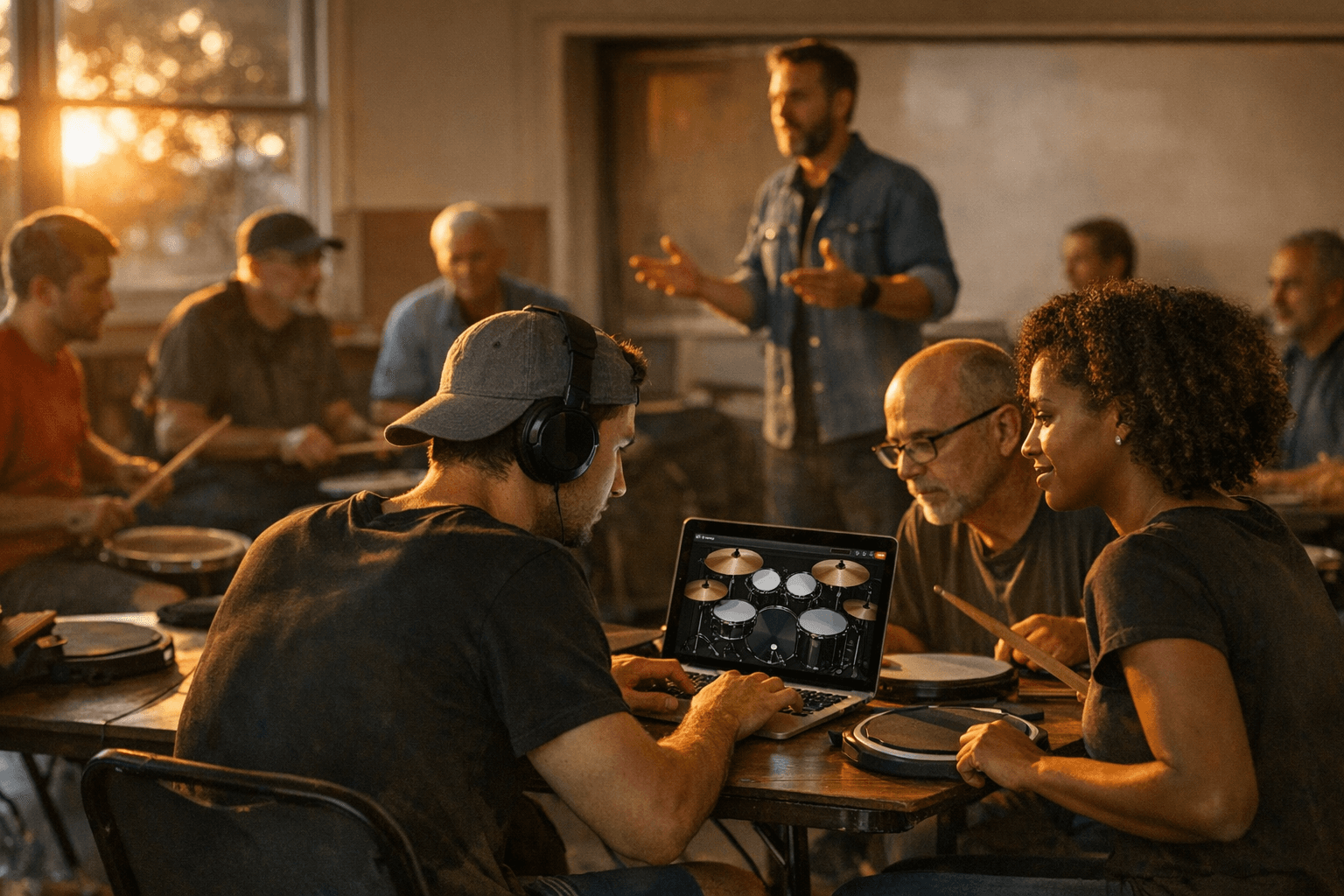
If you want to practice drums without owning a kit, Musicca’s virtual drums are about as low-friction as it gets. You can click the parts with a mouse or play them from the keyboard, and the layout covers the usual suspects, crash, ride, hi-hat, toms, snare, and bass drum, so you are not guessing where the pieces of the set live. That matters for beginners who are still learning the map of the kit, but it also matters for teachers and students who need a quiet way to keep the hands and brain working between full-kit sessions.
What makes the page appealing is how unflashy it is. The design is simple enough that you can learn the controls quickly and spend the rest of the time actually practicing groove ideas. In drumming terms, that means less time fumbling with software and more time reinforcing the stuff that sticks, timing, coordination, and the ability to recognize patterns before your hands lock up.
Why this works for habit-building
The strongest case for Musicca’s virtual drums is not that they imitate a real kit perfectly. It is that they make practice easier to start, easier to repeat, and easier to fit into a normal day. Musicca says the virtual kit can be used to practice along with songs and then apply those skills to real drums, which is the right mental model here. It is a bridge, not a toy, and that distinction is what keeps the tool useful.
There is also a practical access angle. Musicca says no app is available, and the website works on mobile devices with an internet connection. That means the barrier to entry is basically a browser and a few minutes of attention. For a student squeezing in five quiet minutes between classes, or a teacher who wants a no-installation classroom tool, that is a real advantage.
The habit-building value comes from repetition, not novelty. If you can open the page, tap out a groove, and immediately hear whether the pattern sits right, you are more likely to come back tomorrow. The point is not to turn your laptop into a drum kit. The point is to make rhythm practice easy enough that it becomes part of the day.
The keyboard mapping is the detail that makes it feel like drumming
A lot of virtual instruments miss the physical logic of the real thing. Musicca gets closer by keeping the hand division in mind. Its help text notes that drummers typically strike cymbals with the right hand and the snare with the left, and the keyboard shortcuts reflect that kind of separation. That sounds small, but for anyone working on coordination, it is the kind of detail that matters.
That mapping helps with two specific skills: hand separation and pattern recognition. When you are not just hunting for sounds but actually assigning parts to different hands, you start to think more like a drummer and less like someone clicking icons on a screen. It is especially useful for players who are still memorizing where each voice lives on the kit, because the keyboard layout reinforces the physical logic of the instrument.
This is also where the page becomes more than a convenience. You can rehearse basic sticking ideas, then move into groove patterns without losing the thread of which limb is doing what. For younger players, or anyone returning to drumming after time away, that can be the difference between a productive session and a frustrating one.
Where Musicca’s other drum tools expand the value
The virtual drums page sits inside a wider toolset that makes the platform more than a single-page experiment. Musicca’s drum machine lets you create your own beat or choose from popular beats across different genres. It also lets you vary sounds, swapping hi-hat for ride cymbal or cross stick for a standard snare sound, which is useful when you are sketching ideas or hearing how a groove changes with a different color on top.
The sharing function is straightforward too. You can save and share drum beats by copying the browser address, which is a tidy way to move an idea from one person to another without a lot of setup. That matters in lessons, rehearsals, and remote coaching, where the fastest path from idea to playback usually wins.
Musicca’s rhythm exercises push the learning further. The free interactive dictation work progresses from basic rhythms with quarter and eighth notes to more advanced material using sixteenth notes, triplets, and different time signatures. That progression is exactly what a practical rhythm learner needs: start simple, then widen the vocabulary until you can read, hear, and write more complicated figures without freezing up.
A classroom-friendly option with real reach
Musicca frames its teaching resources as free for both teachers and students, and that changes the whole equation. A tool like this is not just for a lone player messing around at home. It fits classrooms, lesson plans, and any situation where an educator wants students to get more rhythm exposure without adding cost or logistics.
The company’s scale also tells you this is not some tiny side project. Musicca says it was founded in Denmark in 2019 by Lasse Grubbe, who holds a Master of Arts in Musicology, and that it now serves several million monthly users in more than 150 countries. That is a meaningful footprint for an education platform, and it helps explain why the virtual drums page feels intentionally built for practical use rather than polished distraction.
Musicca’s mission is to give people around the world the opportunity to learn music theory for free, and the drums tools fit that mission cleanly. The platform is not trying to replace formal lessons or real instruments. It is trying to remove friction, especially for students, educators, and musicians who need a clear, repeatable way to work.
What it can do, and what it cannot
Used well, Musicca’s virtual drums can sharpen timing, improve coordination, and make rhythm practice more approachable. They are especially good for quiet repetition, for building the habit of daily practice, and for getting comfortable with patterns before you hit a real kit. The drum machine and rhythm exercises widen that usefulness by connecting groove ideas to reading, writing, and listening.
But there is a hard limit, and it is worth respecting. A browser-based drum page cannot give you the physical feedback of real sticks on heads, pedals underfoot, or cymbals moving under your hands. It can support technique, but it cannot replace the full-body work that happens on an acoustic or electronic kit.
That is the honest read on Musicca’s virtual drums: they are valuable because they lower the barrier to practice, not because they pretend to be the whole instrument. For drummers who need a clean, free, browser-based way to stay in rhythm, that is enough to make them genuinely useful.
This article was produced by Prism’s automated news system from verified source data, official records, and press releases, then run through automated quality and moderation checks before publishing. The system is built and supervised by the people who set the standards it runs under. Read our full AI policy.
Did this article answer your question?