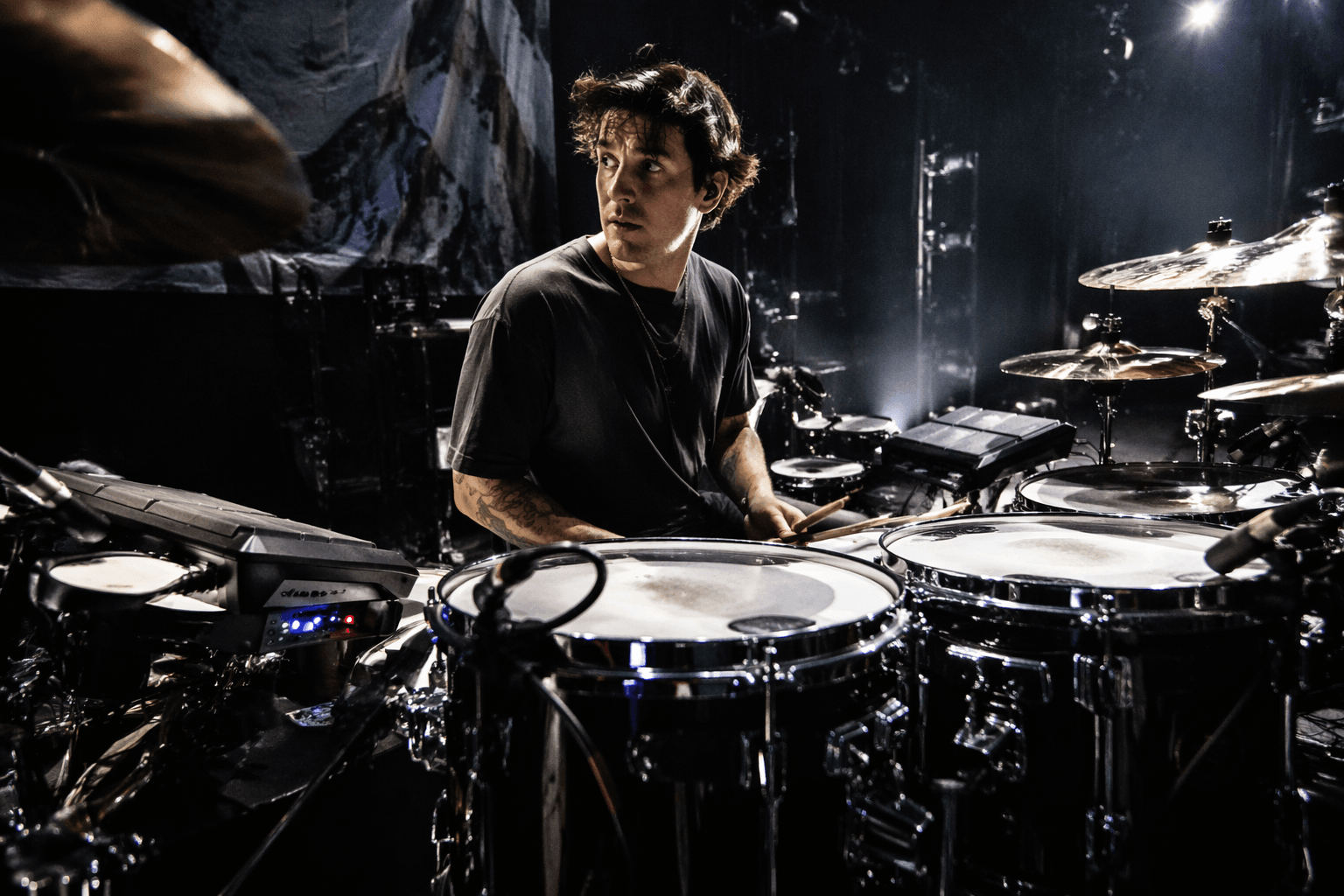
Guitar Center’s drums page maps the full percussion ecosystem
Guitar Center's drums page reads like a map of a crowded market. The real choice now is not kit versus kit, but acoustic, electronic, hardware, and the whole support system.
The page is built for how drummers actually shop
Guitar Center’s drums and percussion page does something a lot smarter than just selling gear. It lays out the category the way real drummers think about it: acoustic drum sets, electronic drum sets, cymbals, hardware and stands, snare drums, drum accessories, hand percussion, marching percussion, and drum amplifiers. Add in used gear, entry-level sets, premium pieces, limited products, world percussion instruments, and replacement parts, and you get the full picture fast: this is not one purchase, it is a build.
That matters because drums sit at the center of music across nearly every culture and genre. A player moving from a practice room to a club date to a studio session often needs different tools for each setting, and the retail layout reflects that reality. The old idea of “buy a kit and you’re done” does not fit the modern drum market anymore.
Acoustic kits are still the backbone
If you want the classic drum-set experience, the acoustic side of the page is where the language gets most familiar. Guitar Center’s acoustic drum set copy spells out the standard parts of a kit: bass drum, snare drum, toms, cymbals, and hardware. It also points to common configurations such as 4-piece jazz setups and 5-piece rock kits, plus kit sizes ranging from 3 through 7 pieces.
That range is useful because it shows how acoustic buying really works. A smaller kit can be the right move for jazz, rehearsals, or tighter spaces, while a 5-piece setup still covers a huge amount of rock, pop, and general gigging work. If you want the visceral feel and the straightforward response that built the instrument’s reputation, acoustic remains the default.
Electronic drums are no longer a side branch
The page gives electronic drum sets the same visibility as acoustic gear, and that is a sign of where the market has gone. NAMM’s 2025 Global Report says the U.S. digital and electronic instruments category grew 36.5% over the last decade, and the same trend extended to drum kits in the United States. That helps explain why electronic kits now sit right next to acoustic ones instead of being buried off to the side.
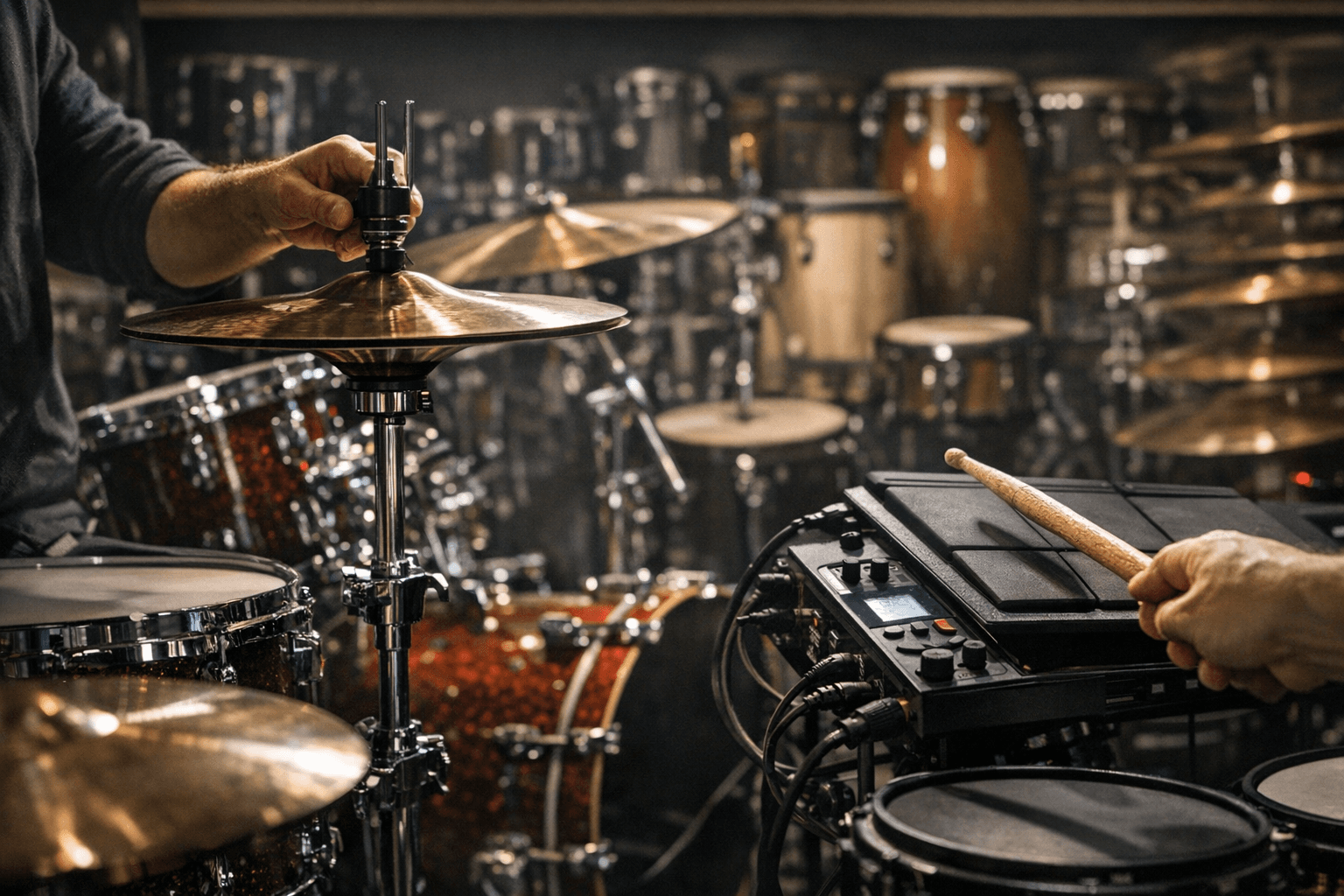
For drummers, the appeal is obvious. Electronic kits make quiet practice possible, open the door to hybrid setups, and let players shape volume and feel in ways acoustic kits cannot. Once drum amplifiers enter the picture, the category stops being just a practice workaround and starts looking like a full performance lane.
The support gear is where many budgets quietly go
Hardware and stands do not get the glory, but they are the part of the setup that decides whether a kit feels solid or annoying. Guitar Center’s category structure puts hardware, cymbals, snare drums, drum accessories, and replacement parts in the same ecosystem for a reason: the core shells are only one piece of the job. If the stands wobble, the snare response feels wrong, or the wrong accessories are missing, the whole rig suffers.
Hand percussion and marching percussion widen the lens even further. They remind you that drumming is not just backbeat vocabulary. It also includes color, ensemble function, field work, and parts of the musical world where sticks, mallets, and auxiliary textures matter as much as a kick and snare.
The market is getting more segmented, not less
The broader industry picture backs up what the page is showing. NAMM reported that U.S. pro audio sales grew 3.3% to $1.59 billion in 2024, which is a useful signal that the surrounding rehearsal and live-performance ecosystem remains healthy. That matters because drums rarely live alone. They sit inside a larger world of amplification, monitoring, recording, and stage use.
In practical terms, that means the shopping decision has become more use-case driven. A player building a kit for apartment practice, a church gig, a rehearsal space, or a touring stage is not shopping from the same checklist. The category is broad enough now that the wrong starting point can waste time and money.
The premium side is getting louder, too
Guitar Center’s Big Bang drum event, which ran from August 7 to 20, 2025, showed how aggressively the retailer uses drums to drive demand. The event included special pricing on acoustic and electronic drum gear, new product drops, exclusive collaborations with Ludwig, Gretsch, and TAMA, and an expanded snare assortment. It also included 48-month promotional financing on select models, which tells you the category is being treated as a serious big-ticket purchase area, not just accessory spend.
Then came another signal that the top end of the market still has pull. On April 3, 2026, Guitar Center announced the relaunch of Orange County Drum & Percussion, or OCDP, a Southern California boutique brand founded in 1991. The relaunch brought back nine snares and sets inspired by heritage designs, with Guitar Center tying the move to original founder Daniel Jensen and artist Adrian Young. Modern Drummer and Music Inc. both framed the comeback as a revival of one of the more influential boutique drum names from the alternative-rock era.
That is the key takeaway from the whole page: the drum world now stretches from first kits to boutique heritage pieces without breaking its identity. You can buy a beginner setup, a rehearsal-friendly electronic rig, a stack of replacement parts, or a limited snare with real history behind it, all under the same heading.
A simple way to read the map
If the page feels overwhelming, the smartest way to use it is to shop by job, not by hype.
- Start with acoustic drum sets if you want the traditional feel, stage volume, and the standard bass-snare-toms-cymbals layout.
- Start with electronic drum sets if you need quieter practice, hybrid performance, or tighter control over volume.
- Look at cymbals, snare drums, hardware, and stands as essential parts of the sound, not add-ons.
- Use drum accessories and replacement parts to keep the setup functional instead of half-finished.
- Move into hand percussion or marching percussion if your playing lives outside the straight-ahead kit.
- Pay attention to used gear, entry-level sets, and premium or limited products as different answers to different budgets and goals.
That is why Guitar Center’s drums page works as more than a storefront. It maps a percussion ecosystem that has become too wide to treat as one category, and too varied to buy casually. The smartest drummer now shops the whole system, because that is what the market has become.
This article was produced by Prism’s automated news system from verified source data, official records, and press releases, then run through automated quality and moderation checks before publishing. The system is built and supervised by the people who set the standards it runs under. Read our full AI policy.
Did this article answer your question?