Josh Devine traces a career built from covers, connections, and flexibility
Josh Devine’s path shows the modern drumming grind: post covers, make contacts, stay versatile, and be ready when one TV gig turns into stadium dates.
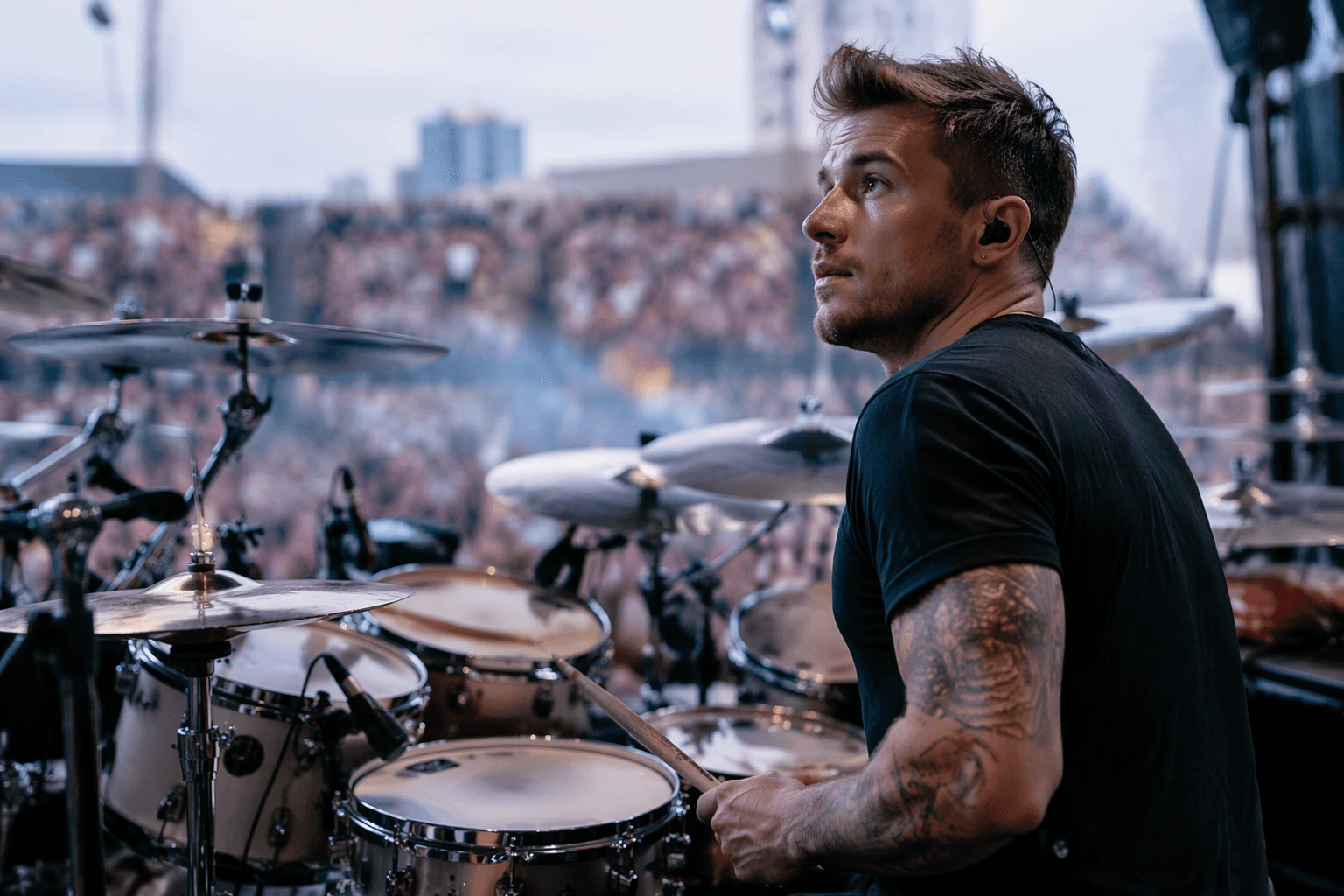
Josh Devine’s career reads like a clean blueprint for how drummers actually get work now. He started with covers online, turned those clips into real-world connections, and kept his playing flexible enough to jump from session work to pop stadiums without losing his identity. Speaking ahead of The UK Drum Show 2026, set for 24 to 25 October at Exhibition Centre Liverpool in Liverpool, England, he makes the case that visibility, timing, and adaptability still beat wishful thinking.
From online covers to actual calls
Devine says the starting point was simple: upload drum videos to YouTube, link them through MySpace, and keep putting the playing where people could find it. That matters because it shows the first job of a modern drummer is not just to play well, but to present the playing in a way that travels. If nobody can see what you do, nobody can hire you for it.
The early breakthrough in his story came through a local songwriter, Charlie Drew, who opened doors to live sessions and work connected to Skepta. That is the part a lot of players miss when they think career growth is all about one big viral clip. Devine’s path is more grounded than that: one useful relationship led to the next, and the work started stacking up in a way that made him more than just an online player. He was already getting attention through drum competitions and endorsements before the real pop break arrived, which tells you the online side was one piece of a wider credibility package.
Why networking mattered more than noise
An earlier interview adds another crucial detail: Devine said he was first contacted by a fixer-songwriter through Facebook. That is not glamorous, but it is exactly how a lot of working drummers get pulled into the room. The lesson is not to chase followers for their own sake, but to make sure your playing is visible enough that the right people, the fixers, writers, and bandleaders, can spot it when they need it.
That old interview also makes clear that Devine’s background was more rock and metal, which only sharpens the point. He was not selling himself as a one-trick pop specialist. He was showing enough command, feel, and versatility that someone could imagine him in a different lane entirely. If you want the practical takeaway, it is this: you need a public face that says, “I can do the gig,” even when your roots are somewhere else.
The One Direction leap was bigger than anyone expected
The real scale jump came with One Direction, and Devine’s own description of how it happened is the kind of thing players should study closely. The job started as a TV mime appearance on “Red or Black,” then turned into an audition, and then became a touring slot. What looked like a one-off television task became the gateway to one of the biggest pop jobs in the world.
Devine said he expected the run to be just one UK tour. Instead, it expanded internationally and then into stadium territory, with audiences of roughly 70,000 to 80,000 people a night. The official One Direction tour archive backs up that scale, documenting the band’s 2015 stadium and arena dates across Europe, North America, Asia, and Africa. For a drummer, that is not just a bigger paycheck. It is a full stress test of timekeeping, endurance, consistency, and nerves.
The emotional side of that story matters too. Devine has talked about the pressure that came with the exposure, including intense fan attention and a major loss of privacy. People learned hotel room locations, and even family members suddenly saw follower spikes. That is the part nobody puts on the audition flyer, but it is part of the deal when a drummer steps into a world that large. You are not just ready to play the parts, you are ready to survive the machine around the parts.
What big auditions really demand
The smartest lesson in Devine’s story is how little of it depends on luck alone. The One Direction opportunity may have started as a TV mime appearance, but the handoff from one role to the next depended on being ready for the next ask. That means your audition prep cannot stop at nailing the parts. You need enough range to handle a different artist, enough discipline to adapt fast, and enough confidence to walk into a room already acting like the gig could be yours.
His career also shows how useful it is to be known for more than one lane. Devine’s current website lists credits including One Direction, Skepta, and Evaride, and that spread tells you he is not locked into a single story. For an aspiring drummer, that is the real goal: build a profile that says you can handle pop, session work, and whatever else comes next without sounding generic in any of it.
Tech is a tool, not the job
Devine’s more recent comments on AI are refreshingly unsentimental. He uses tools like Suno as aids for practice, inspiration, and getting past creative blocks, not as replacements for musicians. That is the sane position, and it is probably the only useful one for working players right now. Tech can help you generate ideas, keep your ears moving, and speed up the early part of the creative process, but it cannot fake touch, pocket, or the ability to make a song feel alive.
His public Suno profile shows 76 songs, 5.3K followers, and 218 remixes inspired, which underlines the point that he is actively experimenting rather than lecturing from the sidelines. The important part is not that he is chasing every new toy. It is that he is using the tool without letting the tool define the musician. That balance, curiosity without surrender, is exactly what a modern drummer needs.
Josh Devine’s story still comes back to the same simple sequence: make the covers visible, turn one connection into the next, and be ready when the harmless-looking gig turns into a stadium run. The platform may have changed since the MySpace days, but the logic has not. If your playing is strong, your presence is clear, and your ears stay open, the jump from clips to calls can still happen.
This article was produced by Prism’s automated news system from verified source data, official records, and press releases, then run through automated quality and moderation checks before publishing. The system is built and supervised by the people who set the standards it runs under. Read our full AI policy.
Know something we missed? Have a correction or additional information?
Submit a Tip