Dwarf Fortress militia guide shows how to survive deadly sieges
A weak militia turns a rich fortress into dead dwarves fast. The fix is a real chain of command, trained squads, and gear that covers every body part.
A fortress can look prosperous right up until the first siege cracks it open. Alocrin’s Hammerwings combat report makes the point bluntly: a properly trained and equipped military was not a luxury, it was the difference between survival and a slaughter by necromancers, goblins, and forgotten beasts. That is the real lesson of any serious Dwarf Fortress militia plan, because wealth only matters if the fortress is still standing when the enemy reaches the gate.
Build the militia before you need it
Dwarf Fortress is a single-player fantasy game set in a randomly generated, persistent world, and Bay 12 Games has said it has been in development on and off since 2002 and consistently since 2006. That long arc matters because the game rewards planning long before danger arrives. The Steam release on December 6, 2022 brought the fortress builder to a much larger audience, but the core lesson stayed the same: defense is not decoration, it is infrastructure.
The first mistake many new players make is treating the military as an afterthought. The game’s combat structure is built around squads, which are the basic military unit that carries out orders, and that means your fortress does not have a “militia” until you create a structure that can actually respond. If the first goblin wave is already on the map and you are still assigning roles, the fortress is behind.
Get the chain of command right
Start with a Militia Commander, because that rank is required to expand the militia with new squads and assign militia captains as squad leaders. That is not an administrative flourish, it is the backbone of how orders move through the military. Without it, you have armed dwarves, not a functioning defense.
Pick at least one dwarf with real combat skill and proper equipment before you try to grow the squad. That veteran can help train others and gives the fortress an immediate body on the line while the rest of the militia catches up. Useful military attributes include fighter, dodger, wrestler, observer, and discipline, and those stats are worth more than raw enthusiasm when the hallway fills with invaders.
Do not ignore the practical side of roster choice either. The guide’s advice is simple and sensible: if you have a dwarf with combat skill, use that dwarf; if you do not, start with dwarves who are not essential to civilian production. A fortress that strips its only brewer, mason, or mechanic for a shaky front line can defeat itself before any siege banner appears.
Train like the siege is already coming
Military training happens in barracks, and the game gives you several ways to use that space: group demonstrations, individual training, sparring, and archery-range practice. That variety matters because a squad that only exists on paper will break the moment real pressure hits. A dwarf can stand in uniform all year and still fail if the squad never gets enough time together.
Squad training and sparring require multiple dwarves, which is one of the easiest traps to miss. If you try to run a military with one lonely recruit and no training partners, the system simply will not function the way you want. Put bluntly: if your dwarves never practice together, they will not fight together.
That is why discipline belongs on the same checklist as weapons and armor. The game’s training loop is designed around repetition and shared routines, so the fortress that schedules training early will be far less likely to collapse in the first real fight. A veteran in the squad is more than a strong body, because the experienced dwarf also gives the others a chance to learn before the enemy arrives.
Equip for survival, not looks
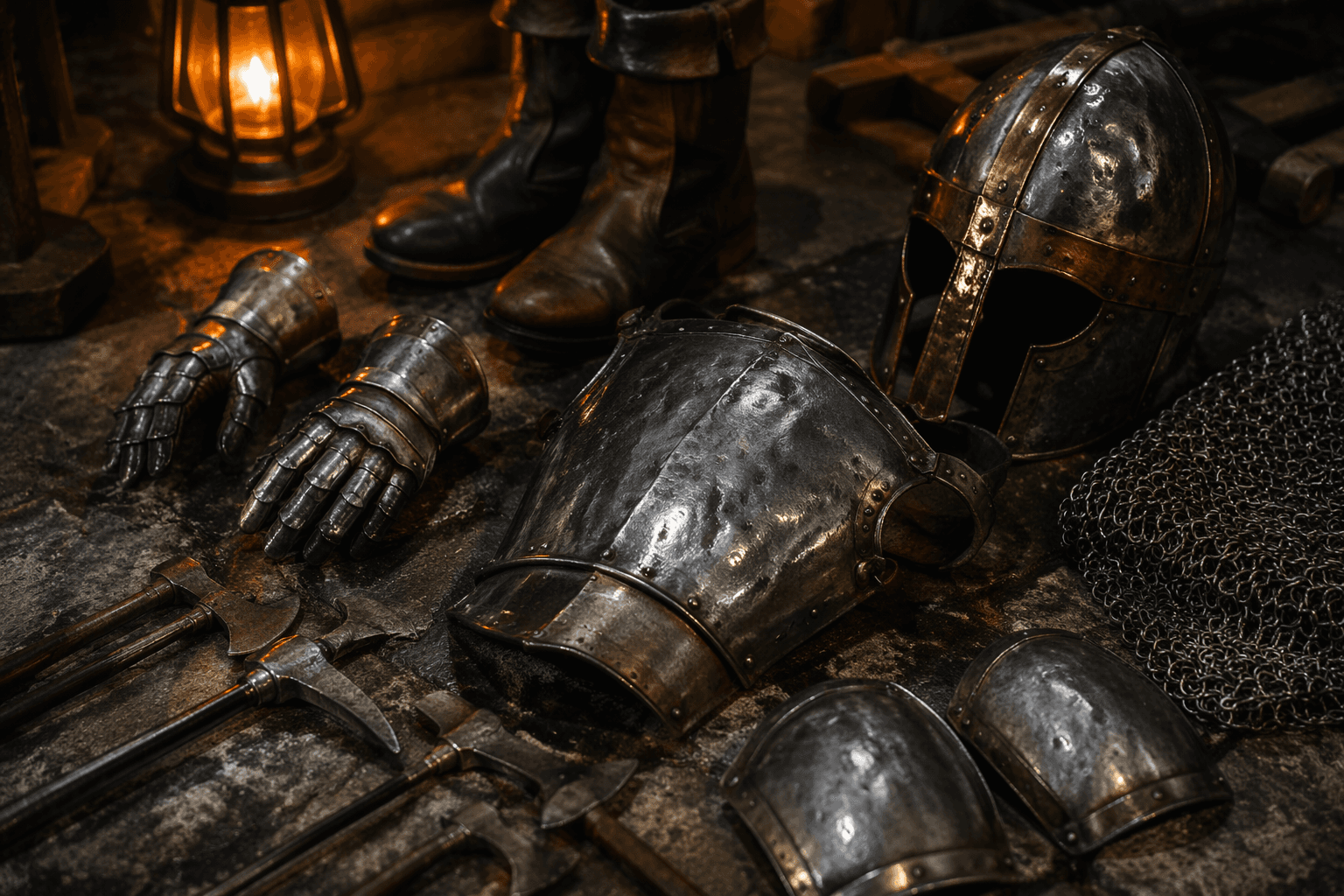
Armor in Dwarf Fortress is not a single full suit. It is a collection of separate pieces that cover different body parts, which is exactly why helmets, breastplates, and shields matter so much. A fortress that hands out one or two token items and calls the unit ready is gambling on luck instead of defense.
That equipment logic should shape every military order you make. If a dwarf is wearing a helmet but has no breastplate, or a shield but no meaningful protection elsewhere, the squad is still exposed in ways that matter once weapons start landing. The point of the armor system is layered survival, not ceremonial uniformity.
Weapons matter too, and axes or swords are strong early choices because they fit the guide’s practical approach to melee defense. But the weapon is only one piece of the setup. If the dwarf reaches the battlefield untrained, underarmored, and unsupported, even the right blade will not save the hallway.
Do not treat marksdwarves like a side project
Marksdwarves turn the fortress into a combined-arms operation instead of a single wall of melee bodies. That matters because ranged defense changes how you handle sieges, hall control, and engagement distance. A fortress that can shoot back has more answers when invaders press the front door.
The marksdwarf system has its own learning curve. The advanced training guide says archers can spar once they reach Competent Fighter skill, and that setup depends on weaponry, quivers, bolts, archery ranges, uniforms, positions, ammo handling, and squad training orders. That is a lot of moving parts, but it is also the reason ranged troops work when they are built correctly.
This is where many beginners get caught. They make crossbows, assign a few dwarves, and assume the rest will sort itself out. In practice, marksdwarves need the same discipline as melee troops, plus the logistics to keep them supplied and the training schedule to keep them useful.
The bigger game makes defense non-optional
Dwarf Fortress has always asked players to learn systems that most games hide. The Steam edition added a tutorial and more helpful guidance, which made the game easier to enter without changing how much there is to master. That tension is part of why the fortress military matters so much: the game will reward a builder who understands the difference between a barracks and a real defense.
The release also brought serious attention to the game’s scale. Tarn and Zach Adams said they made $7.2 million in January 2023 after the Steam launch, a figure that shows how many new players stepped into the fortress builder’s world. A larger audience does not make sieges gentler, though, and it does not forgive the same mistakes that have always doomed unprepared forts.
A fortress fails in the same way over and over again: no commander, no trained squad, no real armor, no archery plan, and no time left once the enemy starts breaking doors. Hammerwings survived because its military was ready when the story turned ugly, and that is the standard every new fortress has to meet before the next siege tests the walls.
This article was produced by Prism’s automated news system from verified source data, official records, and press releases, then run through automated quality and moderation checks before publishing. The system is built and supervised by the people who set the standards it runs under. Read our full AI policy.
Did this article answer your question?