Dwarf Fortress roadmap teases armies, magic, and diplomacy overhaul
Dwarf Fortress is lining up armies, diplomacy, and magic for the next big swing, while map rewrites and site building point to deeper world simulation.

The next stretch of Dwarf Fortress development is aiming straight at the parts of the game that can change a fortress run in motion: armies, diplomacy, and siege behavior. Bay 12 Games is also signaling longer-haul work on site building, map rewrites, villains, and world simulation, which means the future is still being built as a connected stack rather than a set of isolated features.
The next big shift starts with armies and sieges
Bay 12 says the current Army Arc is focused on getting migrants and armies moving across the world map again, improving military organization and command structure, and letting civ and site leaders organize armies during world-generation wars. The most dramatic step is the one that matters in fortress mode: dwarf-mode sieges are intended to come from actual armies on the map instead of abstracted events. That would change siege play from a mostly local defense problem into something tied to the broader world state, with enemies arriving because the simulation moved them there.
The roadmap also points to finer control over squads, including the ability to send part of your army out onto the world map, launch attacks on enemy sites, fight enemy armies in non-site locations, and eventually let armies travel in Adventure Mode. For players, that means military decisions could stop being a fortress-only concern and start shaping the wider campaign map, especially once movement and command are fully stitched back together.
The Siege Update is already changing how forts get threatened
The Siege Update, released in November 2025, laid the groundwork by focusing on invasion planning, overcoming fortress defenses, and defensive siege engines. Bay 12 described it as a revamp of how enemies invade forts, with attackers able to dig and build bridges, and later patch work made invaders smarter and gave them more active rams. That matters because it moves siege play toward active problem-solving rather than waiting for a force to appear at the map edge.
The update trail also shows that siege work is not a one-off. The next major post-siege release is slated to focus on magic, armies, and diplomacy, which makes the military system the bridge between what is already live and what is still being built. In practical terms, that makes army control the most immediate frontier for moment-to-moment gameplay, because it affects how players defend, counterattack, and read the map as a battlefield.
Diplomacy is moving from flavor to a real pressure system
The diplomacy work attached to the next release is broader than simple peace talks. Bay 12’s plans include cleaning up siege negotiations, sending messengers to other sites, and letting players see existing petitions. It also covers using outside armies to muster in the hillocks, receiving warnings from scouts, and engaging or delaying sieging armies, which ties diplomacy directly to military response instead of leaving it as a background layer.
Patch 53.14, released on May 13, 2026, already added messenger tasks that can make peace and improve or open trade relations. The same diplomacy system also lets messengers make peace, declare war, make contact, improve trade, and seek alliances if the fortress has a monarch. That is a meaningful shift for established forts, because diplomatic contact is becoming a set of actions that can reshape trade, war, and alliance status rather than a passive record in the world log.
Adventure Mode site building is the next bridge between modes
The roadmap on the Dwarf Fortress Wiki points to Adventure Mode site building as the first major Adventure Mode feature after launch, with camp founding, building, cross-mode play, and crafting following after that. Bay 12’s long-term development page also says future releases will include site building and maps, which shows that Adventure Mode is not being treated as a side branch. It is being folded into the same simulation network as fortress mode and world generation.
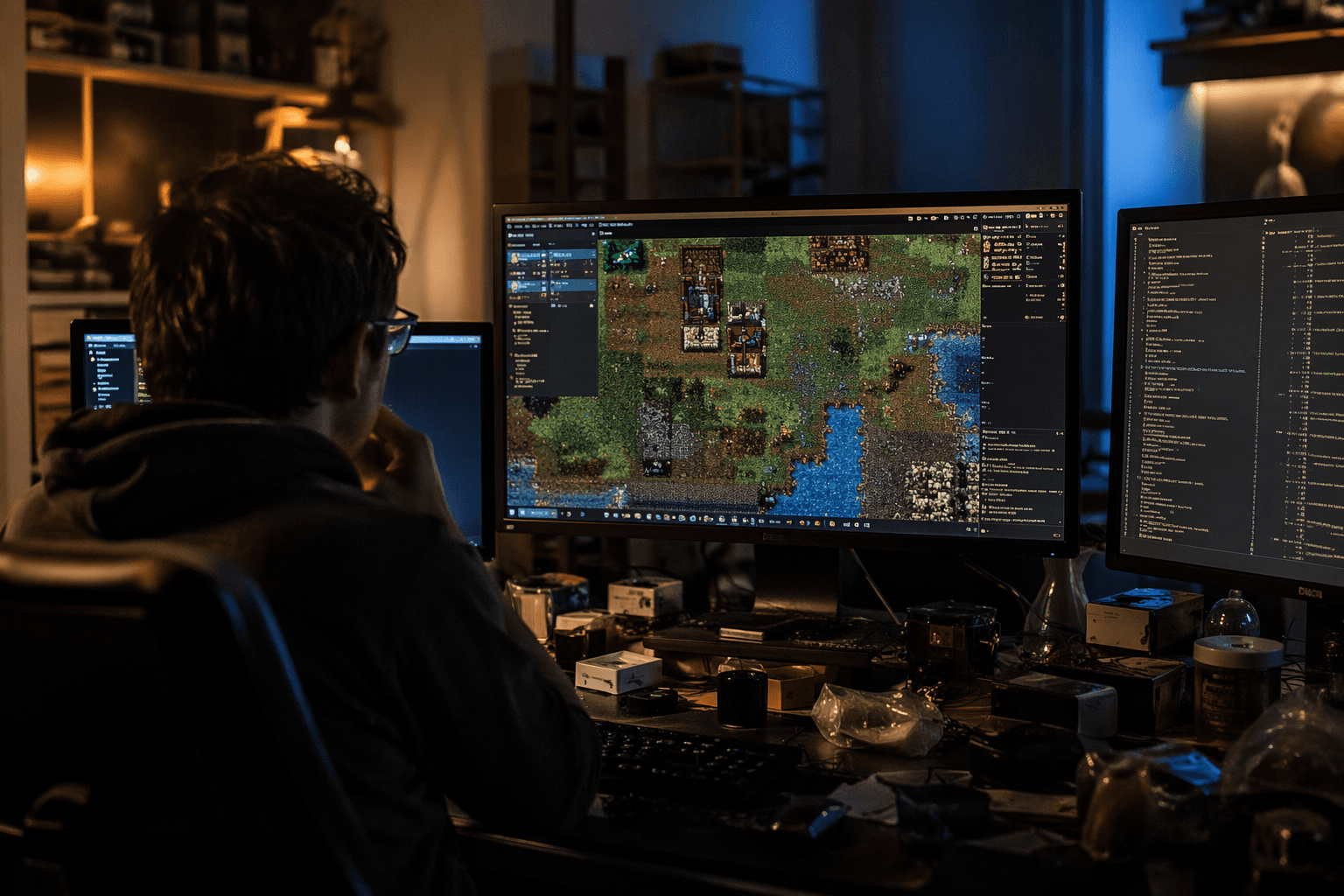
That matters because site building is where the game starts letting a single player action become a persistent place in the world. A camp, a built site, or a crafted object in Adventure Mode can carry consequences back into the larger simulation, and cross-mode play suggests those consequences will not stay locked in one save style. For players who split time between fortress and Adventure Mode, this is the track that could change how the two modes finally talk to each other.
Map rewrites are the quietest change, and possibly the deepest
Post-siege improvements also point to map rewrites and additions, with the goal of making generated spaces and regions more dynamic and reactive, especially underground, while still changing the surface world as needed. That is the kind of work that does not always show up as a flashy feature, but it tends to affect nearly everything that happens on the map. If the terrain system becomes more responsive, then armies, site building, underground civs, and even creature behavior all get a more flexible stage to act on.
The same roadmap also keeps pushing villains releases, myth and magic work, world changes through covens and religion, starting scenarios, and civilization improvements. Those changes are less about one fight and more about how the world remembers itself. In a game that already treats history as a living record, that kind of rewrite can matter more than a single new unit type because it changes the simulation underneath every run.
What is next, and what is still a wait
Bay 12 says 2026 should bring many items from the roadmap, but it has not given firm dates or timeframes. That is important for long-time fans reading the list as a promise sheet, because the development page is explicitly incomplete and does not represent everything the studio wants to do. It is a working view of the project, not a locked release plan.
Even so, the order is clear enough to read the priorities. Army systems and diplomacy are the near-term gameplay changes that should be felt fastest in fortress play. Site building and cross-mode play are the next big bridge. Map rewrites, villains, religion, and economy work are the deeper simulation changes that will probably take longer to surface, but could end up mattering even more once they do.
The project’s scale explains why the roadmap keeps growing
Dwarf Fortress has been in development on and off since 2002 and consistently since 2006, and Bay 12 describes it as a long-term fantasy world simulator meant to span multiple games. That framing explains why the roadmap reads like a living list instead of a tidy patch schedule. The studio is not just adding content, it is rebuilding systems that connect fortress play, world map play, and Adventure Mode into one simulation stack.
The commercial release in December 2022 helped make that possible. The premium version debuted on Steam and itch.io, sold 160,000 units in 24 hours, reached 500,000 copies by the end of 2022, and hit 606,342 copies in its first two months, including 5,000 on itch.io. Later reporting put it above 800,000 copies by April 2024 and over 1 million Steam sales by April 2025. The June 25, 2026 patch, which added a hundred extinct animals and matching animal people, is a useful reminder that the game is still shipping smaller content beats even while the larger systems work continues.
For fortress players, the practical read is simple: armies and diplomacy are the features most likely to change what you do next session, while map rewrites, villains, and world-scale systems are where the bigger simulation payoff is likely to land later. The road ahead is still long, but the shape of it is clearer now, and it is pointing toward a world where sieges, trade, and travel all come from the same living map.
This article was produced by Prism’s automated news system from verified source data, official records, and press releases, then run through automated quality and moderation checks before publishing. The system is built and supervised by the people who set the standards it runs under. Read our full AI policy.
Did this article answer your question?