Dwarf Fortress Wiki maps a sprawling modding ecosystem
Dwarf Fortress modding now stretches from tiny token edits to Lua and shared tooling, and the wiki lays out a clear ladder into the scene.
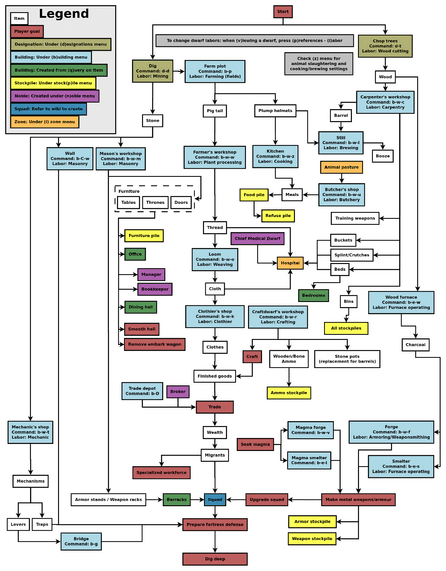
Dwarf Fortress modding is no longer a single dark art. The wiki now presents it as a broad, layered practice that reaches into graphics, items, creatures, plants, language, body parts, materials, workshops, reactions, and more. For anyone opening the door for the first time, that matters: the game’s complexity does not hide modding so much as give it room to branch into small fixes, targeted tweaks, and full-blown content revamps.
The first rung: raws, tokens, and the smallest useful change
At the foundation of the scene are raw files and tokens. The Dwarf Fortress Wiki’s token pages make the logic plain: tokens live in the raws, and those raws can be modified easily, which is why modders can create and distribute new content without rebuilding the game from scratch. The wiki’s modding portal leans into that reality by pointing straight to token references, examples, guides, troubleshooting pages, and mod formats, so the path from curiosity to first edit is visible instead of hidden.
That structure is the clearest sign that Dwarf Fortress modding is granular by design. A creator is not just swapping a texture and calling it a day. In practice, the work often means adding or removing tokens from text files, then watching how those changes ripple through the simulation. A small raw edit can alter a creature, a plant, a workshop, or a reaction chain, which is why even a modest tweak can feel like it changed the shape of a fort.
What makes a mod portable
Once a mod leaves the personal experiment stage, packaging becomes part of the craft. The official Bay 12 Games modding guide says mods no longer live inside save files in newer versions, which means a modded save has to be installed on every computer where that save will be loaded. That one shift changes the social shape of modding too: sharing becomes a matter of distribution and compatibility, not just making a change in isolation.
The same guide gives the basic container language that every new modder has to learn. Mods include an `info.txt` file and one or both of the standard `objects` and `graphics` folders. That simple packaging model explains why the ecosystem has room for both raw-only edits and visual mods, and it also explains why the wiki’s publishing help for Steam Workshop matters so much. If you want other players to actually use what you made, the structure of the package matters as much as the idea behind it.
That is also where DFFD fits in. The archive serves as a dedicated file repository for Dwarf Fortress mods, utilities, pregenerated worlds, and more, giving the community a central place to store and browse the tools that make the scene work. A mod ecosystem stays alive when it has somewhere to live after the first upload, and DFFD gives Dwarf Fortress that shelf space.
Lua scripting opens a deeper layer
The next rung up the ladder is Lua. The wiki identifies Lua scripting as a feature of Dwarf Fortress’s modding system, and notes that it arrived experimentally in version 51.06 before being incorporated into 52.01. That history matters because it marks a shift from mostly file-based edits to behavior-level changes, where modders can reach into systems that used to feel out of bounds.
Bay 12 Games says the Lua update affects procedurally generated objects such as forgotten beasts, divine curses, divine items, necromancers and their lieutenants and experiments, evil weather, and related systems. Those are not minor edge cases. They are some of the game’s most recognizable sources of weirdness, which means Lua gives modders a way to shape the drama that makes a fortress feel uniquely Dwarf Fortress in the first place. The Steam community announcement that put the Lua update on the main branch only underlines how far this layer has moved from experimental novelty to standard part of the toolkit.
A community built around help, not just files
The wiki does more than list mechanics. Its modding portal acts like a hub, linking to the official DFRaws repository, a wiki mirror, Steam Workshop publishing help, and the places where players actually ask questions. The official modding subforum on the Bay 12 Forums is part of that web, and so are the Kitfox Discord channels. That mix tells you something important about the culture around the game: modding is treated as social infrastructure, not just technical labor.
The result is a scene that can support very different kinds of authors. One person can make a convenience mod that smooths out a rough edge. Another can rebalance the economy, adjust content for flavor, or overhaul whole systems. The wiki’s broad coverage, the Bay 12 guide’s packaging rules, Lua’s reach into generated content, and DFFD’s archive all reinforce the same point: Dwarf Fortress has enough moving parts to reward both tiny interventions and ambitious rebuilds.
For a newcomer, that is the real map. The ladder starts with tokens in raws, climbs through `info.txt` and folders that make a mod portable, and keeps going into Lua and shared community tools. What used to look like one opaque skill now reads like a spectrum, and the game’s famous complexity is exactly what makes that spectrum possible.
This article was produced by Prism’s automated news system from verified source data, official records, and press releases, then run through automated quality and moderation checks before publishing. The system is built and supervised by the people who set the standards it runs under. Read our full AI policy.
Did this article answer your question?