Duotone Foil Assist debate, 2-blade glide or 3-blade thrust?
The 2-blade is the clean-glide choice, but the 3-blade gives the harder hit when you want more bite off the line, in weak surf, dock starts, or for heavier riders.
The short answer
If you want the Duotone Foil Assist to disappear under your feet and keep the ride feeling like foiling, the 2-blade is the one that makes sense. If you want a more obvious shove, stronger bite, and a setup that feels more locked in, the 3-blade is the better call.
That is the real decision here, and Tony Jones gets straight to it. This is not about turning a foil board into a full eFoil, because Duotone’s whole pitch is lighter assistance, not a full-power replacement. It is about choosing how much the system helps when you need it, and how much of the glide you are willing to give up to get that help.
What Duotone is actually building
Duotone positions Foil Assist as a lightweight, agile hybrid system with a mast-mounted motor and propeller. The point is to get you going earlier, help you hold momentum, recover from mistakes, and stretch a good session without killing the feel that makes foiling addictive in the first place.
The hardware matters because it is not just a motor bolted onto a board. The Foil Assist Set AL uses an 84 cm aluminum eMast, and Duotone says the motor pod is integrated into the mast and set 17 cm below the top plate to reduce drag. That low-profile layout is part of why the system can stay useful without feeling like a lump of machinery hanging off the board.
Duotone also makes the limits clear. The Foil Assist is meant to offer less power and runtime than an eFoil, and the company lists average battery runtime at 30 to 60 minutes. Two batteries are required to run the system, which tells you exactly what kind of tool this is: a short, focused assist package, not an all-day throttle machine.
Why blade count changes the ride
The blade choice is not a cosmetic tweak. It changes thrust, response time, drag during unpowered glide, and the overall balance between a helping hand and a push you can feel through the board.
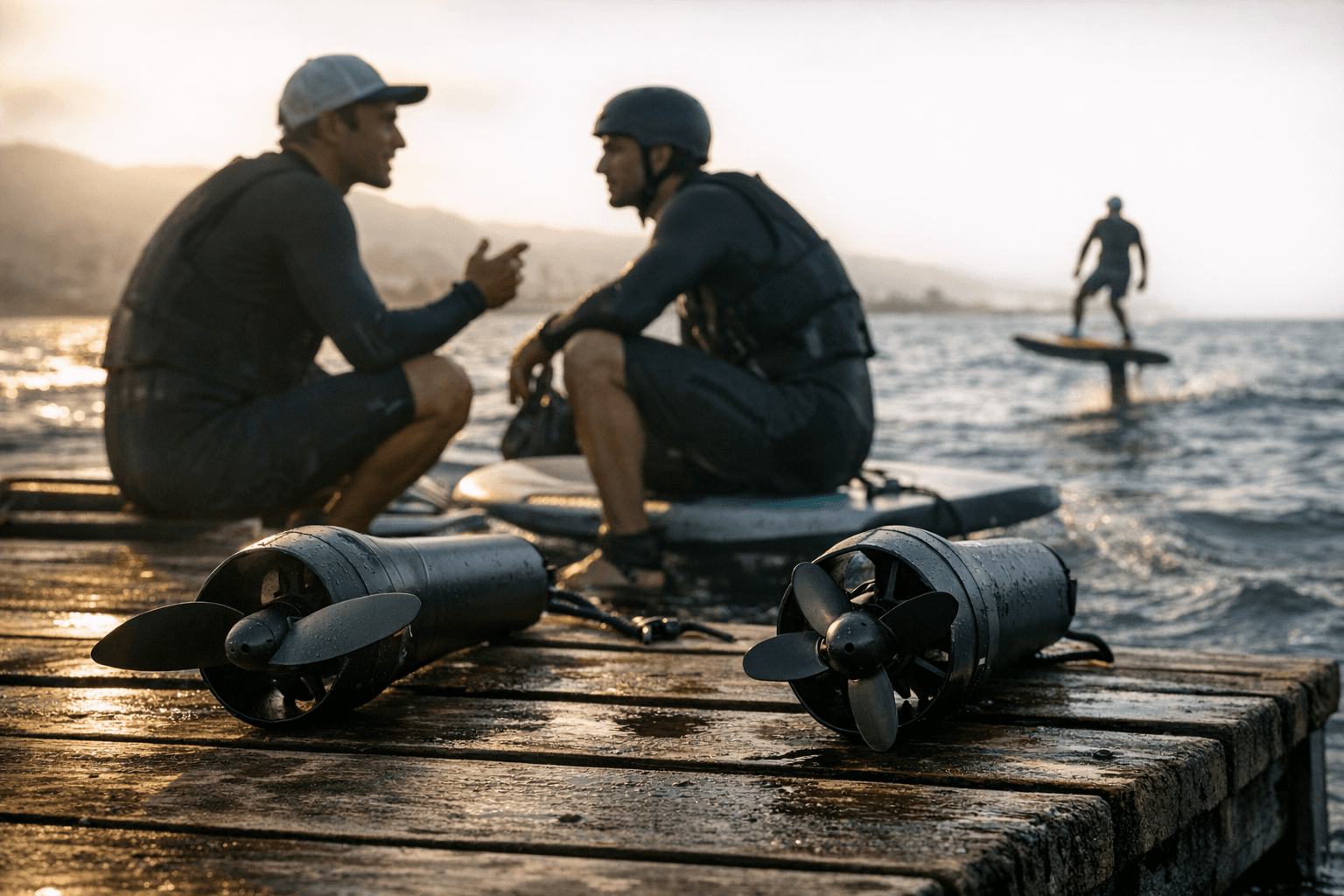
The 2-blade option is the cleaner, lower-drag setup. Duotone says the two-blade folding propeller reduces drag for effortless glide on the wave, and that is the key phrase. When the assist is subtle, the board carries its natural feel better, which is exactly what you want when you care more about glide than force.
The 3-blade option is the opposite end of that tradeoff. The SUP Company describes it as the more performance-oriented setup, with stronger drive and a more locked-in feel. Duotone’s broader propeller language also points to the power blades, made from aluminum, as the maximum-performance option, so the intent is clear: this is the blade count for riders who want more bite and a more immediate thrust sensation.
Which setup fits your riding
If your sessions are built around small-wave dock starts, the 3-blade is the safer bet. That extra bite helps when the water is messy, the takeoff is short, or you want the board to answer faster when you need to pop onto foil. It is the choice that makes the assist feel active, not shy.
If you are a heavier rider, the 3-blade also starts to make sense quickly. More thrust and a more locked-in feel usually mean less hesitation when you are trying to get the foil engaged, especially in flatwater or marginal surf where every bit of drive matters.
If you care most about longer sessions and preserving the pure glide of the foil, the 2-blade is the smarter move. Lower drag means less of that propeller-induced brake feeling when you are unpowered, and that matters once you are already up and riding and want the assist to fade into the background.
If tighter turning is part of your style, the 2-blade has a real case too. The cleaner feel and more natural glide let the board stay freer underfoot, which makes the system feel less like it is steering the session and more like it is just taking the edge off the hard parts.
A simple way to think about it:
- 2-blade: cleaner glide, lower drag, more natural feel
- 3-blade: stronger bite, more immediate thrust, more locked-in response
The setup details riders overlook
The prop itself is only one part of the equation. Duotone’s Foil Assist mounts to standard US foil tracks, but it requires a fuselage adapter, so compatibility is not an afterthought. The adapter ecosystem covers Duotone, F-One, Armstrong, Gong, Axis, Lift, North, Code, Sab, AFS, and KT, which makes the system much easier to drop into an existing quiver.
That matters because this is a highly integrated setup, not a random bolt-on. Duotone’s current system details also separate the eMast, battery, and charger components, which reinforces the point that riders need to think about the full package, not just the prop. Even the battery choice is built around practicality, with air-travel-friendly LiHV batteries and the 30 to 60 minute runtime window that keeps the use case focused.
Where Foil Assist fits in the lineup
Duotone is clearly aiming Foil Assist at a wider range of real-world foiling than just one discipline. The company points to weak surf, light-wind winging, prone foiling, and downwind bumps as the places where this system earns its keep. The Cruise mast variant is aimed at entry-level and intermediate riders, especially in flatwater and small-wave conditions, which tells you this is about opening up access without stripping away the foil feel.
That is why the blade debate matters so much. In a system designed to give just enough help, the propeller decides whether the assist feels like a gentle nudge or a meaningful shove. The 2-blade is the better fit when you want glide and stealth. The 3-blade is the move when you want thrust, control, and a more assertive launch.
Know something we missed? Have a correction or additional information?
Submit a Tip