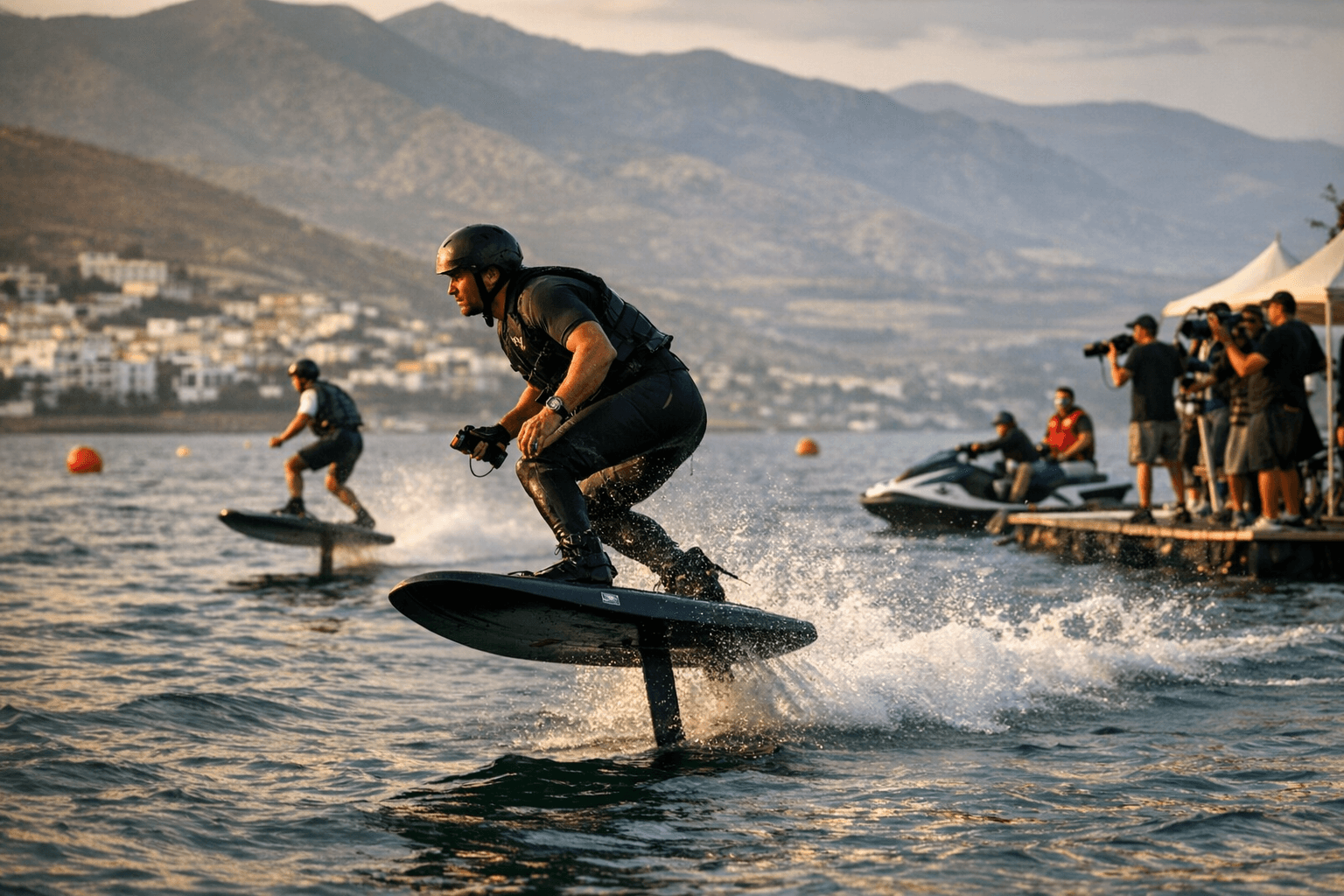
eFoil Leash Debate Resurfaces as Retractable Technology Changes Safety Calculus
Retractable leash designs from Oceanus and EFS are challenging the "jump away from the board" doctrine that has defined eFoil safety since the sport's early days.

The question of whether to leash your eFoil has never had a clean answer, but it just got considerably more complicated. eFoil Solutions published a detailed breakdown of the for-and-against arguments on April 8, putting retractable leash technology at the center of a safety conversation the industry has been circling for years.
The original objections were legitimate. eFoil boards carry significantly more mass than traditional surfboards, and a recoiling leash can slingshot that weight back toward a fallen rider with enough force to cause serious injury. Add sharp masts and wings to the mix, plus the real possibility of leash line entangling with a propeller or drive unit, and early instructors had good reason to drill one rule above everything else: jump away from the board. That doctrine kept riders clear of the hardware, but it also meant boards drifting into rocks, washing toward bystanders, and getting lost in current.
The calculus started shifting in 2022, driven by two specific developments: the arrival of folding-prop drives from Lift and Flite, and the growth of wave-riding eFoil sessions where a loose board becomes a genuine hazard. Folding props addressed the entanglement concern directly by collapsing under reverse load, removing the most dangerous variable in the leash-near-a-drive equation.
Retractable leash systems moved in to fill the gap. Oceanus built the original design, and EFS developed updated versions, both working around the same engineering priorities: internal coil and spool mechanisms that extend under load rather than snapping taut, shock-cord dampers that absorb peak force during a fall, and elevated line geometry that keeps slack out of the water where a drive could pick it up. Those three features address, point by point, the classic objections that drove the no-leash consensus in the first place.
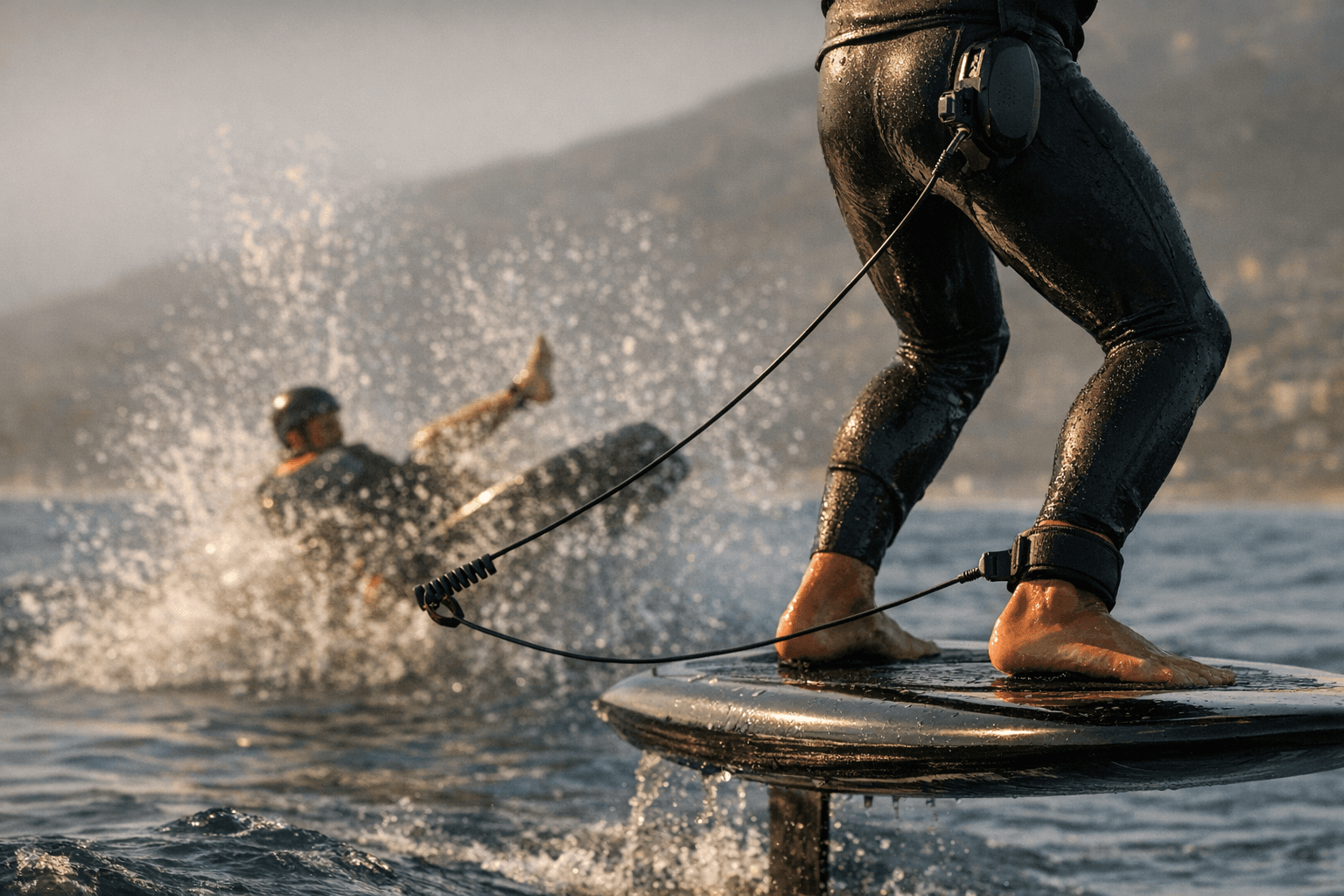
eFoil Solutions frames the decision as context-dependent rather than universal. In crowded rental bays and sheltered demo lagoons, a leash keeps boards retrievable and reduces damage risk; in wave zones, it can be the difference between recovering your board and watching it get destroyed on rocks. Wearable configurations range from ankle to waist belt to impact-vest integration, with no single option optimal across all disciplines and conditions.
The company's analysis includes one clear position: "In rough water, strong current, or offshore conditions, staying connected to your board can be a major safety advantage." But it also stresses that a leash policy without training protocols and rehearsal can increase risk rather than reduce it. That framing puts pressure squarely on operators and instructors to build leash use into fleet checklists and safety briefings rather than treating it as optional gear.
As folding-prop technology matures and retractable designs become more widely available, the eFoil industry appears to be converging on a practical middle ground: retractable leash plus operator education, applied selectively based on conditions. It is a more honest answer than the blanket prohibition that defined early eFoil safety culture, even if it demands more from the people running the programs.
Know something we missed? Have a correction or additional information?
Submit a Tip