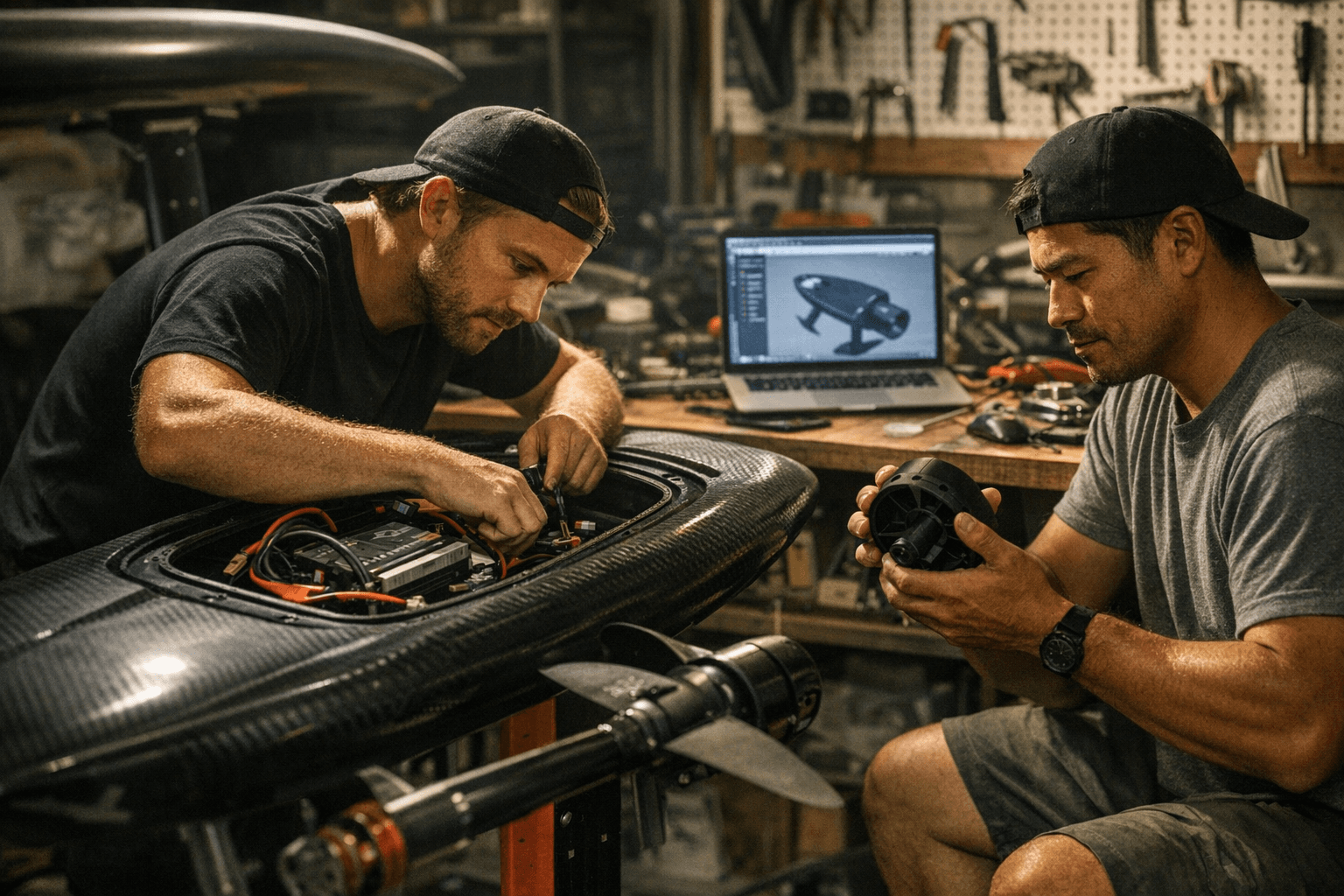
Foil Drive Mandatory Firmware Update Adds Over-Rev Protection, Smoother Motor Profiles
Foil Drive's mandatory firmware caps free-spin RPM at ~4,200-4,300 to prevent motor damage, and it's required before the new 3-blade prop hub ships this April.

Foil Drive's latest firmware release is mandatory before your next session. Skip it and your motor is one water-exit away from a free-spin excursion that the company specifically engineered this update to prevent.
The update, detailed in a Worthing Watersports advisory published April 2, addresses a real and recurring failure mode: when a Foil Drive unit clears the surface during a fall or hard pump, the unloaded motor can spike to destructive RPMs. The new over-rev protection caps free-spin RPM at roughly 4,200-4,300, cutting in before the motor reaches damaging thresholds. The requirement applies across all three current platforms: Fusion, MAX and Slim.
Beyond the limiter, the release adds battery ON/OFF control through the app, which reduces accidental drain between sessions and removes the need to physically cycle the unit at the beach. The V3 controller gets refined long-press response and improved GPS accuracy in this build. For riders tuning tilt-assist setups, advanced pitch and roll sensitivity is now configurable, letting you match the system's behavior to your specific mast geometry, board volume and discipline.
Getting current is straightforward: update the Foil Drive app first, then connect your unit and push the firmware through the app's update prompt before taking the system on the water. Worthing frames this as the first configuration step after any new purchase, which signals how non-negotiable it is.
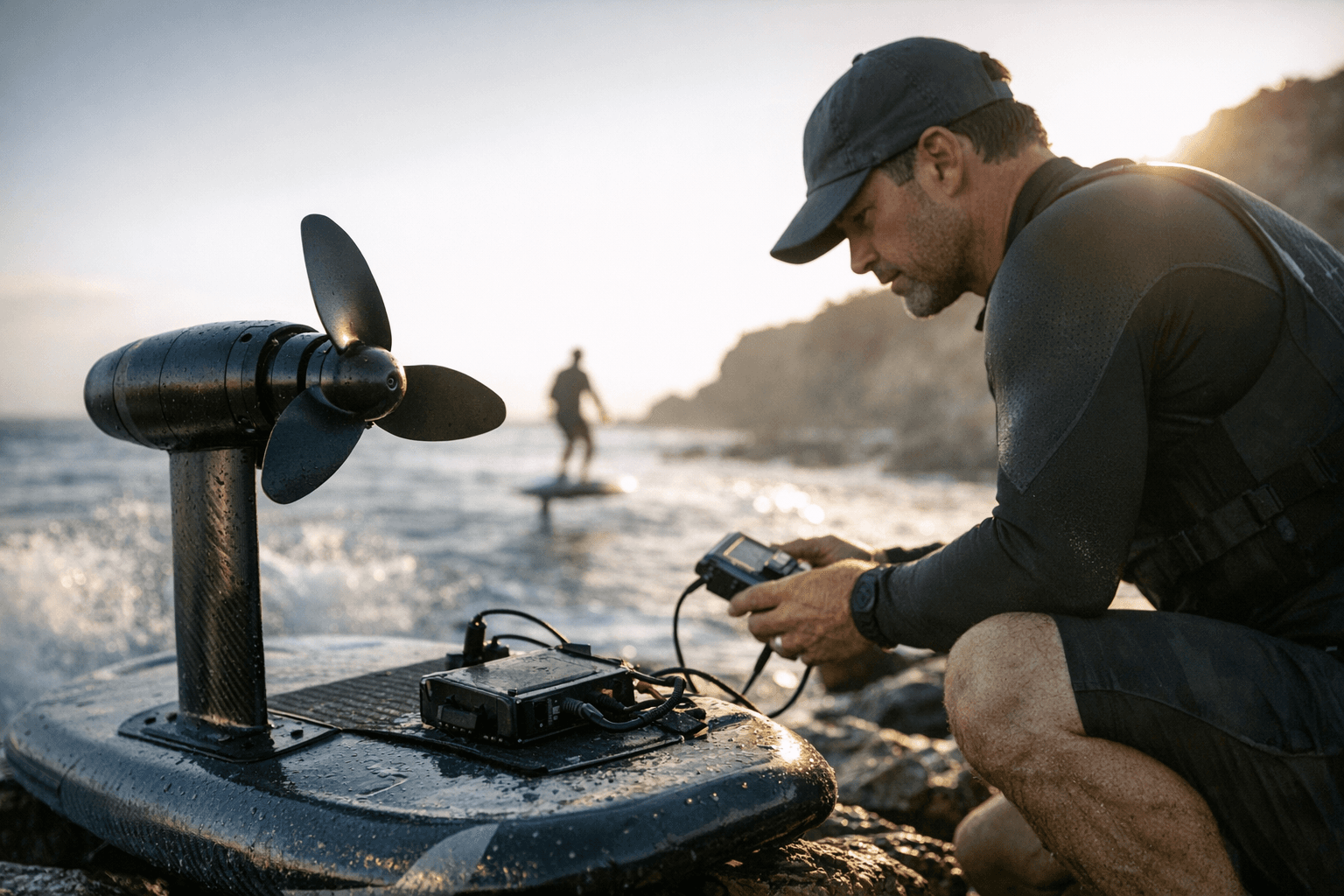
The update also unlocks compatibility with Foil Drive's new three-blade propeller hub, which has been reaching European and U.K. retailers since early April. The three-blade geometry is built around low-end torque and cleaner water entry, targeting the specific weak point of the existing prop when you're trying to lift a heavy rider, a high-volume freeride board or a large-area foil from a standing start. The trade-offs are predictable: more blade area means higher battery draw and a modest reduction in top-end speed, while cavitation resistance improves because the additional blade sustains flow during the transitional phase when part of the prop is briefly breaking the surface.
If you're running a MAX or Fusion on a board over roughly 5'8" with a high-aspect foil and struggling with pop-up under load, the three-blade hub directly addresses that problem. Fleet operators and rental shops will likely find the reduced stall incidents worth the marginal hit to speed and runtime. Lighter riders on responsive mid-size gear who already nail clean takeoffs on the existing two-blade should hold off; the current prop's higher top-end efficiency and lower current draw are still the better fit for that use case.
For anyone waiting on the prop, the firmware update is not optional in the meantime. Running an unpatched unit risks motor damage that voids warranty and ends sessions early, and at current repair costs, that's not a gamble worth running.
Know something we missed? Have a correction or additional information?
Submit a Tip