Foil Surfer's Guide to Composite Maintenance, Repairs, and Daily Checks
A nick smaller than your thumbnail can start a chain reaction that cracks a mast mid-session; here's exactly how to spot, triage, and fix composite damage before it grounds you.
Carbon fiber and fiberglass foil components are simultaneously the most impressive and most unforgiving materials in the sport. A fractured mast or delaminated wing root doesn't announce itself with a warning creak — it waits until you're generating speed on a swell, then fails fast. Getting systematic about composite care isn't overly cautious; it's what separates riders who keep flying from those who are waiting on a repair bench.
Why Composites Demand Attention
Foil wings, fuselages, and masts are typically built from carbon fiber, fiberglass, or hybrid laminates bonded to foam or hollow cores. That construction delivers an exceptional strength-to-weight ratio, which is why foils feel so alive underfoot, but it comes with a specific vulnerability profile. Impact damage causes delamination and core crush — problems that are invisible to a casual glance but structurally catastrophic. Chemically aggressive cleaners and prolonged UV exposure attack the resin matrix over time. The practical implication: early detection and conservative handling are the two levers that prevent a small ding from becoming a catastrophic failure at speed.
Daily and Weekly Checks
Visual Inspection
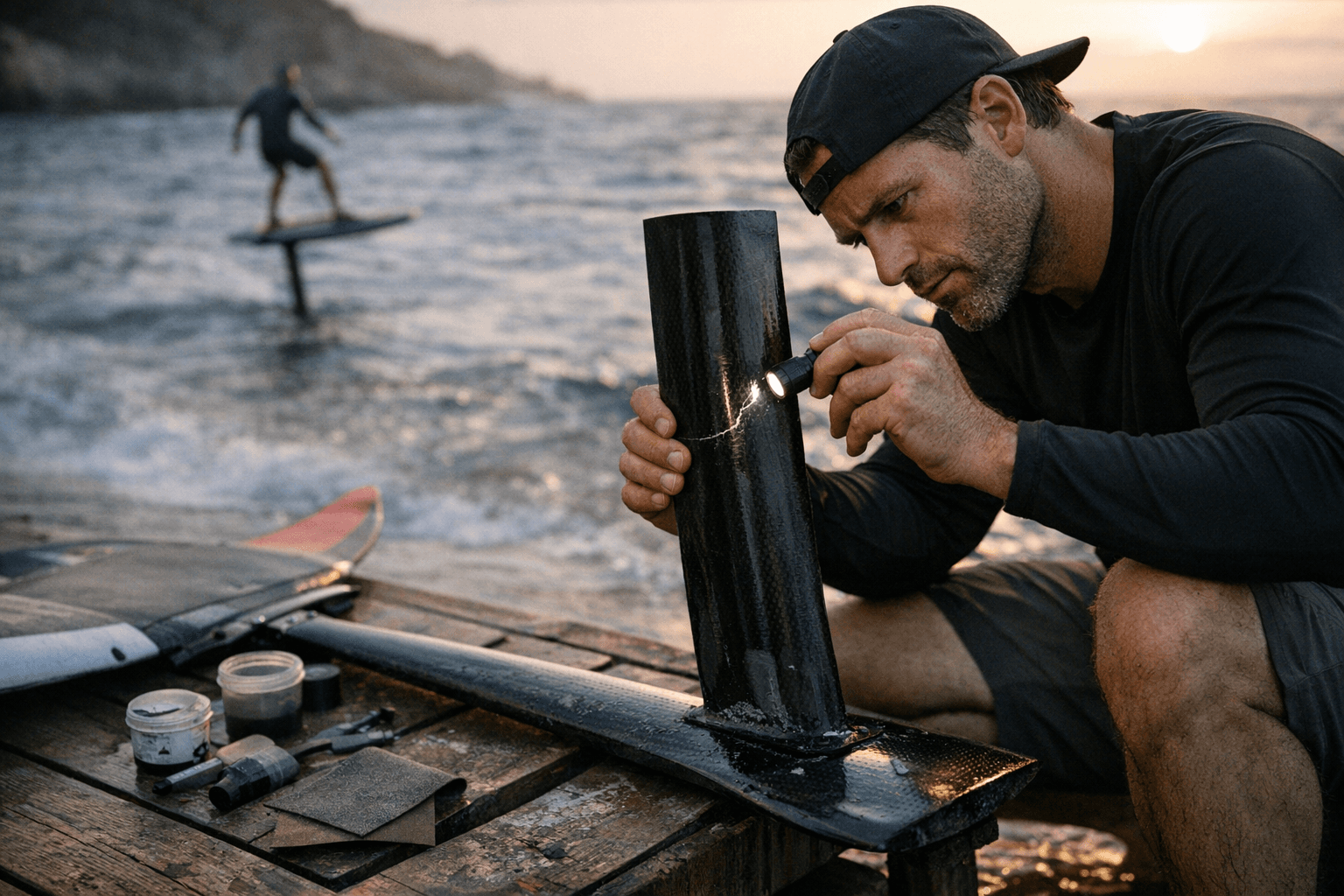
After every session, rinse every component with fresh water, then take two minutes to run your hands and eyes across the mast, wings, fuselage, and board rails. You're looking for cracks, chips, or soft spots. A soft spot under finger pressure is a core crush signal; don't dismiss it. Rotate hardware and check for fretting corrosion and hairline cracks at bolt holes, because water ingress at a fastener point can migrate inward along the core before you see any surface evidence.
Fasteners and Interfaces
Confirm torque on mast bolts and fuselage screws against manufacturer specs — not by feel, but with a torque wrench. Apply marine-grade threadlocker to any bolt that backs off consistently in your riding environment, and replace stainless fasteners at the first sign of galling or pitting. Inspect mast-base seals for compression set; if you see water intrusion at the gasket, replace the gasket before the next session, not after.
eFoil-Specific Electrical Checks
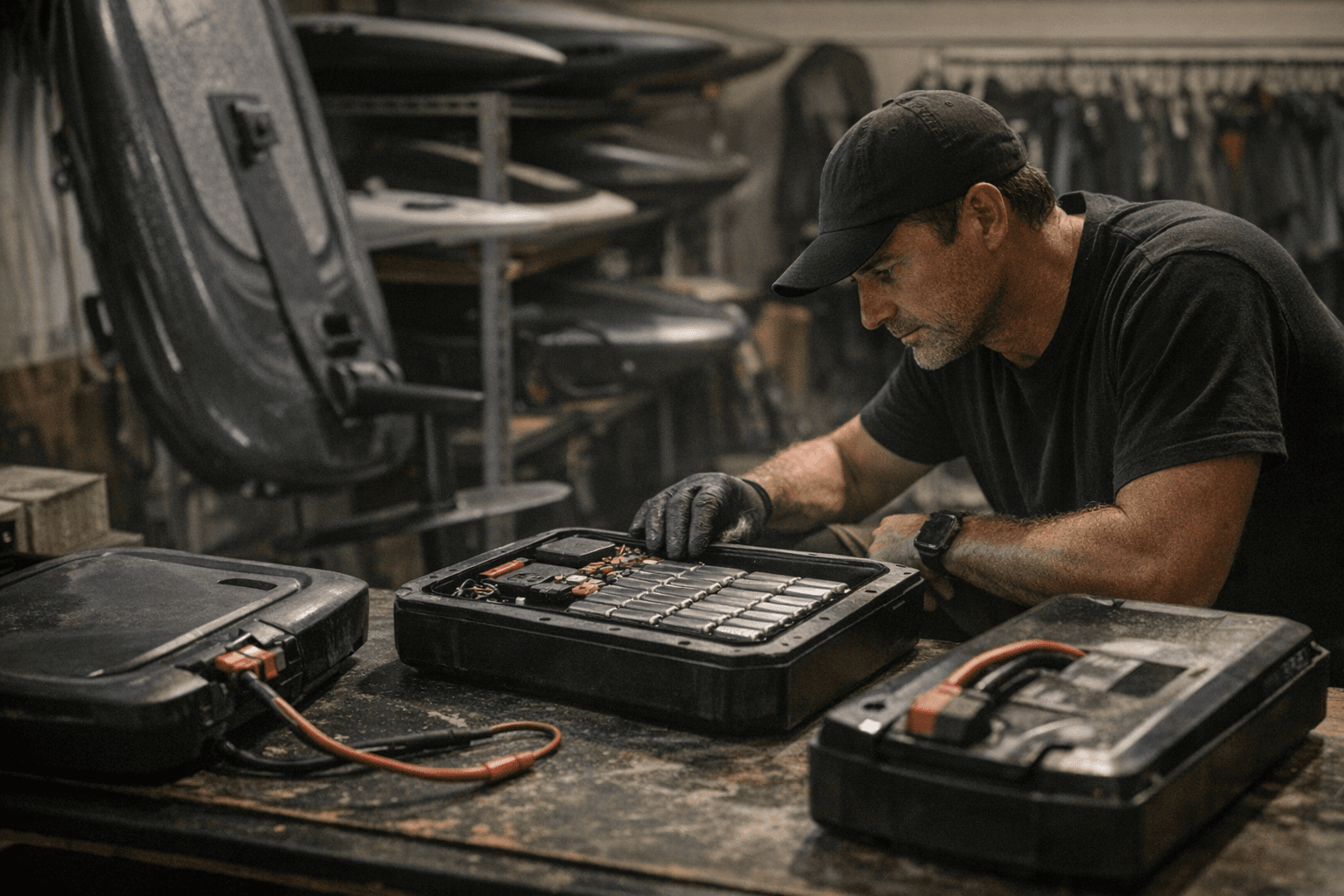
For eFoil owners and club fleet managers, the electrical system adds a second failure axis to monitor. Store batteries at roughly 40 to 60 percent charge in a cool, dry location for any long-term storage period; following your battery manufacturer's guidance here isn't optional, it's safety-critical. Before every launch, inspect the motor bell and propeller for nicks: even a small nick can unbalance the drive assembly and accelerate bearing wear until you have a mid-session failure. Confirm that all waterproofing plugs and connector boots are fully seated before the board hits water.
Minor Cosmetic Repairs: What DIY Handles Well
Gelcoat and Paint Chips
Small surface chips are within DIY territory. Sand the area clean, degrease it, and fill with a two-part marine epoxy or a manufacturer-approved touch-up kit. The key discipline is keeping repairs thin and smooth; a heavy filler layer concentrates stress at its edges and is visually obvious under raking light. Thin, feathered patches are stronger and invisible.
Small Delaminations
Minor edge delaminations with surface separation under one to two centimeters can be temporarily stabilized with vacuum bagging or tightly wrapped tape, then reinforced with a thin epoxy patch. Treat this as triage, not a fix. The threshold is clear: if the delamination is larger than your thumbnail or the surrounding area feels soft under pressure, stop riding immediately. Water ingress into core material is the primary driver of progressive structural failure, and once moisture is inside the core, it spreads with every flex cycle.
When to Stop Riding and Call a Pro
There are three situations where the session ends and the board goes to a shop:
- Any deep impact that exposes core material or leaves a soft spot anywhere in the laminate.
- Visible cracks running across structural elements, specifically the mast box, fuselage joints, or wing roots.
- Any electrical fault on an eFoil: the smell of burning, sudden unexplained power loss, or water found in the battery compartment.
None of these are judgment calls. They are stop signs.
Professional Repairs: What to Ask For
Not every marine repair shop is equipped for foil composites. When selecting a shop, look for one that specifically lists foil repairs in its portfolio. A qualified shop will begin with a moisture survey to map the extent of core damage before cutting anything. The actual repair process involves scarfing and layered laminate work with matched fiber orientation — the fiber direction isn't cosmetic, it's structural. When the work is done, ask for a written repair report documenting the materials used, the expected post-repair strength, and a recommended re-test schedule. The industry norm is 24 to 48 hours of cured condition followed by functional sea trials under controlled conditions before returning to normal riding loads.
Storage, Transport, and Long-Term Care
How you store and move your equipment compounds or offsets everything else in this guide. Store boards and wings out of direct sunlight in a dry space at moderate temperature; UV degradation of the resin matrix is slow but irreversible. Use padded board bags for transport and position masts and wings so they aren't flexing under their own weight during transit. Never stack heavy items on top of carbon components, even briefly. After each session, rinse salt from all surfaces; periodically wash with a mild, pH-neutral soap. If your manufacturer recommends UV-protective finish reapplication, factor that into your seasonal maintenance calendar.
The Risk Management Frame
Every decision in composite maintenance is fundamentally a risk management decision. The conservative call, stopping when you suspect structural damage, avoiding DIY patches on anything involving the core or through-bolted joints, and taking structural work to qualified shops, extends both your riding life and your board's service life. If you find damage you're unsure about, photograph it, note when and how it happened, and consult the manufacturer or a certified repair shop before launching again. The cost of that conversation is nothing compared to the cost of a failure at foiling speed.
Know something we missed? Have a correction or additional information?
Submit a Tip