Force 9 Winds Ground Athens Hydrofoil Services, Stranding Saronic Island Travelers
Storm Erminio's force 9 winds grounded Saronic hydrofoil services from Piraeus, Rafina, and Lavrio on April 2, leaving island-bound travelers without fast connections to Aegina, Poros, and Hydra.
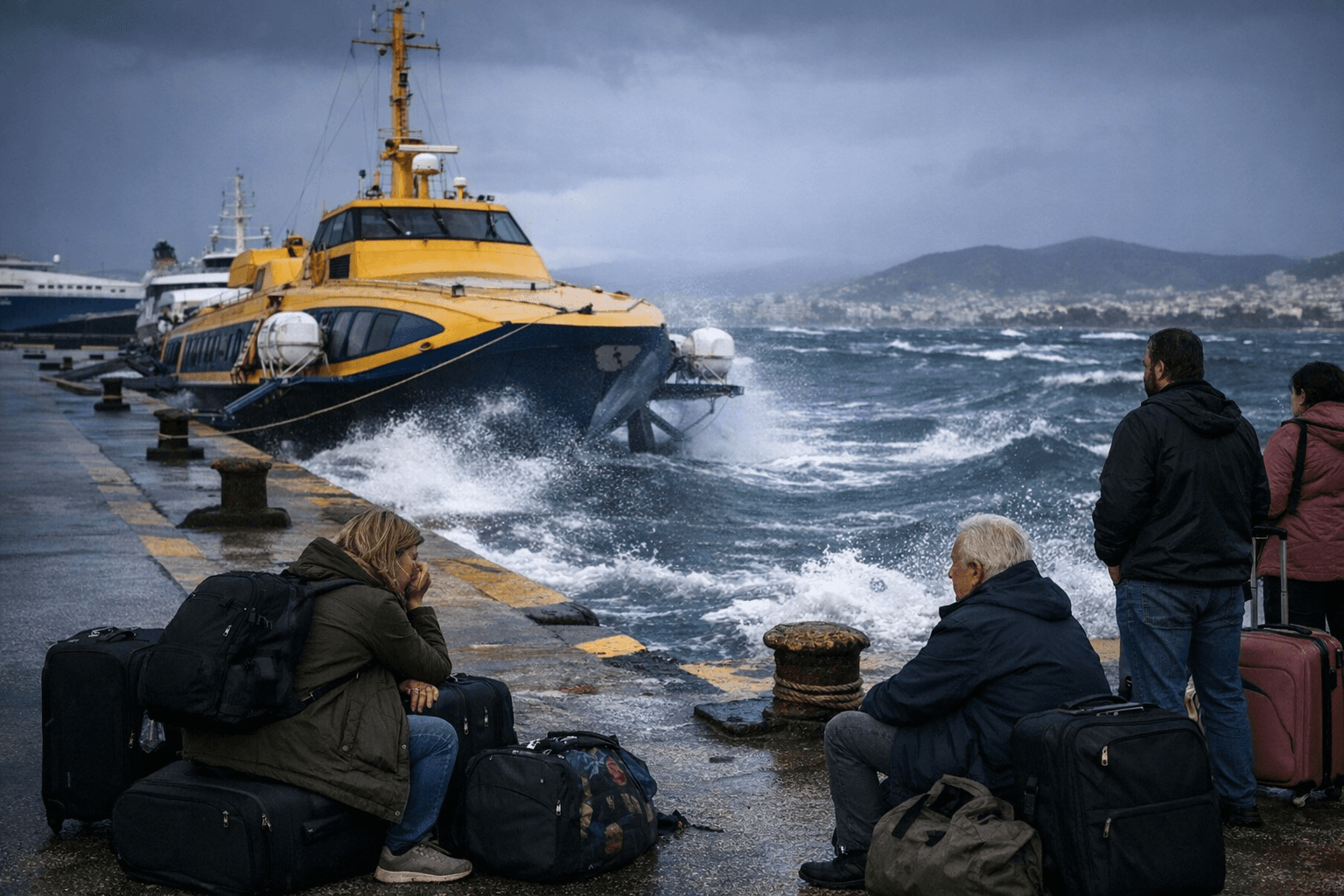
Storm Erminio hit the Attica seaboard on April 2 with sustained winds reaching force 9 on the Beaufort scale, and port authorities across Athens' three principal passenger gateways responded by halting early departures and suspending all high-speed hydrofoil operations in the Saronic Gulf. The shutdown covered Piraeus, Rafina, and Lavrio simultaneously, cutting off the quick foil-assisted connections that day-trippers and island commuters depend on for routes to Aegina, Poros, and Hydra.
The decision exposed exactly the trade-off foiling riders already understand intimately: the same lift characteristics that let hydrofoil ferries skip across flat water at high speed become a liability the moment surface chop, gusts, and confused seas arrive together. Running foilborne in those conditions raises the risk profile sharply, both for structural loads on the foils and for passenger safety. Port authorities allowed conventional displacement-hull ferries to continue operating where conditions permitted, preserving a baseline of connectivity at the cost of significantly longer crossing times.
For travelers who had built tight itineraries around hydrofoil schedules, the suspension created a cascade of missed connections. Same-day transfers tied to flights, cruise departures, or pre-booked excursions collapsed when the fast services went down, pushing passengers onto whatever later displacement sailings remained available or forcing rebooking altogether. The overflow onto conventional ferries compressed capacity and extended journey times on routes where the hydrofoil's speed advantage is normally the entire point.
The episode is a sharp illustration of how narrow the operational window can be for foiling vessels in exposed waters. Hydrofoil ferry routes through the Saronic Gulf sit in the same physical environment that makes the region appealing for recreational foiling: open fetch, consistent winds, and a sea state that shifts quickly. Those same dynamics that produce rideable conditions on a good day can put commercial hydrofoil operators well outside safe limits within hours when a named storm system moves through.
For anyone planning island trips out of Athens on a fixed schedule, the April 2 suspension reinforces a practical rule: treat hydrofoil timetables as weather-dependent rather than guaranteed, especially during the shoulder and winter seasons when Aegean storm systems remain frequent. Checking with operators before heading to port and building buffer time into any itinerary that chains a hydrofoil connection to a flight or cruise boarding is not overcaution; it is the minimum contingency planning that fast-ferry travel in exposed Greek waters demands.
Erminio's passage left the Saronic routes intact structurally, but the operational disruption it caused on April 2 will likely inform how operators and regulators communicate schedule reliability to passengers through the rest of the spring sailing season.
Know something we missed? Have a correction or additional information?
Submit a Tip