How to make backcountry water safe in the Four Corners
A clear seep in canyon country can still make you sick. In the Four Corners, the safest setup is boil first or filter plus disinfect, with a backup for cloudy water and a clogged filter.
A slick-looking spring in canyon country is not a safe drink just because it flows. In the Four Corners, water often comes from seasonal springs, stock tanks, low-flow creeks, and runoff-fed seeps, and the CDC’s rule is simple: if the water quality is unknown, treat it before you drink it.
The Wilderness Medical Society’s 2024 guidance treats this as a broad field problem. Water-borne disease can come from bacteria, viruses, protozoa, and parasitic helminths, and the same treatment logic applies whether you are out solo, with a small group, or managing a household-style trip.
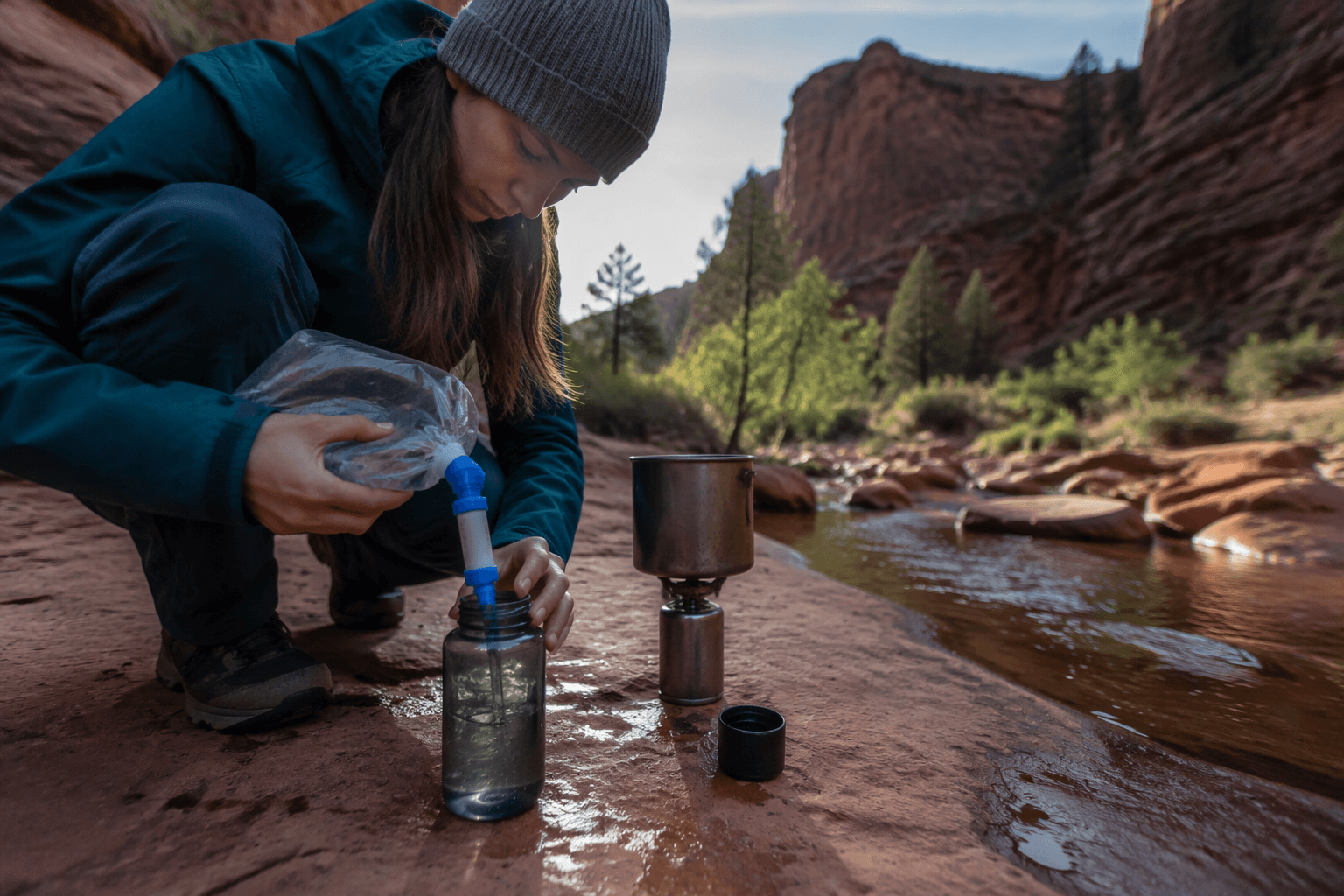
The first rule: do not trust looks
The desert teaches a bad habit fast: clear water can still be contaminated, and cloudy water is even less forgiving. Colorado State University Extension calls a water access and treatment plan essential for a safe backcountry trip, and all backcountry water must be treated with an effective method before consumption.
If you are crossing a wash, camping near a seep, or filtering from a stream that has picked up fine silt after a storm, you are not looking for the prettiest source. You are deciding how to make an uncertain source safe enough to drink without blowing up the route.
Boiling is the cleanest answer when fuel allows
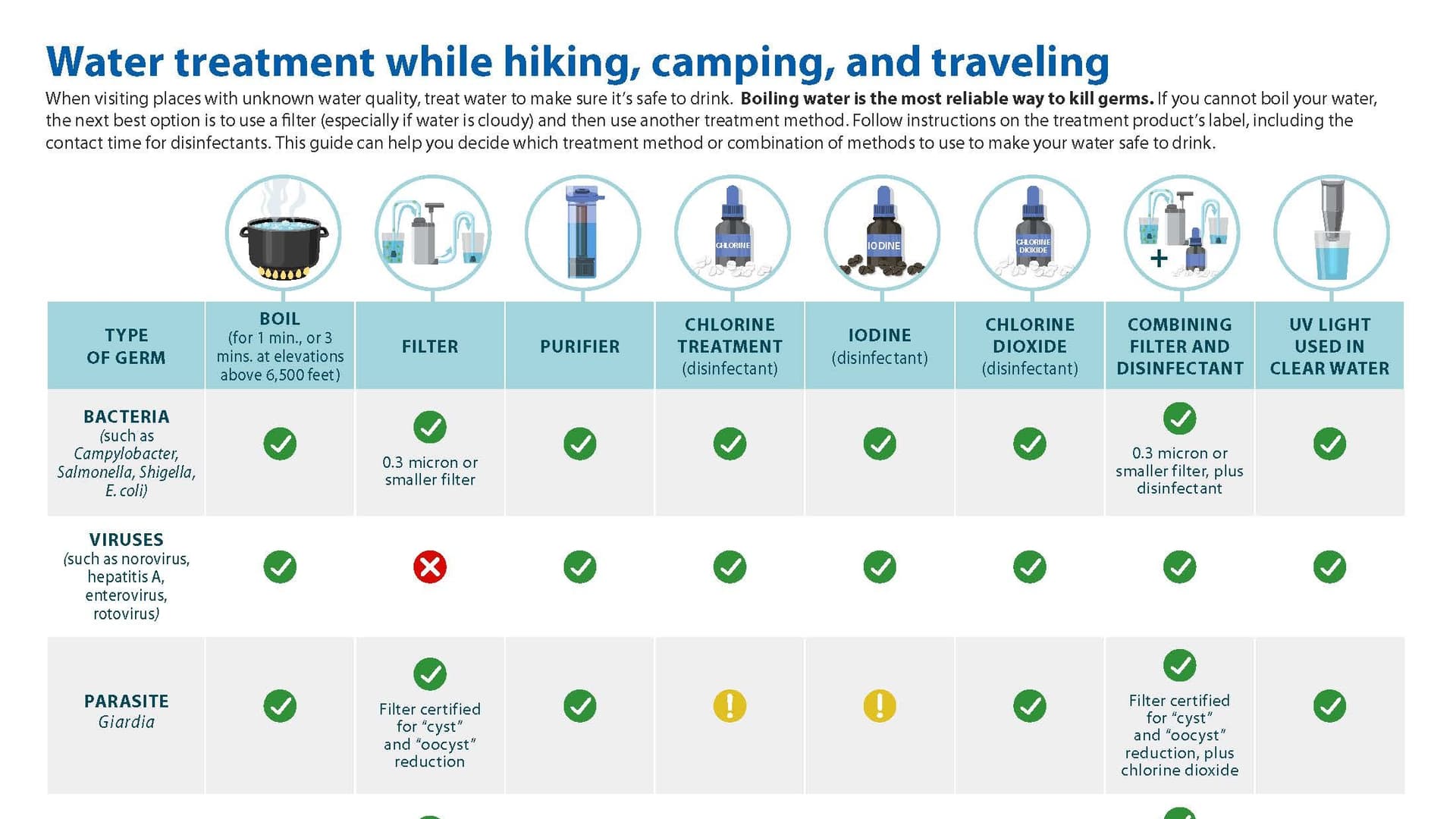
If you can afford the fuel and the time, boiling is still the gold standard in the field. The CDC recommends bringing water to a rolling boil for 1 minute.
The Minnesota Department of Health recommends a fuel-saving field trick: bring the water to a boil, then remove it from the heat and keep the pot covered for several minutes. That can help stretch a canister on a long canyon day.
Filters help most when the water is cloudy
The CDC’s backcountry guidance is direct: if the water is cloudy, filter it and then disinfect it. That order matters in canyon country because desert water is often silty, and a filter can strip out the grit that makes chemical treatment and UV less effective.
A filter can remove particles and some organisms, but it does not automatically solve every contamination problem on its own. In dirty water, filtration is step one, not the whole plan.
Chemicals are the lightest serious backup
For most of us, the best backup is chemical disinfection because it is small, cheap, and easy to carry when a source goes bad or the filter clogs. The CDC specifically names chlorine, iodine, and chlorine dioxide, and the important detail is not just the brand on the package, but the wait time on the label.
If you shortcut that contact time, you are not actually finishing the treatment. Chemical disinfection can save a trip when the water is better than expected, the filter element is fouled, or you have to keep moving and cannot spare fuel for a boil.
UV can work, but it is not my desert solo act
UV sits in a narrower lane. It is a disinfection method, not filtration, and UV treatment requires water to be free of particles that could act as a shield, meaning not cloudy. That is a problem in canyon country, where the water that is easiest to find is often the water most likely to carry fine sediment.
UV should not be the only answer for Four Corners backcountry water. It can have a place in a clean, well-prepared system, but cloudy seep water, silty runoff, and muddy stock tanks are exactly the kind of sources that punish a UV-only plan.
What to carry so one bad source does not wreck the route
The safest field setup is redundancy, not optimism. If you want a kit that can survive real Four Corners conditions, build it around two layers of protection:
- A primary filter for cloudy water
- A chemical backup with chlorine, iodine, or chlorine dioxide
- Enough fuel and pot space to boil if needed
- A plan for where water is actually available before you leave the trailhead
The National Park Service’s Safe Drinking Water page for Grand Canyon National Park covers the park’s Transcanyon Water System, built between 1965 and 1970, which still serves millions of annual visitors.
This article was produced by Prism’s automated news system from verified source data, official records, and press releases, then run through automated quality and moderation checks before publishing. The system is built and supervised by the people who set the standards it runs under. Read our full AI policy.
Did this article answer your question?