Moab’s BLM highlights e-bike trails on iconic slickrock routes
The BLM’s Moab e-bike map turns a slickrock legend into a route-planning tool, pointing riders to trails that fit motor-assist use before they hit the wrong rock.
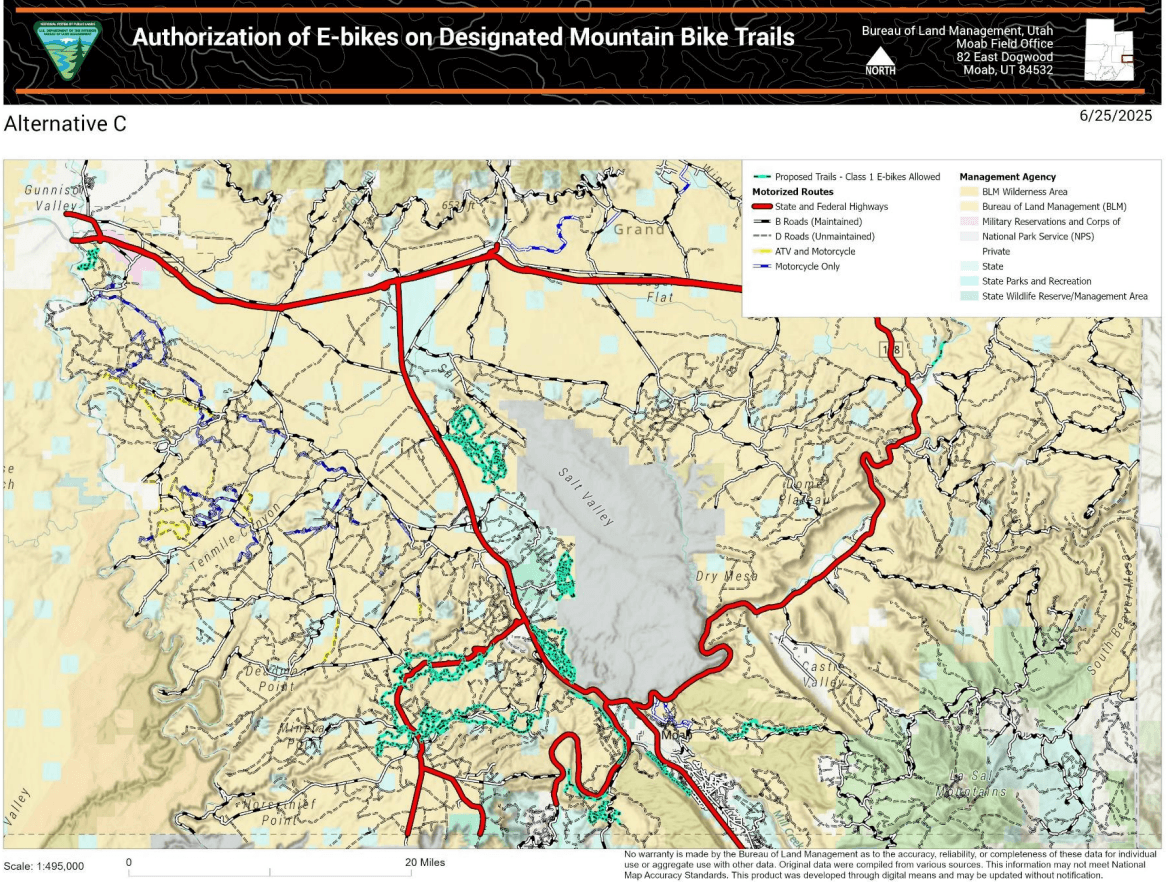
If you roll into Moab with an e-bike and treat Slickrock like any other desert spin, the BLM’s trail guidance is the nudge you need to slow down and choose carefully. The Moab Field Office has drawn a clear line on its e-bike map, naming recommended routes instead of lumping the whole red rock maze together, and that matters in a place where 1.8 million acres of public land draw nearly 3 million visitors a year.
The BLM is steering e-bikes toward named routes, not open-ended guessing
The Bureau of Land Management’s Moab e-bike materials point riders to a specific set of trails: Slickrock Trail, Hells Revenge, Steel Bender, White Wash Area and Hook and Ladder. The map is issued from the BLM Moab Field Office at 82 Dogwood Ave., Moab, UT 84532, which gives riders a practical place to anchor trip planning before they hit the trailheads.
That list is useful because it tells you how the agency wants motor-assist bikes sorted in the Moab system. Instead of assuming every famous route is interchangeable, the BLM is flagging trails that already carry weight in local riding culture and making the equipment question part of the decision. For riders, that means the first step is not “where is the iconic trail?”, but “which iconic trail is actually the right fit for this bike?”
A clean way to think about it is this:
- If you want the classic Slickrock experience, the name alone still points to the benchmark route in Moab biking culture.
- If you are on an e-bike, the BLM’s recommended list is the clearest signal for where motor-assist use fits best.
- If you are unsure, start with the named e-bike trails rather than showing up expecting every sandstone line to behave the same way.
Slickrock is still the legend, but the legend now comes with ride-planning consequences
Slickrock Trail is not just a famous name. Visit Utah traces the name to early settlers whose horses had trouble gaining traction on petrified sand dunes, which is a useful clue for anyone arriving with modern equipment and different expectations. The same finely textured sandstone later made the trail famous for rubber-tire grip on mountain bikes, turning traction into the whole story.
That history is why the route carries so much local weight. In 2019, the Moab Sun News marked Slickrock’s fiftieth year and called it “living history” of Moab, a phrase that fits the way the trail still shapes how riders talk about the town. Another trail history source places Slickrock inside the National Trails System, created by the National Trails System Act of 1968, which gives the ride a federal layer of significance on top of its cultural one.
The trail also proved how visible Moab’s public lands can be in wider bike politics. IMBA ran “If the Slickrock Trail can be Sold, are any Trails Safe?” on Feb. 5, 2020, in response to an oil and gas lease threat, then posted “Slickrock Saved!” on Feb. 21, 2020. That episode underlined what locals already know: Slickrock is not just a weekend ride, it is one of the symbols people use when they argue about what Moab public land should be.
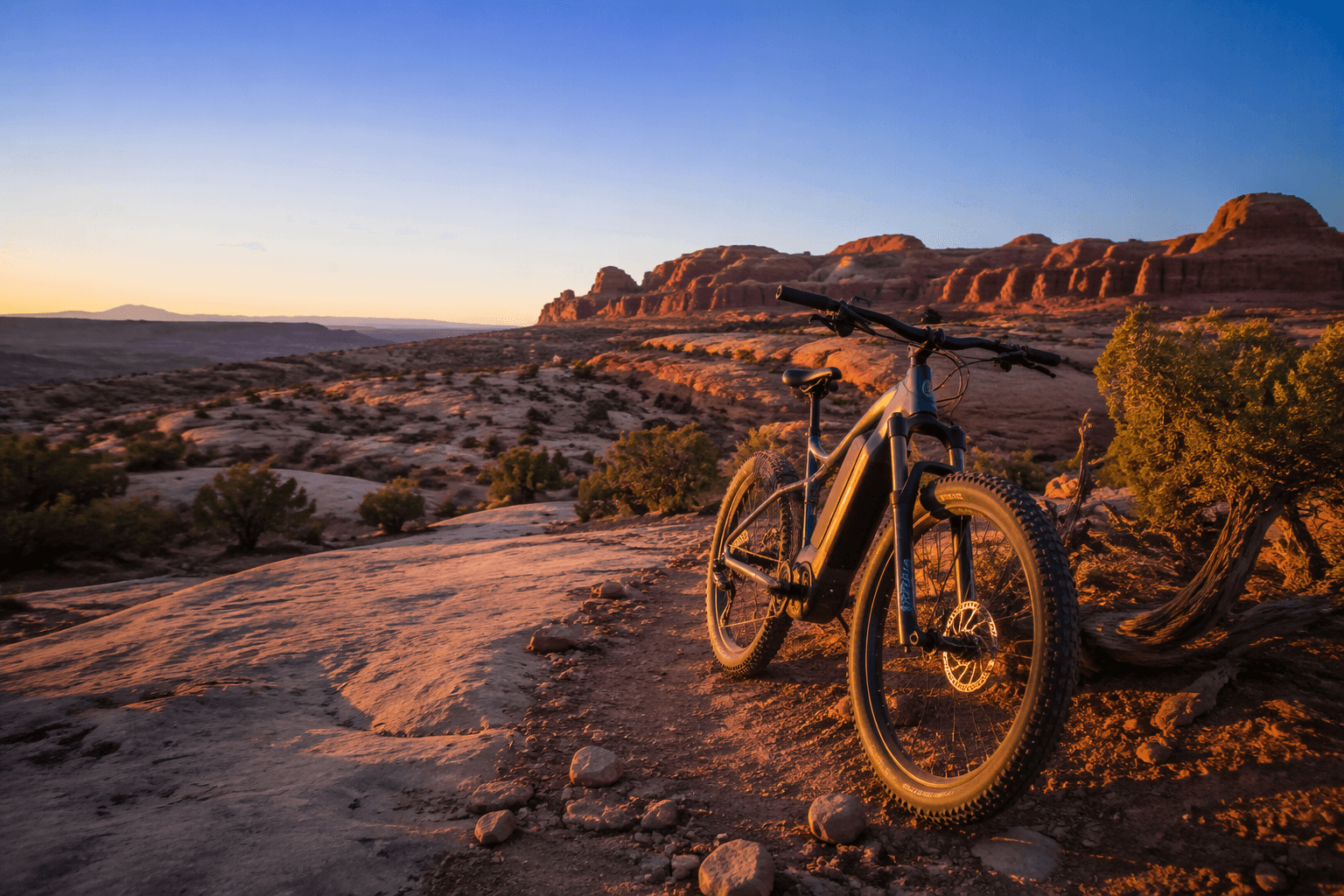
What changes when you bring an e-bike
On Slickrock, the old advice still holds: traction, tire pressure and line choice matter more than pure speed. On an e-bike, though, the equation gets more complicated because assist settings, battery management and weight distribution all change how the bike feels on sandstone. A route that looks manageable on paper can become a very different ride once the motor, battery and extra heft are all part of the climb.
That is exactly why the BLM’s recommended e-bike list is valuable. It does not erase the classic mountain-bike identity of these trails, and it does not pretend every route in Moab should be ridden the same way. It simply gives riders a realistic starting point so they can match the bike to the terrain instead of learning the hard way on slick rock and exposed climbs.
For Slickrock itself, planning still needs to be conservative. The National Recreation Trails listing puts the route at about 12.1 miles total, including a 10.1-mile main trail and a 2.0-mile practice loop. Visit Utah says riders should allow about four hours for the ride and carry more water than usual, which is sound advice in a desert where heat and exertion can add up fast.
Moab’s scale is why this guidance matters
The BLM’s visitor guide describes Moab public lands as a “red rock adventure mecca,” and the phrase fits because the field office manages more than biking alone. Its lands sit in the heart of the Colorado Plateau, carved by the Green and Colorado rivers, and the agency says people come here to camp, hike, climb, raft, bike, four-wheel and attend outdoor events.
That breadth matters because Moab is not a small-town trail network with plenty of room to improvise. The BLM notes the field office manages 1.8 million acres and that recreation draws nearly 3 million visitors a year, while local context puts Moab at about 5,300 residents. When those numbers meet a place built for multiple use, trail choice becomes more than preference: it is how riders avoid crowding, mismatched expectations and equipment that does not fit the route.
The slickrock legend is still the hook, but the real ride-planning lesson is simpler. In Moab, the best day starts with the right trail for the right bike, and the BLM’s e-bike map is the clearest way to make that match before the tires ever touch the sandstone.
This article was produced by Prism’s automated news system from verified source data, official records, and press releases, then run through automated quality and moderation checks before publishing. The system is built and supervised by the people who set the standards it runs under. Read our full AI policy.
Did this article answer your question?