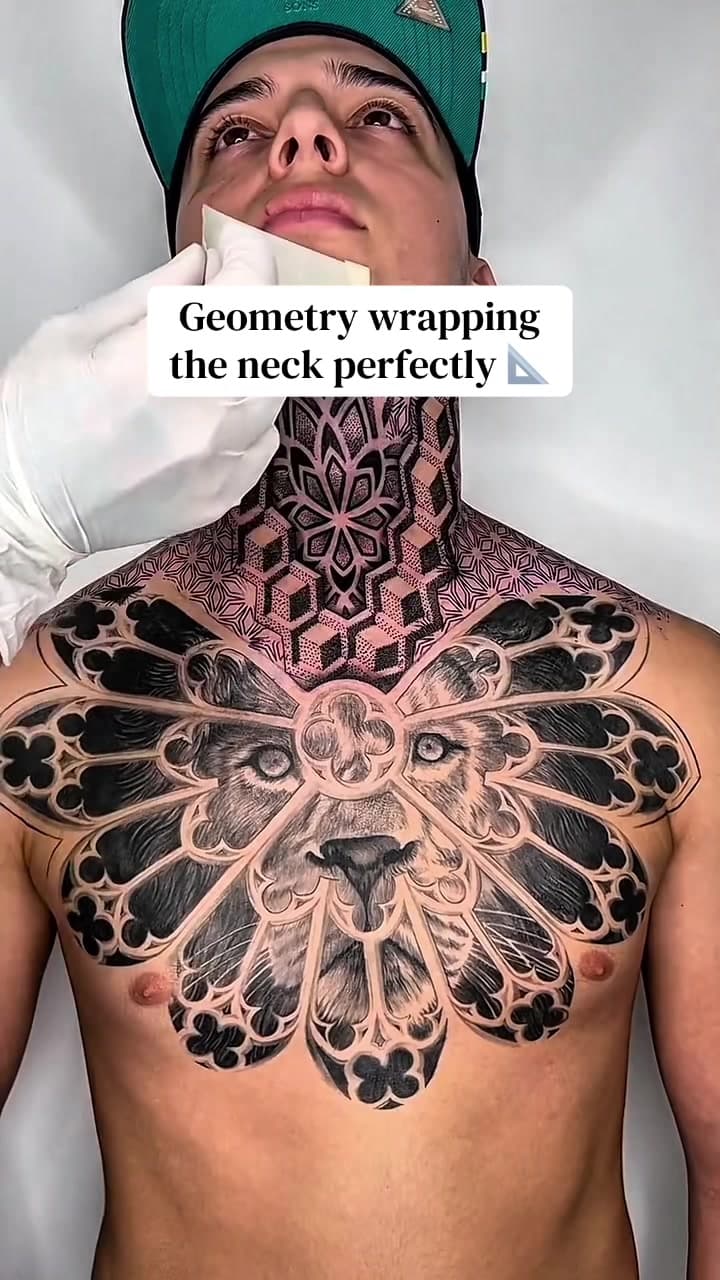
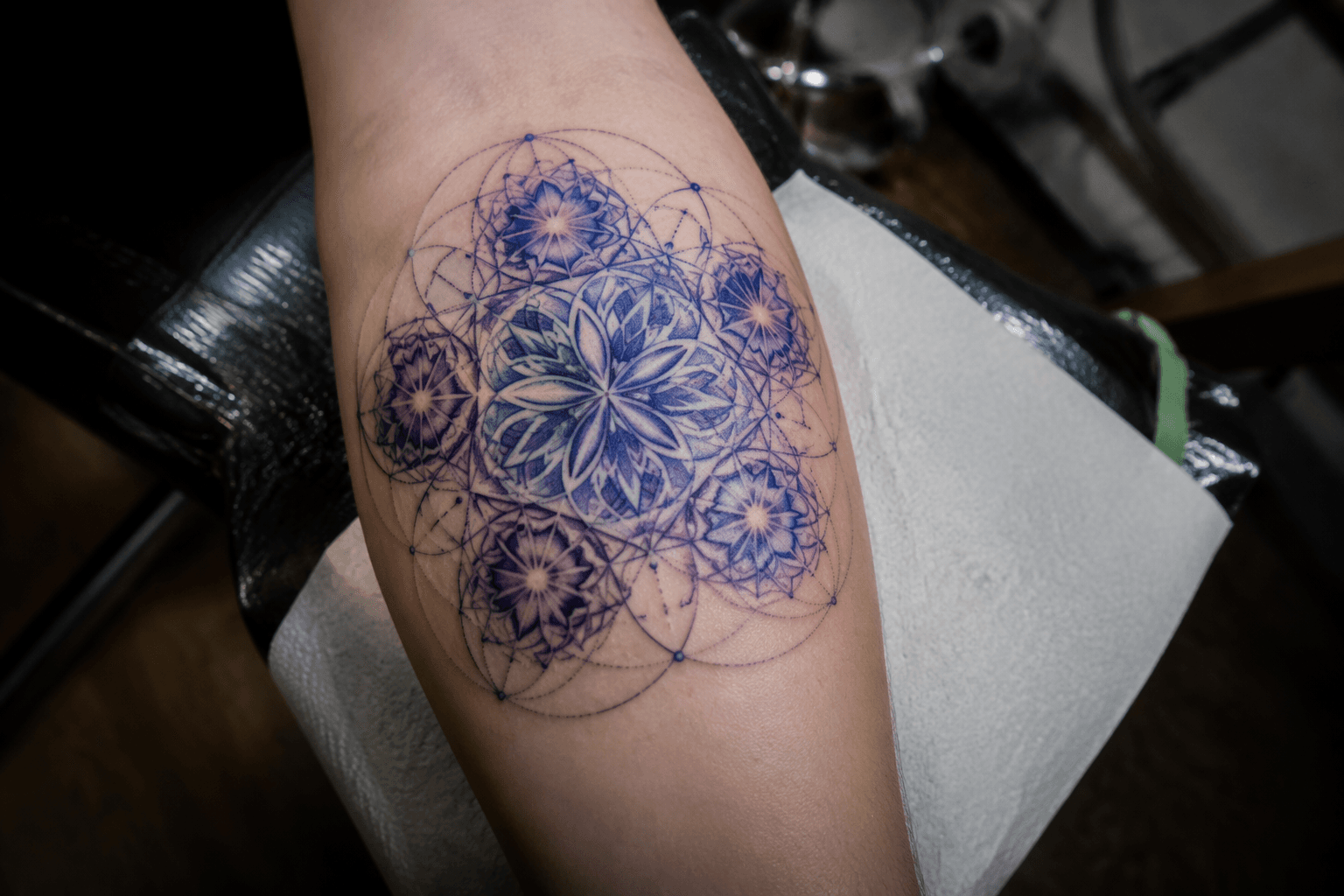
10 artists creating geometric tattoos that span the body
The best geometric tattoos win by mapping joints, curves, and negative space, not just filling skin. Scene360's 10-artist feature makes anatomy the real design test.
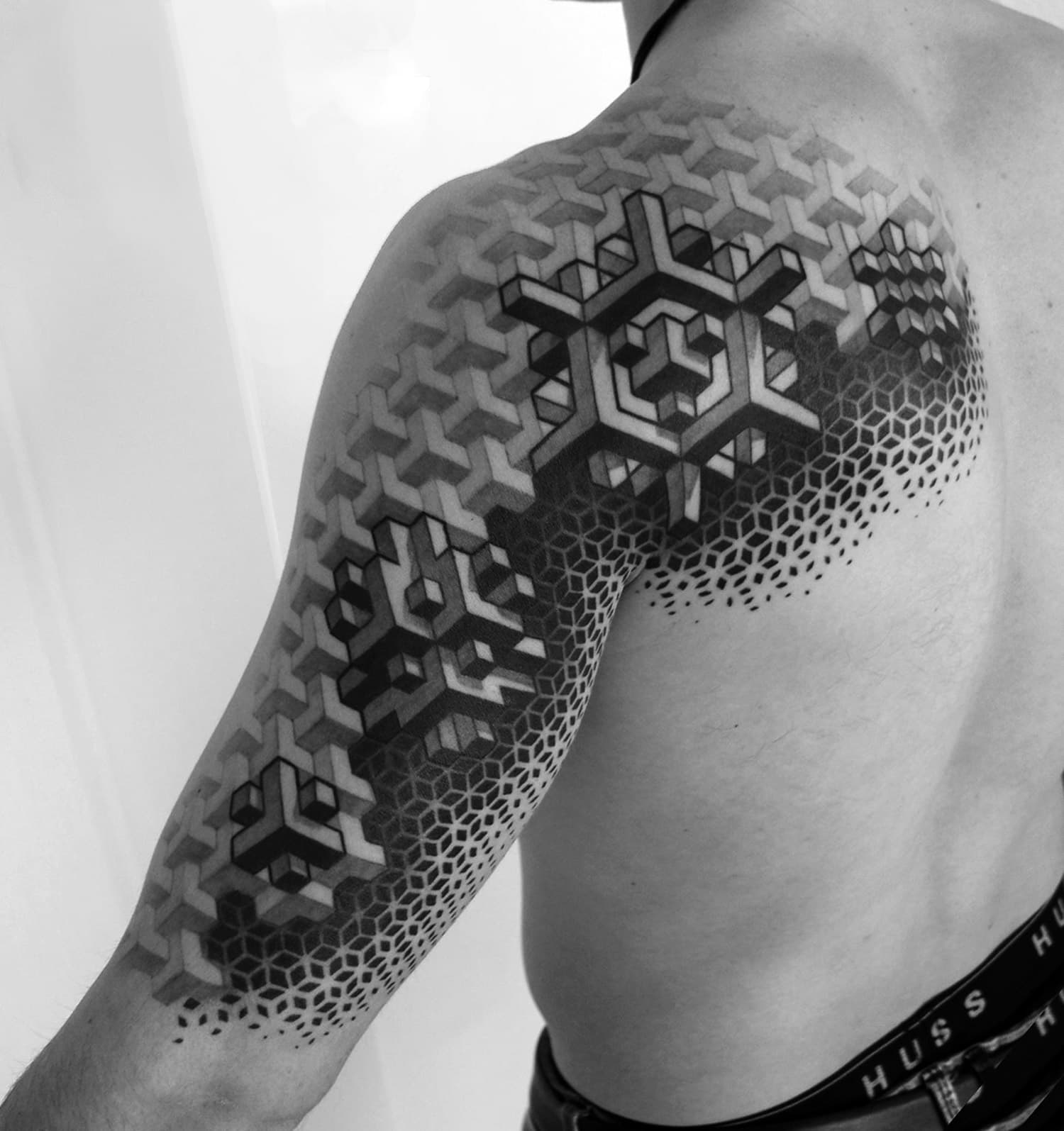
A geometric tattoo can look flawless in a square photo and still fall apart the moment a shoulder rolls or a rib cage twists. Scene360's feature on 10 artists who create geometric tattoos spanning the body works because it treats anatomy as the real canvas, not just the stencil sheet.
Body first, symbols second
The strongest body-spanning geometric work does not start with a motif, it starts with where the body bends and breathes. Scene360's framing, across arms, torsos, ribs, shoulders, and back panels, makes that obvious: once the work leaves a single patch of skin, the body itself becomes part of the composition.
Placement across joints and curves
A design that ignores the natural centerline or the twist of a rib cage can look precise on paper and crooked on skin. The real test is how the pattern lands over elbows, shoulders, and the hard curve of the side body, where a slight placement error can throw off the whole read. In large geometric work, the stencil is only the beginning; the placement is what decides whether the tattoo looks intentional or forced.
Symmetry has to survive movement
Perfect symmetry means less when the body is still than when it is moving. Chest panels expand and contract, shoulders rotate, and sleeves flex every time an arm lifts, so mirrored geometry has to be planned for motion instead of a flat-front pose. The best artists build in enough discipline that the design still reads when the wearer is walking, reaching, or turning.
Scale is what keeps the piece readable
Body-spanning geometric tattoos usually work because they mix small structural details, medium repeating forms, and one or two larger anchors that hold the whole thing together. Without that hierarchy, the eye gets stuck in the middle and the pattern turns into noise instead of rhythm. This is where scale matters as much as line quality, because a giant tattoo without breathing room can feel crowded even if every line is technically clean.
Negative space does real work
Open skin is not empty skin in this style. Scene360's negative-space coverage treats it as a meaningful design principle, and geometric work leans on that idea hard because negative space gives the body room to shape the pattern instead of letting the pattern crush the body. On a ribcage or shoulder cap, that breathing room is often what keeps the composition legible.
Laura Martinez and the architectural read
Paramount Network's 2018 digital exclusive on geometric tattooing featured Laura Martinez and described the style as "the architecture of all living organisms" and "a universal language." That is exactly the right frame for large geometric work, because the tattoo stops being a set of symbols and starts behaving like structure. Martinez belongs in that conversation because the style only feels powerful when the body itself is part of the design logic.
Dillon Forte and sacred geometry without clutter
Inked's August 12, 2019 feature "So You Want A Sacred Geometry Tattoo" centered Dillon Forte as an artist explaining how elaborate, yet simple designs are built. That balance matters in full-body geometric work, where too much ornament can kill the clarity that makes the piece hold together from a distance. Forte's name keeps coming up because sacred geometry works best when it looks controlled, not crowded.
Kirk Nilsen and the shared visual language
Paramount Network put Kirk Nilsen alongside Laura Martinez and Dillon Forte in the same geometric conversation, which tells you how the style is judged: by composition, not just by a single emblem or pattern. When geometric work spans multiple zones, the artist has to connect separate parts of the body without making the seams obvious. That is the part casual viewers miss in photos and the part clients live with every day.
The style is still in rotation
Business Insider was already writing in 2015 about what tattoo artists say people should know before getting a trendy sacred geometry tattoo, and 2024 studio trend coverage still lists geometric patterns among current popular styles. That span shows the category has stayed visible long enough to move beyond novelty. For anyone planning a large piece now, the practical takeaway is simple: the market has not moved on from geometric tattooing, but the bar for clean execution is higher than ever.
The older roots still matter
TED-Ed's history lesson places tattooing at least 8,000 years back, which is why sacred geometry plugs so easily into the bigger story of tattoo culture. The forms may be modern, but the instinct is ancient: use the body to carry patterns that can be read at a glance and survive in motion. That is the real reason the strongest geometric tattoos spanning the body feel less like decoration and more like architecture that happens to live on skin.
This article was produced by Prism’s automated news system from verified source data, official records, and press releases, then run through automated quality and moderation checks before publishing. The system is built and supervised by the people who set the standards it runs under. Read our full AI policy.
Did this article answer your question?