27 geometric tattoo ideas for stylish, confident body art
Geometric ink lands hardest when the pattern fits the body. These 27 ideas sort the style by symmetry, line weight, and how well each one ages.
Samuel O’Reilly’s 1891 electric machine helped make crisp repetition, symmetry, and modern linework much easier to pull off. Tattooing goes back to Neolithic times. Geometric tattooing spans sacred geometry, dotwork patterns, mathematical shapes, symmetrical compositions, mandalas, platonic solids, and geometric animal designs.
1. Fine-line triangle stack
Start here if you want the cleanest entry point into geometric ink. A small stack of triangles on the inner forearm or wrist keeps the pain and budget modest, but it still needs a steady hand because thin lines show wobble fast.
2. Single-axis arrow line
This is the minimalist’s version of a geometric tattoo. One straight axis with a pointed tip reads sharply on the forearm, calf, or spine, and it ages better than overcomplicated micro-detail because there is less linework to blur.
3. Dotwork circle cluster
A tight cluster of circles and dots gives you rhythm without full commitment to a dense composition. It works well on the ankle or upper arm, where the spacing can breathe instead of collapsing into a dark patch.
4. Wrist micro-band
A slim geometric band around the wrist is one of the easiest ways to wear the style daily. Keep the shapes bold enough to survive wear, because overly delicate bands can fade into visual noise faster than people expect.
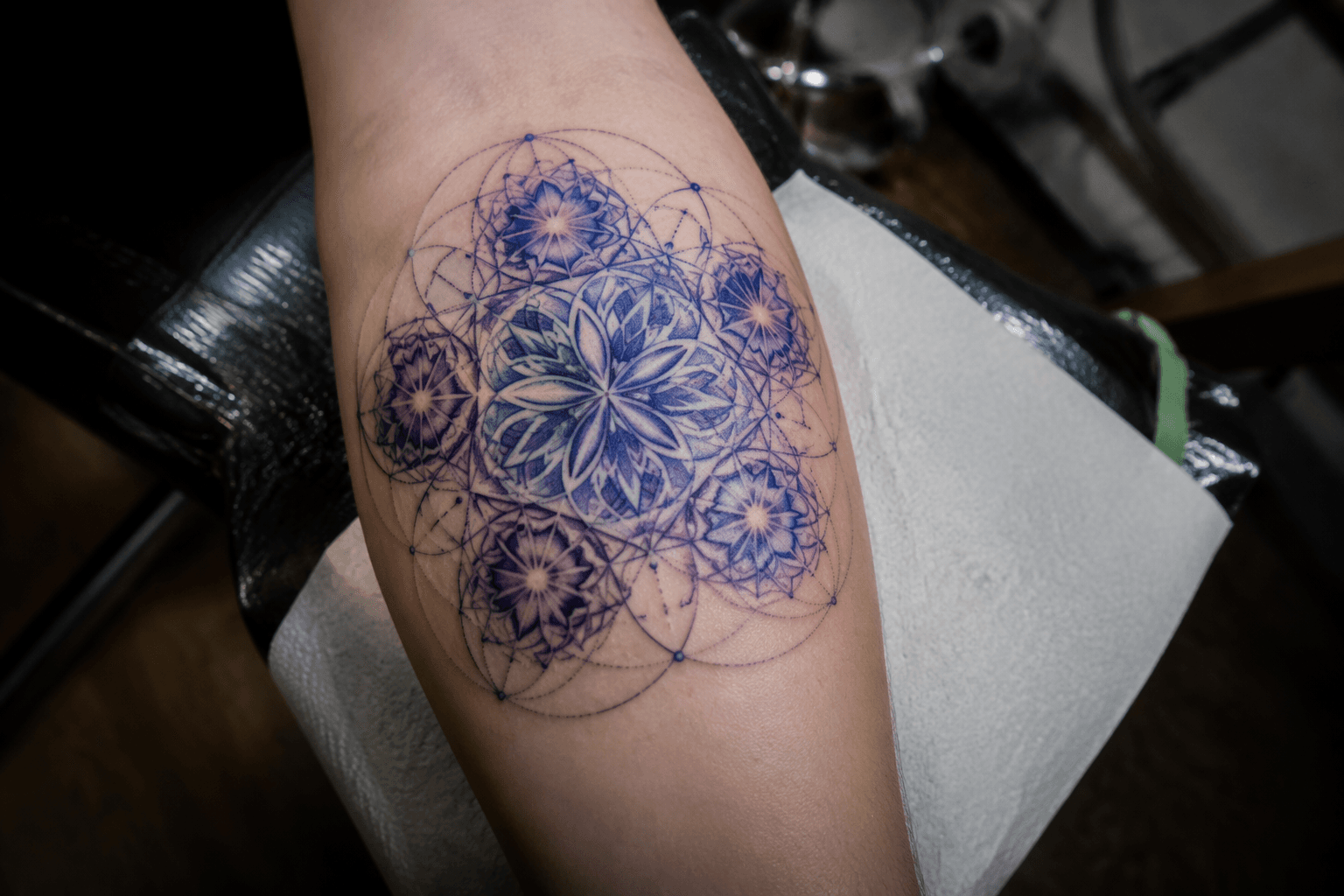
5. Palm-sized mandala
This is where geometry starts to feel meditative instead of purely graphic. Mandalas carry long religious and ritual significance in South Asian traditions, including Vedic and tantric practice.
6. Simple geometric flower
A rosette built from triangles, petals, or hexagons gives you a softer read without leaving the geometric lane. It is a good middle-ground design for the upper arm or shoulder blade if you want structure without looking severe.
7. Polygonal animal head
If you want personality with your precision, a wolf, lion, or raven built from clean planes does the job. They usually work best when the silhouette stays readable from across the room.
8. Platonic solid forearm piece
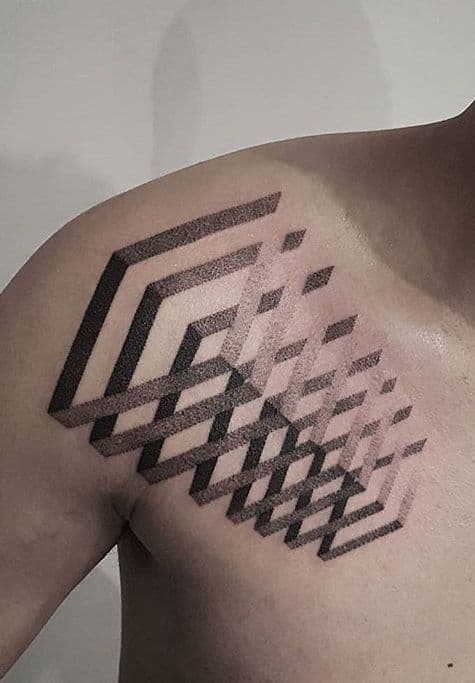
A cube, dodecahedron, or other Platonic solid brings the math-forward side of the style to the front. These designs reward clean edges and even spacing.
9. Sacred geometry medallion
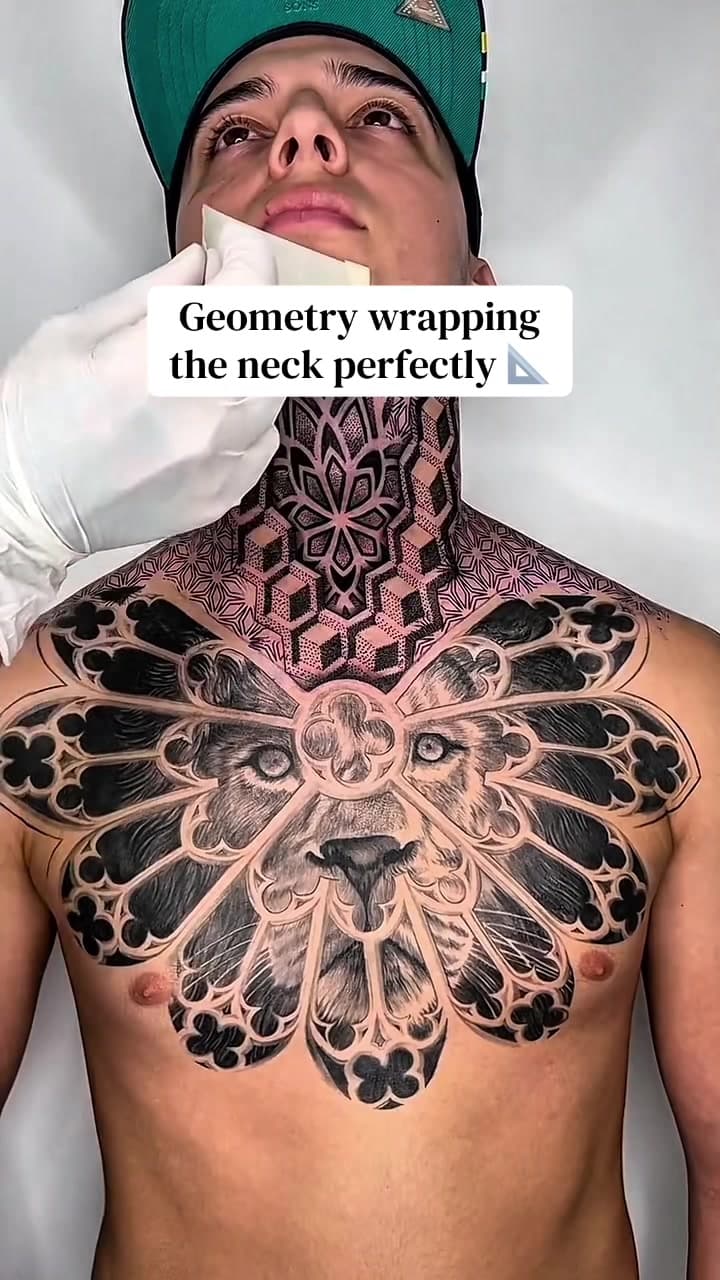
A chest or upper-back medallion built from intersecting circles and measured spacing is a high-confidence move. It looks best when the symmetry is exact, because any drift in the centerline makes the whole piece feel off.
10. Ornamental shoulder cap
This is where black shading and delicate pointillism start doing real work. Ornamental tattooing has roots in ancient tribal traditions, and a shoulder cap gives that heritage-style density plenty of room.
11. Mehndi-inspired cuff
Pattern work around the forearm or calf can look stunning, but this is also where cultural awareness matters. Mehndi-inspired ornamental styles call for cultural awareness before you wear them permanently.
12. Hexagon field panel
A field of repeating hexagons makes a strong forearm or outer-bicep piece if you like order over ornament. It is visually efficient, but the pattern needs clean spacing, or it turns into a crowded grid instead of a statement.
13. Chevron knee wrap
Knee tattoos are unforgiving, so a repeating chevron design works better than a fussy image that needs perfect alignment. The hard angles follow the joint well and give you a graphic look that still reads after the knee bends.
14. Sternum mirror mandala

Mirror symmetry across the sternum is one of the most demanding placements in geometric tattooing. It is worth the effort if you want a piece that feels centered and intentional, but it punishes any off-balance stencil work.
15. Yantra-style talisman
A yantra, also called Sak Yant, brings sacred geometry into protective symbolism. These designs are associated with meanings such as protection, fortune, and charisma.
16. Calf lattice
A lattice on the calf gives you a strong surface for repeated geometry without forcing the design into a cramped space. It ages well when the lines are thick enough to hold and the negative space stays open.
17. Half-sleeve triangle system
This is where geometry starts behaving like architecture. A half-sleeve built from repeating triangles, bands, and dotwork can feel modern and cohesive, but it takes a patient artist and a bigger budget.
18. Full forearm symmetry sleeve
If you want the style to announce itself immediately, the forearm is the cleanest canvas. Dense symmetry on a forearm sleeve looks sharp for years when the spacing is deliberate, though the session time climbs quickly.
19. Back-piece mandala grid
A back piece gives you room for layered mandalas and larger symmetry maps. Back work can turn muddy if the pattern is packed too tightly.
20. Geometric thigh animal
A thigh piece can handle a large animal form without the compression you get on the forearm. The bigger canvas helps the geometry stay legible, especially if the artist uses open planes instead of overworking the shading.
21. Spine-line stack
A vertical stack of circles, polygons, or small sacred-geometry elements runs cleanly down the spine. It is elegant, but the placement demands accuracy because the spine exposes every shift in the centerline.
22. Blackwork cuff with solid fills
Solid fills and heavy contrast usually hold up better visually than ultra-thin linework, though they ask more of your skin and your healing time.
23. Mirrored chest panel
A mirrored chest panel has to work from both sides of the body.
24. Geometric animal sleeve
A sleeve that threads animal shapes through hard-edged structure gives you motion and symbolism at once.
25. Ornamental leg sleeve
A leg sleeve lets ornamental patterning spread without feeling cramped, especially if you lean into black shading and pointillism.
26. Large back mandala with solids
Platonic solids, mandala structure, and dotwork can live together here as long as the artist keeps the hierarchy clear.
27. Custom hybrid geometry piece
Custom hybrid geometry pieces use one visual logic, not four competing ones.
This article was produced by Prism’s automated news system from verified source data, official records, and press releases, then run through automated quality and moderation checks before publishing. The system is built and supervised by the people who set the standards it runs under. Read our full AI policy.
Did this article answer your question?