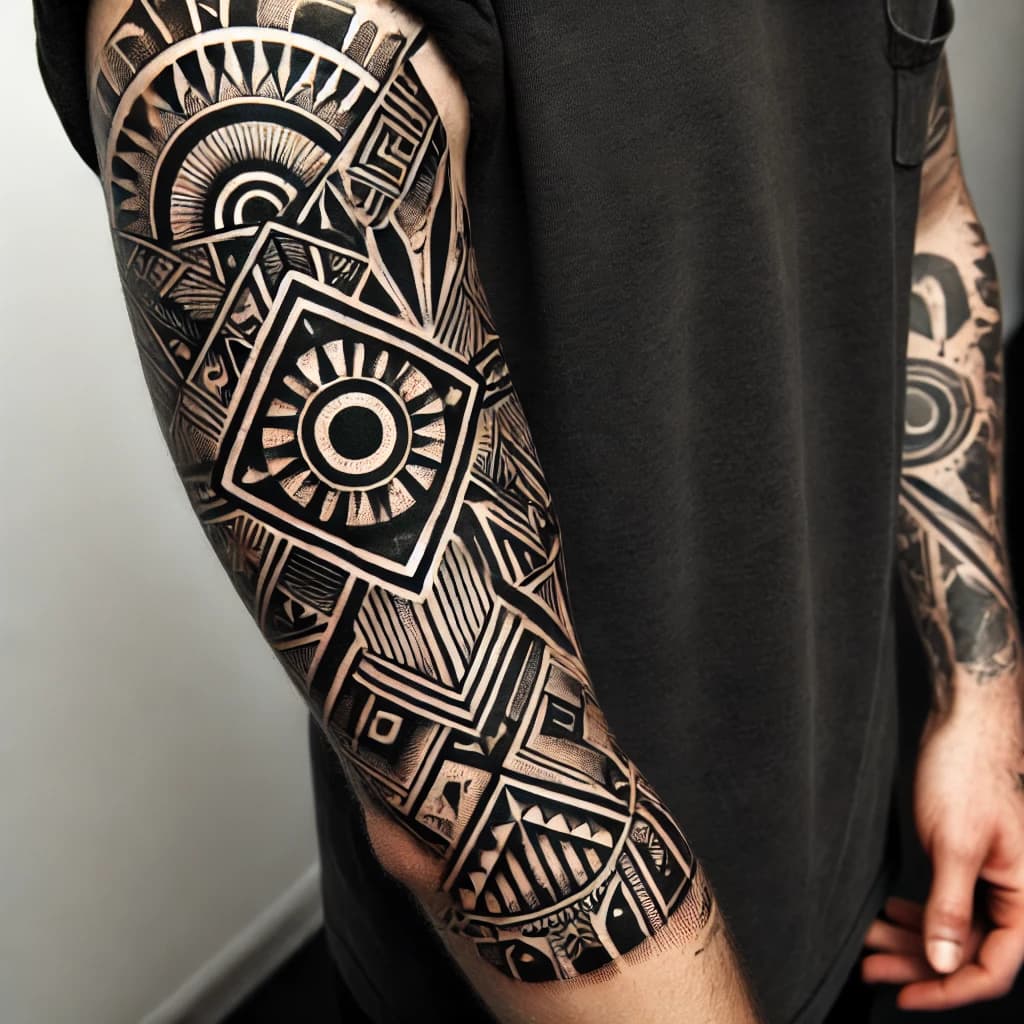
Back tattoos, sacred geometry and mandalas for bold large-scale designs
Back pieces live or die on symmetry and scale. The upper back favors clean geometry, while full-back work demands months of planning, pain tolerance, and flow.
Why the back still wins for large-scale geometry
The back is still the biggest single canvas in tattooing, and that is exactly why geometric work feels so powerful there. It can hold a sacred-geometry mandala, a blackwork framework, or a full composition that reads like architecture on skin, with the added drama of being visible to everyone else and often hidden from the person wearing it.
That tension gives back tattoos a different charge than smaller placements. The wearer lives with a private piece of body art that only fully reveals itself in mirrors, while everyone else sees the scale immediately. In geometric tattooing, that split between intimacy and display makes the back feel less like a surface and more like a stage for symmetry.
What fits best on the upper back
If the goal is precision, the upper back is often the safest and smartest place to start. Its broad surface gives mandalas, sacred-geometry wheels, and symmetrical linework room to breathe, while the shoulder-blade contours can help a design settle naturally instead of looking forced. That shape matters, because geometry only looks strong when the structure feels intentional.
The upper back is also a good answer when you want a piece that can read clearly without demanding a full-body commitment. A centered composition between the shoulder blades can anchor a design with a strong spine, while mirrored elements can use the shoulders as visual balance points. For collectors who want line discipline, negative space, and a clean outer frame, this placement usually keeps the artwork readable as the body moves.
When the full back earns its scale
Full-back work is the place for designs that need narrative, expansion, or a strong central axis. Monolith Studio’s back tattoo guide points to sacred geometry, mandala pieces, blackwork, and lettering as major requests, but the same space also carries dragons, phoenixes, religious figures, and floral work. That breadth is the point: the back can hold both structure and story.
A full back lets geometry evolve beyond a single medallion or central motif. You can build outward from the spine, use the shoulder blades as symmetrical anchors, or stretch a pattern into a complete field that feels more like a mural than a single tattoo. The tradeoff is commitment, because the larger the composition, the more every line, spacing decision, and transition has to hold up at distance and in close view.
Why symmetry matters more here than almost anywhere else
Geometric back tattoos succeed when the body flow is treated as part of the design, not as an afterthought. The natural width of the back gives symmetry real power, but it also punishes sloppy planning. A mandala that drifts off-center, or a sacred-geometry build that ignores the curve of the shoulders, can look strained even if the individual elements are well done.
That is why the back is such a strong match for collectors who think in terms of balance, axis, and repeatable structure. The flatness of the upper back can preserve precise linework, while the shoulder blades create a built-in frame that makes a large composition feel deliberate. When the design is built to the body instead of pasted on top of it, the result reads as a single image rather than a cluster of parts.
Pain, endurance, and the reality of getting it finished
Back tattoos are not only about aesthetics. A peer-reviewed study on tattoo pain perception looked at body area and the time required to complete the tattoo as factors in how pain is experienced, which is a useful reminder that placement and session length are part of the equation. That matters on the back, where the upper area tends to be more tolerable than the spine or lower back.
The anatomy explains why. NIAMS notes that the back includes vertebrae, spinal cord, discs, ligaments, tendons, and muscles, so spine-adjacent tattooing can become more uncomfortable than work placed farther out on the shoulders or upper back. For large projects, that discomfort is often paired with time, because full back pieces commonly unfold over multiple sessions across several months.
Aftercare is part of the placement decision
Back tattoos are also harder to manage after the needle stops. The area is difficult to reach on your own, which makes cleaning and moisturizing more awkward than with an arm, calf, or chest piece. That practical problem matters more on large work, because healing has to stay consistent across broad sections if you want crisp linework and even saturation.
For geometric pieces, that means aftercare is not just comfort, it is preservation. Smooth healing helps keep sharp angles sharp, preserves symmetry, and prevents the kind of patchy finish that can flatten a mandala or make blackwork look uneven. The bigger the piece, the more the healing process becomes part of the design’s final success.
A canvas with deep roots, not just a modern trend
The back feels modern when it carries a giant mandala or a fine-line geometric build, but the placement itself is ancient. Smithsonian Magazine notes that humans have been marking their skin for thousands of years, and that tattoos have historically signaled religious faith, protection, pain relief, and social status. Ötzi the Iceman, whose body carried 61 tattoos, had markings on his lower back, which puts back-area tattooing deep inside human history.
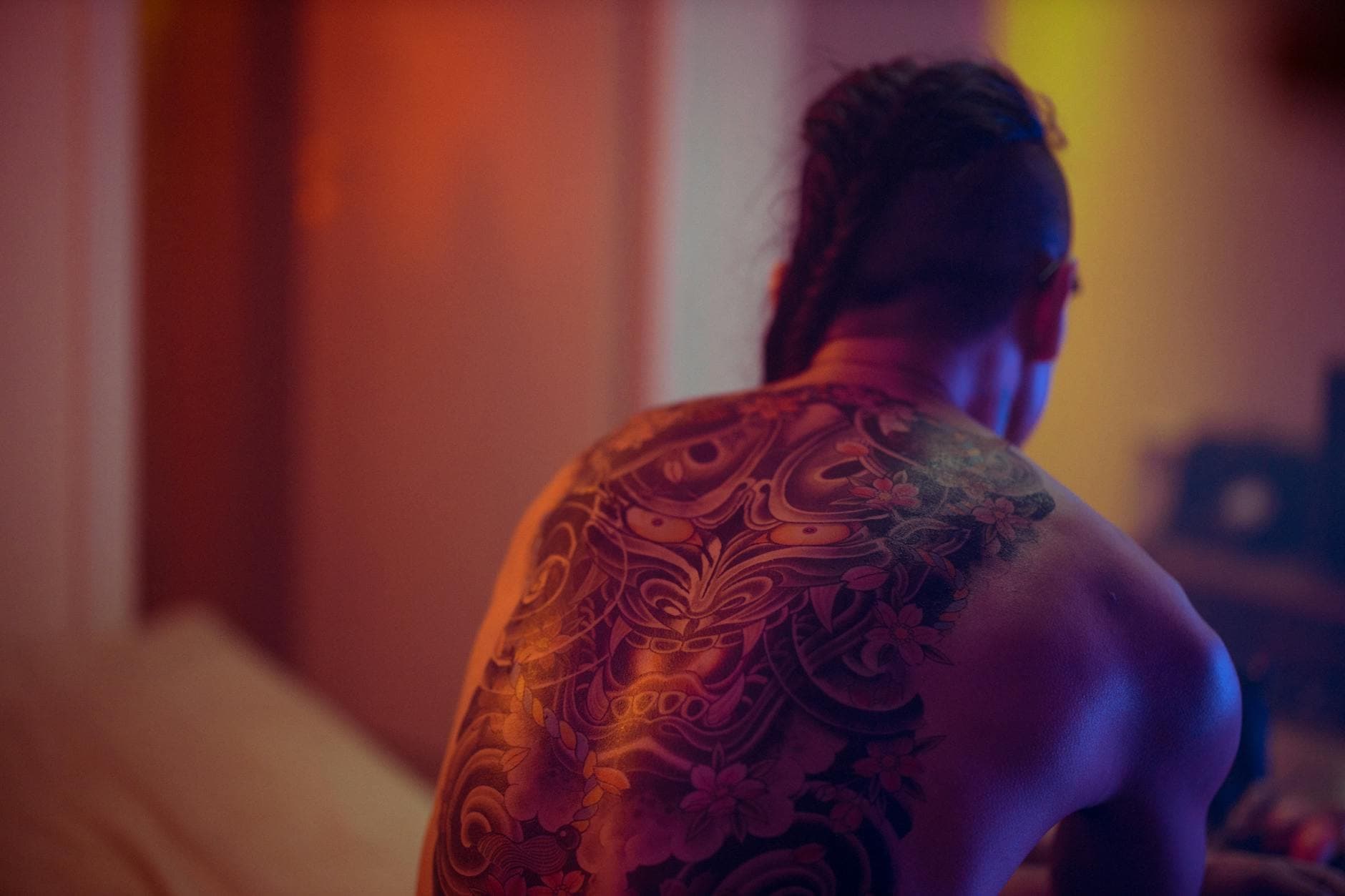
Japanese tattoo tradition adds another layer. Fordham University notes that Japanese tattoo history can be traced to the 5th century, and that tattoos have been linked at different times to superstition, criminal branding, and art. Britannica adds that yakuza members often bear elaborate body tattoos, which is part of why Japanese-style full-back work still carries such strong visual weight today. The old associations may differ from modern geometric tattooing, but the message is the same: a back piece has always been about presence.
That is why the back remains the ultimate canvas for large-scale geometric storytelling. It gives symmetry room to breathe, rewards disciplined planning, and turns a mandala or sacred-geometry build into something that can be seen at a glance and lived with for years.
This article was produced by Prism’s automated news system from verified source data, official records, and press releases, then run through automated quality and moderation checks before publishing. The system is built and supervised by the people who set the standards it runs under. Read our full AI policy.
Did this article answer your question?