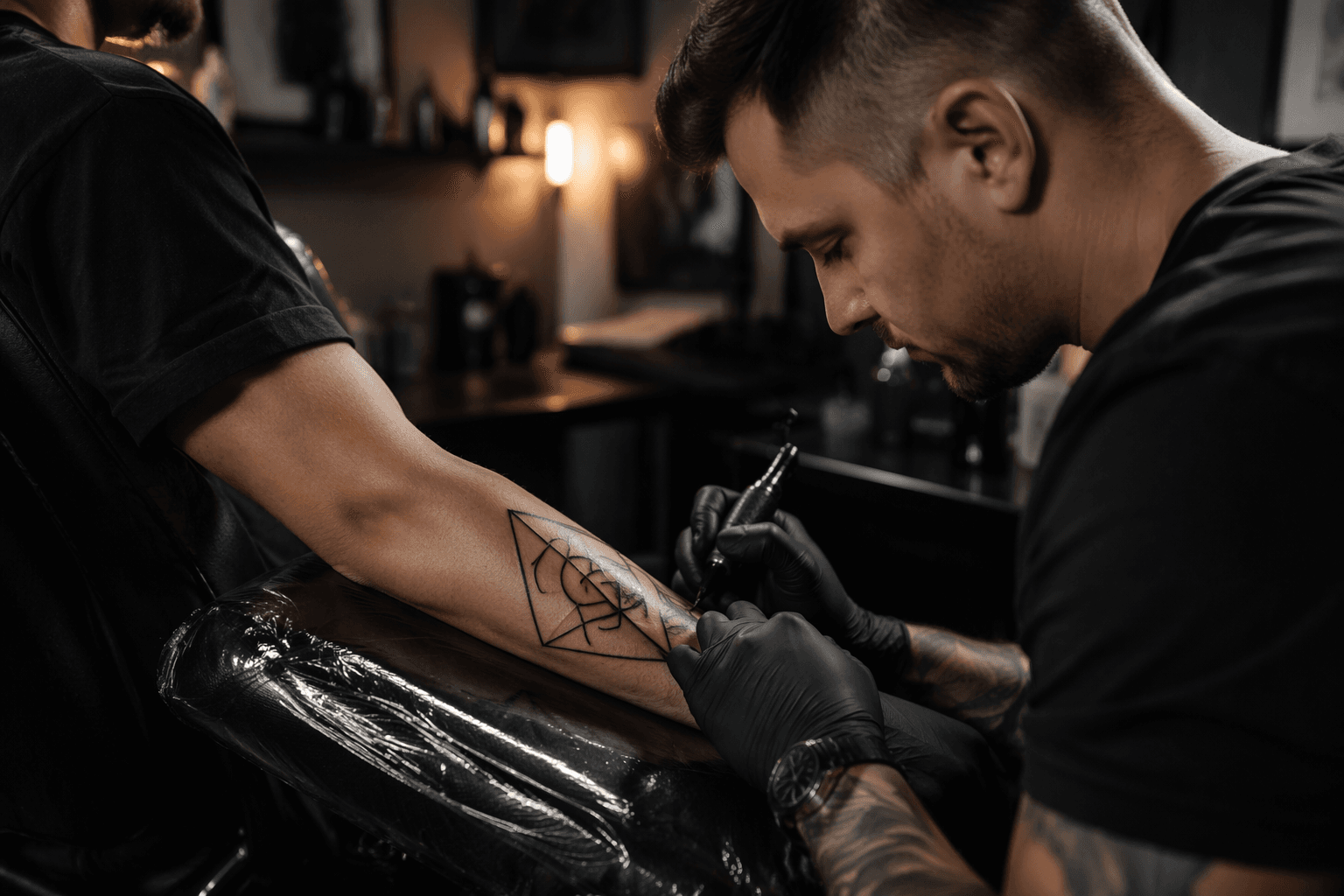
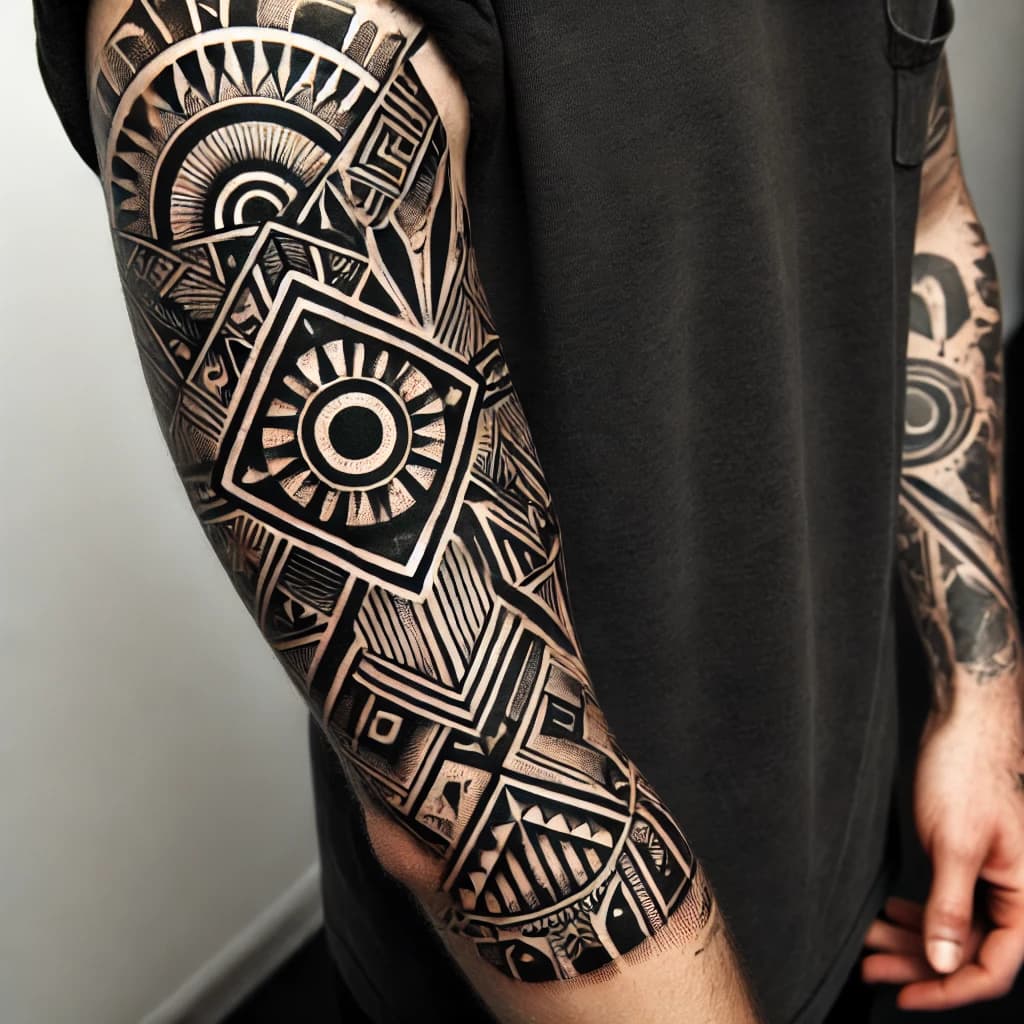
Nakkab’s Sernakkab tattoos merge Turkish marbling with anatomy-led linework
Nakkab turns marbling into anatomy-first linework, making tattoos that are built to follow the body so closely they resist easy copying.
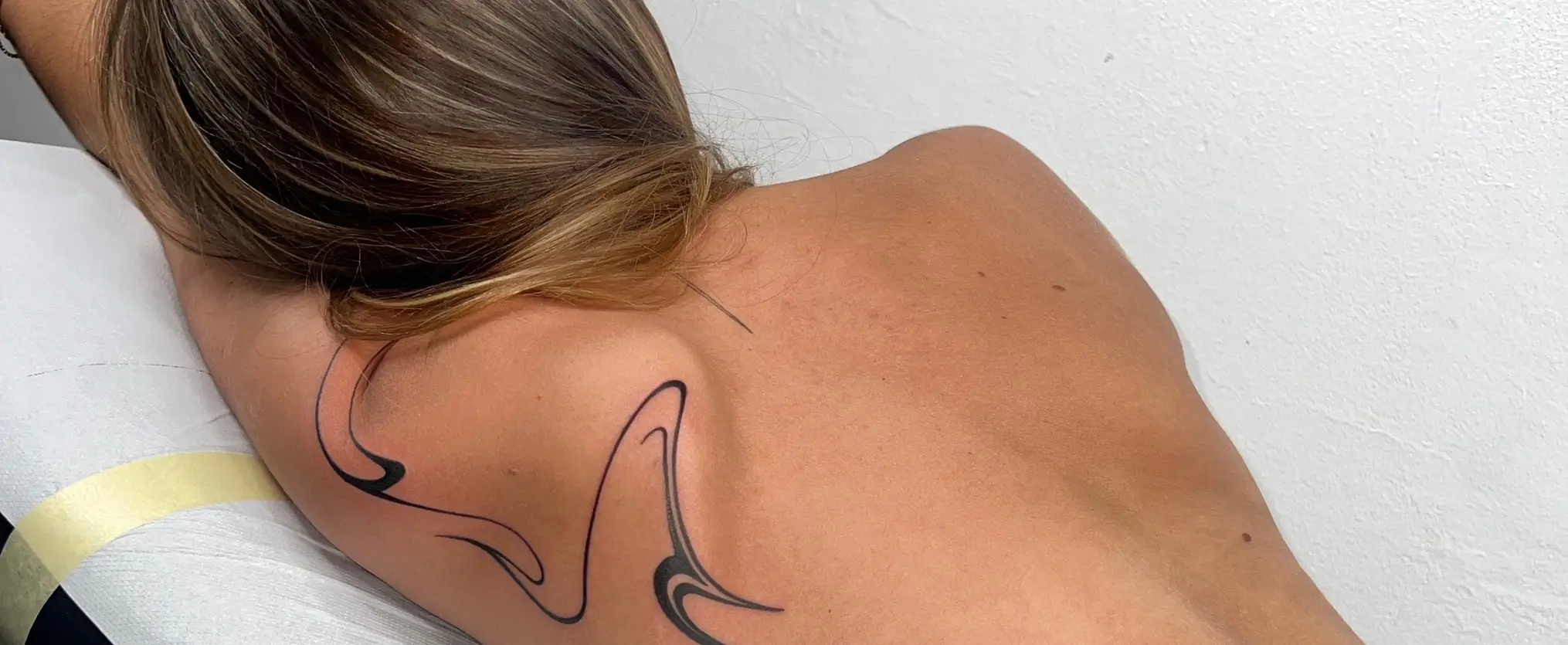
Nakkab’s Sernakkab tattoos merge Turkish marbling with anatomy-led linework
A design that looks loose but is built to be hard to copy
Nakkab’s work lands in that rare sweet spot where a tattoo feels fluid on the skin and still reads like a calculated system. The appeal is not just the look of the lines, but the fact that the design is built to resist imitation by making the body itself part of the composition. In a tattoo market where 32% of U.S. adults now have at least one tattoo and 22% have more than one, that kind of custom logic is more than a gimmick, it is a real differentiator.
What makes the work hit for geometric readers is the tension at its core: the pieces appear spontaneous, but they are anything but improvised. The method is structured, anatomy-led, and deliberately difficult to flatten into a repeatable flash sheet.
What Sernakkab actually is
Nakkab calls the approach Sernakkab, and the name points straight to the source material: Turkish marbling, or Ebru, merged with tattooing. UNESCO recognizes Ebru as the traditional Turkish art of creating colorful patterns by sprinkling and brushing pigments onto oily water, then transferring the result to paper. That marbling logic gives the tattoos their movement, but the tattooing side is what turns it into something body-specific rather than decorative in the abstract.
Nakkab says he treats the client’s muscle and bone anatomy as the reference point, not as an afterthought. That matters, because a lot of tattoos that try to look dynamic still sit on the body like stickers. Sernakkab aims for the opposite: the form is supposed to belong to the body’s planes, curves, and motion.
He introduced the method in 2019, after spending years from 2015 to 2019 moving through different styles and repeatedly coming back to linework, movement, and designs that followed the body instead of sitting on top of it. That pivot is the key to understanding the work. It is not a random mashup of marbling and tattooing, but the result of a long return to the same problem, how to make a tattoo feel native to the person wearing it.
Why the linework is the real firewall
The most important thing about Sernakkab is not the marbling texture, it is the line discipline. Once the stencil is applied, there is very little room for improvisation, because the lines have to hold their shape without relying on heavy shading or decorative clutter to cover mistakes. That is exactly why the work is so hard to duplicate cleanly. If someone copies the surface motif but misses the anatomical placement, the tattoo loses the whole effect.
That makes the design logic especially relevant in geometric tattooing, where precision is already part of the vocabulary. The difference here is that precision is not only about symmetry or crisp edges. It is about how line weight, spacing, and directional flow adapt to the body’s movement. The tattoo has to work from multiple angles and in motion, not just in a flat photo.
The broader principle is simple: the best tattoos do not fight the body. They follow muscle and motion so the design reads naturally as the person moves, twists, or raises an arm. That is where Nakkab’s work feels less like a style exercise and more like a system built to make replication fail.
How the process starts before the needle ever touches skin
Sernakkab begins off-skin, and that is part of why the final result feels so locked in. Nakkab creates physical marbling artworks first, then scans them and adapts those forms to a client’s unique anatomy. His site says the work is purified and placed through that process, which is another way of saying the design is translated rather than copied straight across.
Clients send reference photos taken in a relaxed posture, along with notes on mood, placement, and color preferences. That posture detail is not minor. A tattoo designed from a tense pose can warp when the body relaxes, so starting from a calm, natural stance helps the composition sit correctly once it is inked. Before the appointment, clients review and confirm the design, which makes the workflow highly preplanned and leaves little to chance in the chair.
That pre-approval step is part of the identity of the method. It turns the tattoo into a planned collaboration between artist, marbling, and anatomy, rather than a live improvisation. For anyone used to geometric work, that tracks. The cleanest pieces are usually the ones where the structure was solved before the machine ever started moving.
Why this matters in a crowded tattoo culture
Nakkab’s rise says something bigger about where tattoo authorship is heading. As tattoos become more mainstream, the premium is shifting from simply getting something bold to getting something that feels singular and structurally intelligent. The audience is large enough now that generic good-looking work is no longer enough to stand out.
That is where originality becomes a material issue, not just an aesthetic one. If a design can be replicated easily, it loses some of its value in a culture that increasingly rewards one-off systems and body-specific composition. Sernakkab answers that by making the anatomy do part of the authorship work. The tattoo is not just drawn on skin, it is composed through the body.
For geometric tattoo culture, that is the real takeaway. The future of premium work may not be about louder motifs or denser ornament. It may belong to artists who can make a design obey the body so precisely that copying it becomes awkward, obvious, and incomplete. Nakkab has turned that idea into a method, and that is why the work feels less like a trend piece than a warning shot to everyone still tattooing templates as if the body were a flat page.
This article was produced by Prism’s automated news system from verified source data, official records, and press releases, then run through automated quality and moderation checks before publishing. The system is built and supervised by the people who set the standards it runs under. Read our full AI policy.
Did this article answer your question?