Stretch marks and geometric tattoos, what to know before booking
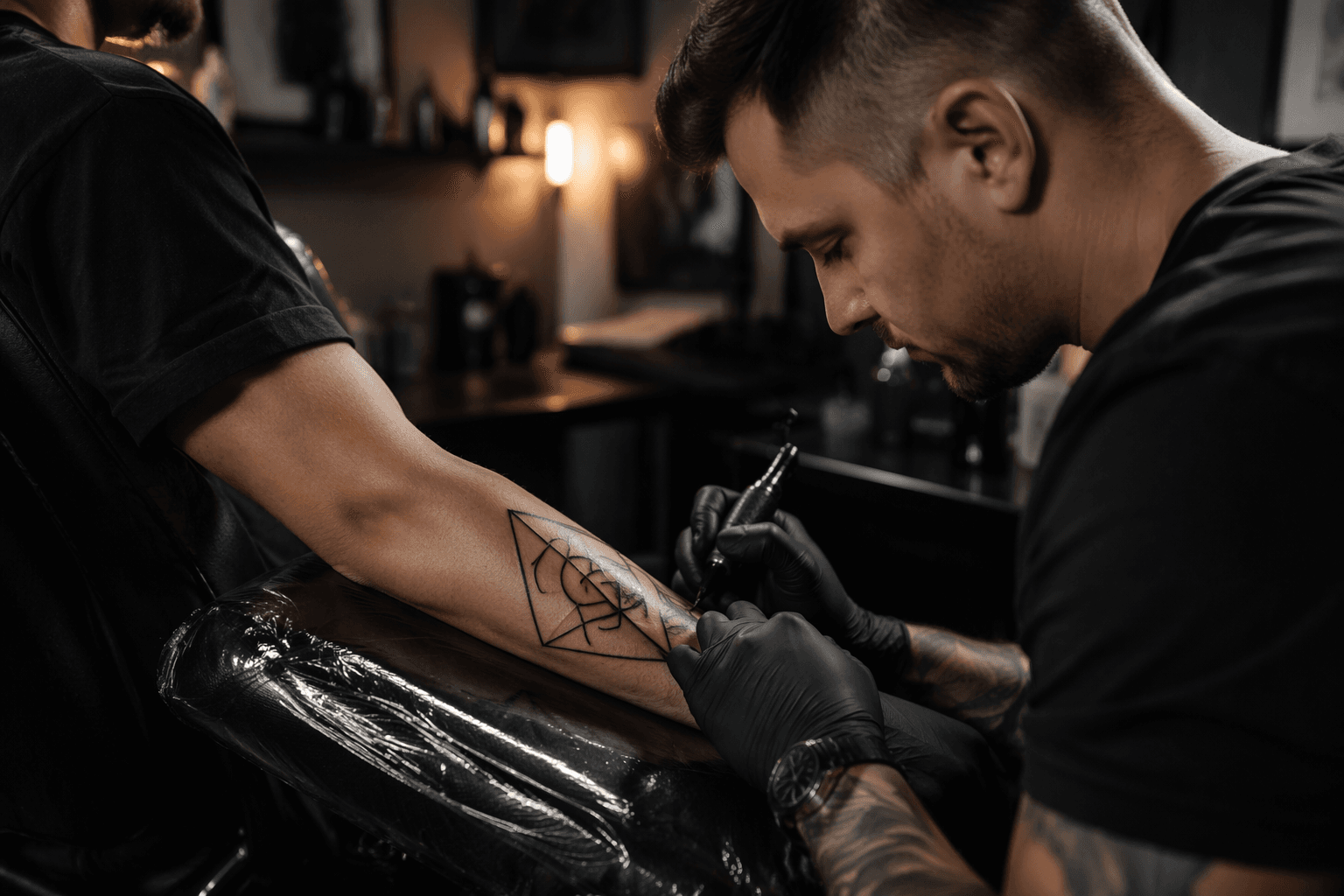
Geometric tattoos can work over stretch marks, but only when the skin is mature, the placement is forgiving, and the artist can adapt the design.

Stretch marks change the canvas
Stretch marks are not just surface texture. The American Academy of Dermatology describes them as a type of scar that forms when skin stretches or shrinks quickly, rupturing the collagen and elastin that support it. That matters for geometric work, because the cleanest linework in tattooing depends on skin that behaves predictably, and stretch-marked skin rarely does.
The upside is that stretch marks are common, and they are not dangerous in themselves. Mayo Clinic says they are harmless and often fade over time, even if they never fully disappear. They most often show up on the tummy, chest, upper arms, legs, bottom, hips, or back, so this is not a rare edge case, it is a familiar part of how bodies change.
Fresh marks and mature marks are not the same job
The first decision is timing. Fresh stretch marks, especially red or purple ones, are still active-looking scar tissue and are not the right surface for tattooing. Mature white or silver marks are the better candidate because they are healed enough to behave more like settled scar tissue than an ongoing skin change.
That difference is critical if you want geometric tattooing, where symmetry, spacing, and line precision matter. A design that looks crisp on flat healthy skin can blur, buckle, or heal unevenly when the skin underneath is still changing. An ethical artist should be willing to tell you to wait, because the safer call is often the smarter one.
Why geometry is beautiful here, and why it is unforgiving
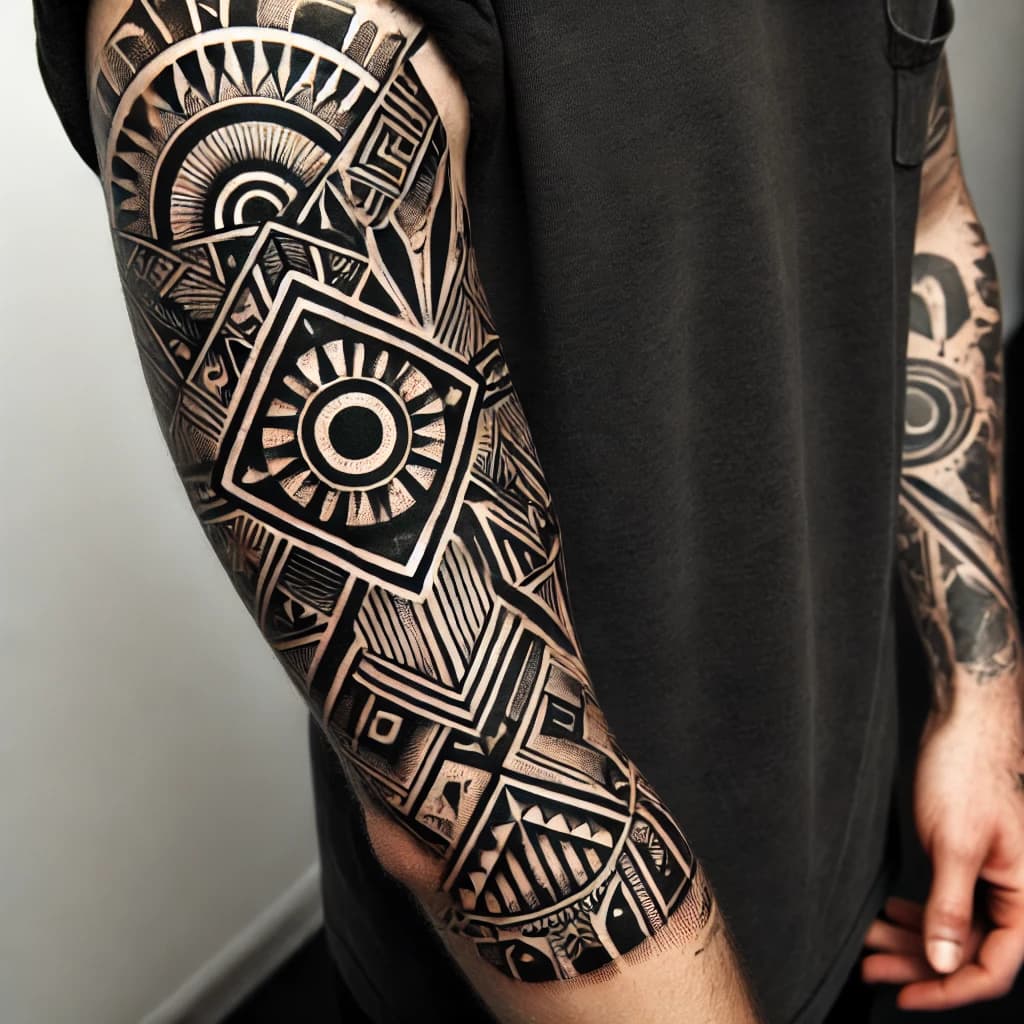
Geometric tattoos reward structure. Sacred geometry, grids, linework, and mirrored forms all depend on exact placement, but stretch marks can interrupt that structure in ways a flash sheet cannot predict. On scarred skin, the design has to adapt to the body instead of pretending the body is a blank page.
That is why fine-line and highly detailed geometry can be risky over stretch marks. Thin lines and tight spacing are less forgiving on textured skin, and any distortion reads immediately. If the marks sit on a curved or mobile area, the challenge doubles, because the tattoo has to hold its shape while the body moves.
Placement matters more than most people expect
The abdomen, thighs, hips, and upper arms are common stretch-mark zones, and they are also areas that can be more sensitive during tattooing. Scar tissue can be less elastic and may create tightness or pain, which changes the experience under the needle. Even when the marks are mature, the area may still feel different from the surrounding skin.
That is why placement-specific planning matters so much. A geometric pattern that looks elegant across a flatter area may need to be simplified, widened, or rebalanced if it crosses a dense stretch-mark field. Sometimes the right answer is not a different tattoo, but a different composition.
What to ask before you book
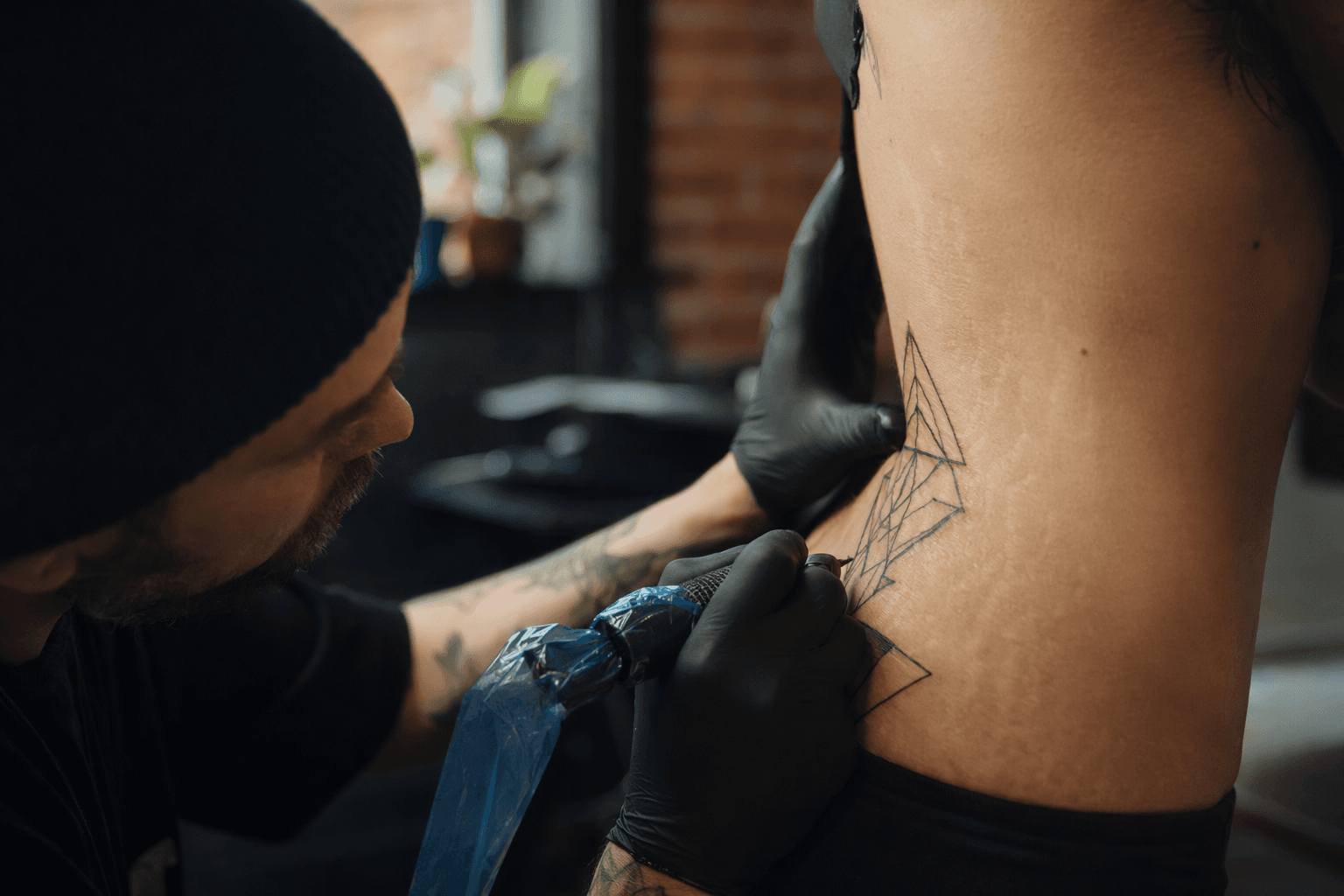
A strong portfolio is not just about pretty healed tattoos, it is about evidence that the artist understands altered skin. You want to see healed examples of scar or stretch-mark work, not just fresh photos taken under flattering lighting. The best artists talk about texture, retention, and placement with the same care they bring to the design itself.
Before you commit, ask questions that reveal whether the studio can handle this kind of surface:
- Have you tattooed over mature stretch marks before?
- Can I see healed examples, especially geometric or fine-line work on textured skin?
- Would you adjust the design if the marks cross a high-motion area?
- At what point would you recommend waiting instead of booking now?
Those answers matter more than a flashy stencil. If the artist talks as if the marks will disappear under ink with no trade-off, keep looking.
Pain, risk, and the reality of healing
Stretch-mark tattooing can hurt more than a standard session because scar tissue is often more sensitive and less elastic than nearby skin. That does not mean the work is impossible, but it does mean you should expect a different kind of session than a tattoo on untouched skin. Patience matters, both during the appointment and after it.
There is also a real safety side to the decision. The FDA says tattoos and permanent makeup can carry risks that include infections and allergic reactions. The American Academy of Dermatology also notes that tattooed skin can react in unexpected ways and that tattoos can make skin cancer harder to detect, so the choice is not purely cosmetic. Larger tattoos can take a few months to fully heal, according to Cleveland Clinic, which is another reason not to rush a cover-up over sensitive skin.
Aftercare is part of the design
A stretch-mark tattoo is only as good as its healing. Gentle cleansing, moisturizing, and protective care are not afterthoughts here, they are part of protecting linework on skin that already has a different texture. If the area gets overworked, irritated, or overexposed during healing, the result can be patchy and uneven.
That is especially important for geometric tattoos, where small changes in line quality are easy to spot. If the tattoo sits on mature stretch marks, let it heal at its own pace and respect that the skin may take longer to settle. The goal is not to force the body to act like untouched paper, but to help the design land cleanly on the skin you actually have.
The bigger picture
Paramedical tattooing has long been used to camouflage scars and stretch marks, and this work sits inside that tradition even when the result is decorative rather than corrective. Geometric and fine-line styles can be stunning in this setting, but they ask the most from the skin and the artist at the same time. That makes judgment part of the craft.
The safest booking is the one that matches ambition to reality. If the marks are mature, the placement is workable, and the artist can redraw the geometry around the skin’s texture, the result can be elegant and deliberate. If the marks are fresh, the lines are too precise, or the artist refuses to slow down, the smartest move is to wait for a better canvas rather than forcing the wrong one.
This article was produced by Prism’s automated news system from verified source data, official records, and press releases, then run through automated quality and moderation checks before publishing. The system is built and supervised by the people who set the standards it runs under. Read our full AI policy.
Did this article answer your question?