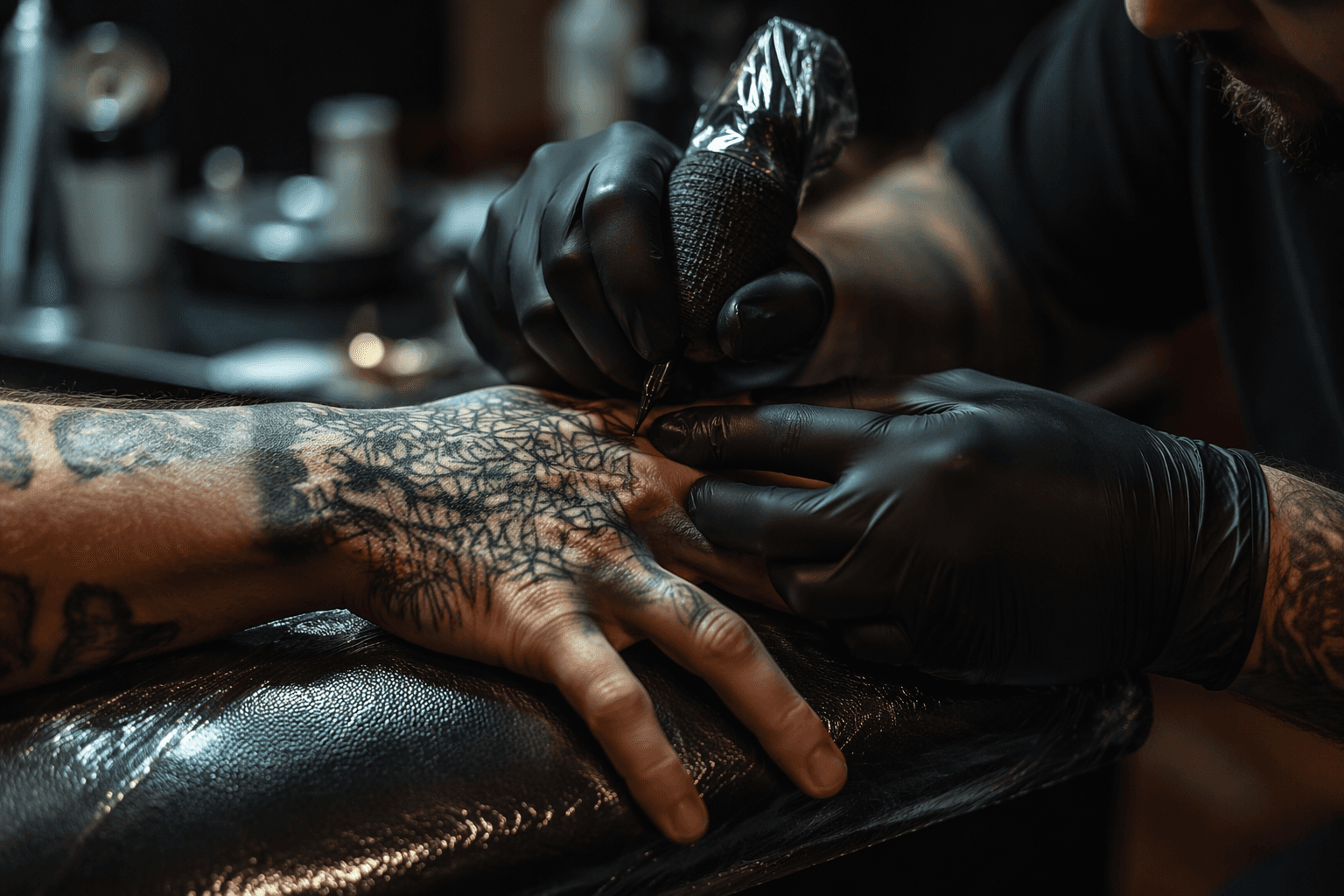
Why stencil accuracy makes geometric tattoos succeed or fail
A geometric tattoo can be flawless on paper and still fail on skin if the stencil drifts. The difference lives in transfer paper, prep, and placement checks.
The hidden break point in geometric ink
The new split in geometric ink is not a style debate. It is a transfer problem. In geometric tattooing, the stencil is the first version of the tattoo that has to behave like finished architecture, because symmetry, spacing, and line alignment are the whole point of the design.
That is why a slightly warped stencil can do damage before the needle ever touches skin. A triangle can drift out of axis, a mandala ring can sit off-center, and a mirrored panel can lose balance once it meets the curve of a forearm, ribcage, or shoulder. In this genre, the stencil is not just a sketch. It is the framework that protects the composition from breaking apart.
What stencil paper is really doing
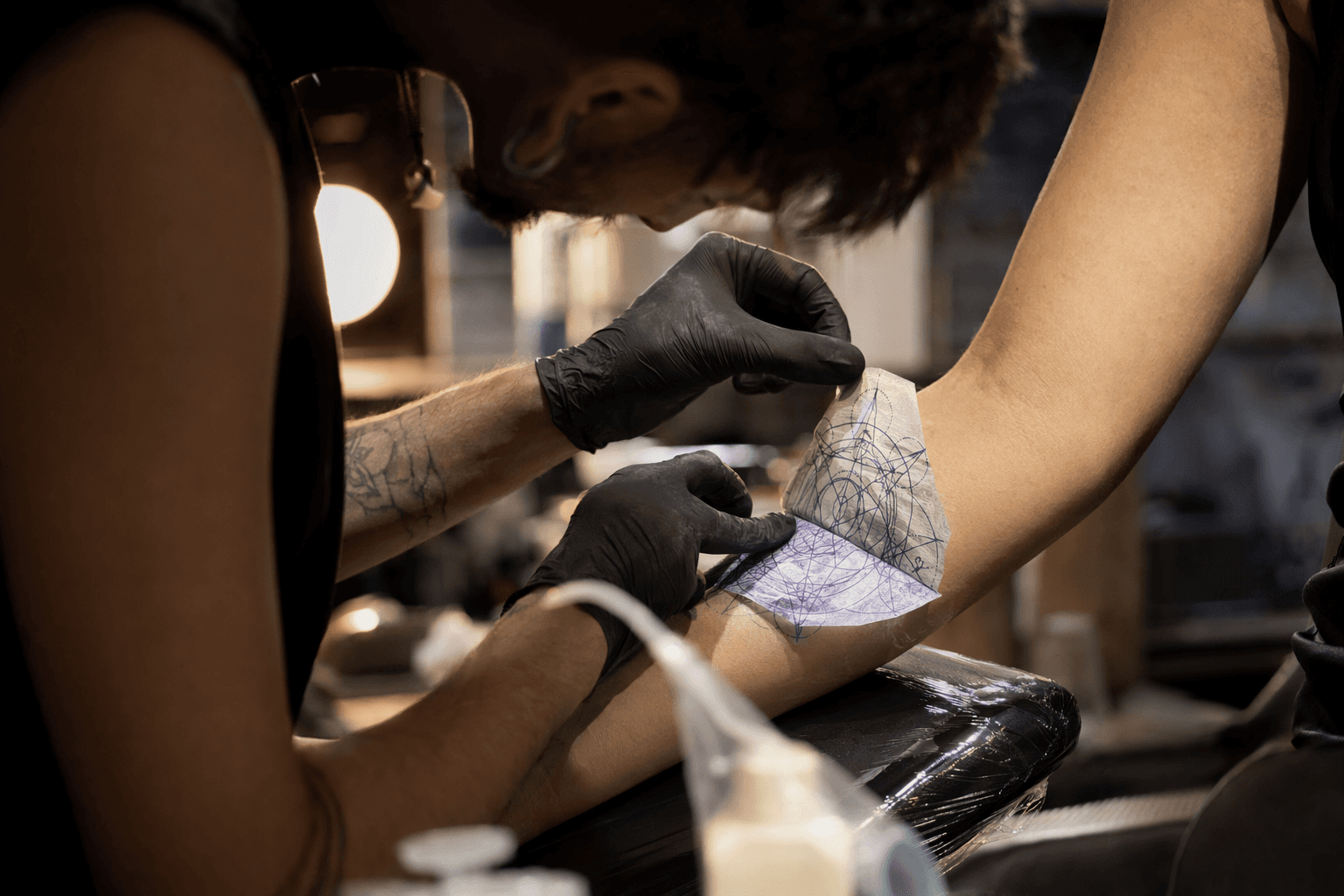
Tattoo transfer paper, or stencil paper, is the roadmap that moves a design onto skin instead of forcing the artist to freehand the entire piece. The paper itself is built in layers: a white master sheet where the design is applied, a brown protective sheet that keeps the master clean, a purple carbon layer that carries the image, and a yellow backing that adds stability.
That layering matters in geometric work because the design often depends on repeatable spacing and clean edges. If the transfer is smudged, uneven, or slightly shifted, the error gets baked into the tattoo’s structure. The smaller and tighter the geometry, the less room there is for improvisation once the stencil is down.
Why the genre depends on transfer fidelity
Geometric tattoos ask for more than visual neatness. They rely on measured relationships between circles, points, mirrored motifs, and nested channels of linework. That is why stencil accuracy is such a make-or-break issue here: the stencil sets the symmetry before the skin adds its own distortions.
This is especially true in sacred geometry, ornamental symmetry, and fine-line structure. A design with dotwork circles or thin channels can look perfect on screen and still become difficult to execute if the transfer lifts or blurs mid-session. Once that happens, the artist is forced to rebuild clarity by eye, and that is exactly where precision pieces start to unravel.
The long history behind a modern problem
The pressure to get transfers right is not new. Tattoo Archive traces stencil methods back through Scythian felt pads, carved wood blocks used in Borneo and by Coptic tattooists, 19th-century hectograph ink and rice paper, and early celluloid stencils at the turn of the century. Tattoo stenciling has always been about preserving intent from one surface to another.
Louis Morgan was already describing a transfer method in 1912 in *The Modern Tattooist*, laying tissue paper over a design and tracing it with an indelible pencil. Tattoo.co.uk adds that Edwardian tattoo suppliers sold hectographic transfer paper, that artists washed and shaved the skin before applying transfers, and that Dettol, invented in 1933, later helped some tattooists dampen skin for better transfer results. The tools changed, but the goal stayed the same: keep the image readable when it leaves the page and lands on living skin.
How artists build the stencil matters
There is no single correct workflow, but each one carries a different tradeoff. Hand-drawn stencils can sharpen muscle memory and force the artist to understand the design more deeply. Digital creation and thermal printing, on the other hand, bring speed and consistency, which can be a lifesaver when a piece has strict symmetry or needs to be repeated across a larger body map.
Thermal stencil printing is now described by Tommy’s Supplies as the professional standard in many modern studios. That makes sense in a genre where inconsistency creates visible errors and, in multi-artist settings, unnecessary client do-overs. If a stencil process cannot be repeated cleanly, the tattoo itself inherits that instability.
The three checks that matter most
Before the needle starts, the best geometric tattoos have already been checked three times: the design itself, the skin surface, and the placement on the body. Those checks are where precision lives.
- Paper choice: Use a transfer method that holds fine lines cleanly and does not bleed on contact.
- Skin prep: Wash and shave the area so the stencil sits evenly, then apply with enough control that it does not smear.
- Placement review: Step back and confirm the body’s curves have not pulled the design off axis, especially around mirrored elements and circular forms.
The reason these details matter is simple. A design that is perfectly centered on a flat page may need to be nudged, scaled, or re-angled so it reads correctly on a shoulder cap, sternum, or calf. Geometry forgives less than most styles, because the eye notices imbalance immediately.
Why precision has become part of the style itself
Artists known for this lane treat the stencil as part of the final artwork. Dillon Forte, whose work is closely associated with contemporary sacred geometry, launched a Sacred Geometry Drawing App in 2025, a sign that geometry-focused tattooing is increasingly shaped by digital planning tools and precision-first workflows. Ilya Cascad’s ornamental geometric work is described in terms of symmetry, precision, and longevity, which is exactly the standard a strong stencil has to support.
That is the real lesson hidden inside stencil paper, thermal printers, and skin prep. Geometric tattooing succeeds when the transfer behaves like a blueprint and fails when it behaves like a rough guess. In this style, accuracy is not an extra polish added at the end. It is the thing that makes the whole design possible in the first place.
This article was produced by Prism’s automated news system from verified source data, official records, and press releases, then run through automated quality and moderation checks before publishing. The system is built and supervised by the people who set the standards it runs under. Read our full AI policy.
Know something we missed? Have a correction or additional information?
Submit a Tip