Geometric Tattoos Demand Clean Lines, Stability, and Precise Needle Depth
Geometric tattoos punish sloppy linework fast. If your grip, stability, or depth are off by even a little, the flaw survives the heal and shows up in every ring, grid, and border.
Why geometry exposes every mistake
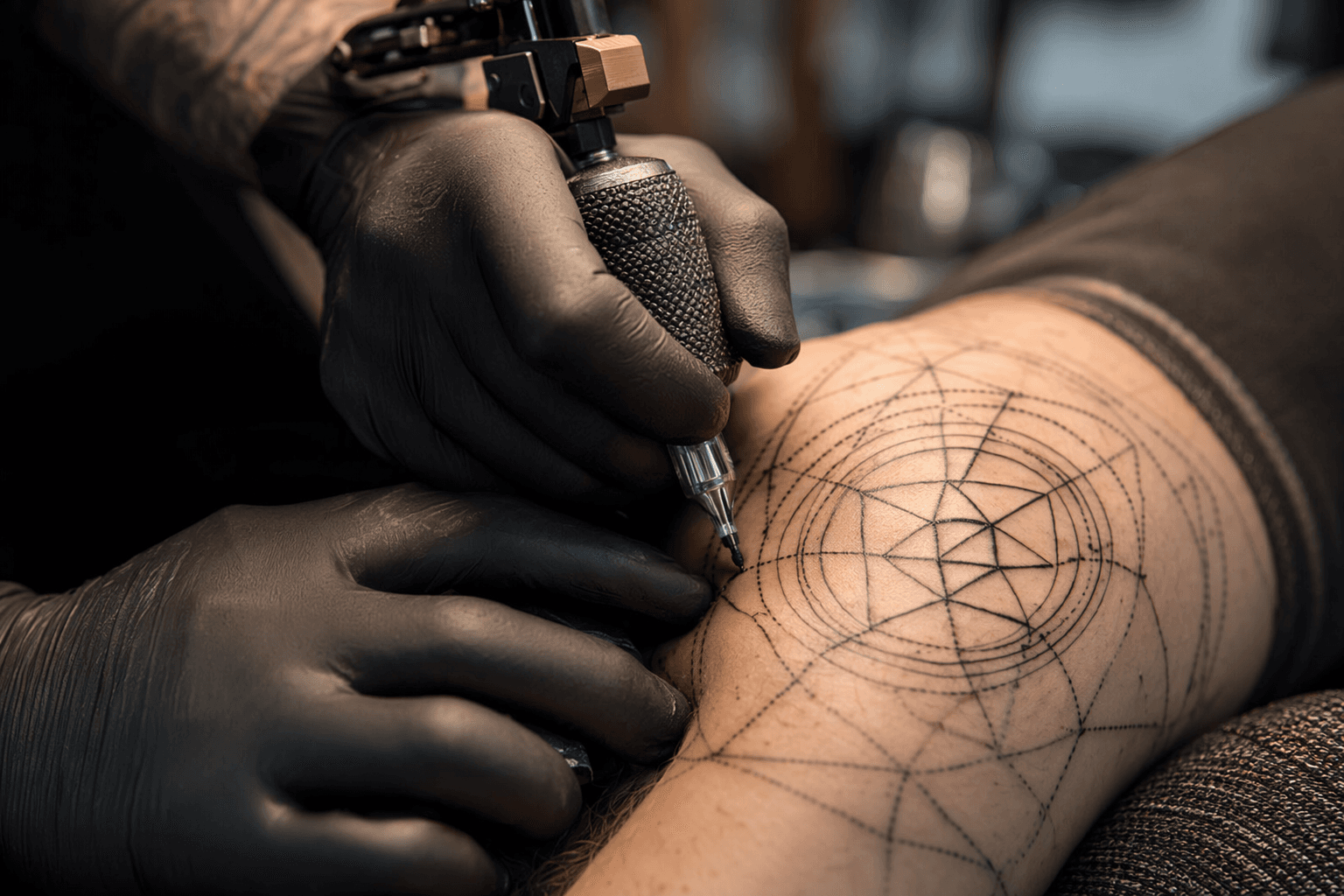
Geometric tattoos do not forgive guesswork. A shaky outline that might disappear inside a looser ornamental piece becomes obvious the moment it lands in a mandala ring, a hexagon border, or a straight architectural line. That is why linework sits at the center of geometric tattooing: Tattooing 101 treats it as one of the most important beginner skills and one of the hardest to master, and that framing is dead on.
The real goal is not just to get ink into skin. It is to produce professional-level lines with good saturation, perfect needle depth, and no shakiness, because the structure of the whole tattoo depends on those things staying consistent from start to finish. In geometric work, the line is the design, the boundary, and the symmetry check all at once.
Get the machine hold right before you chase cleaner lines
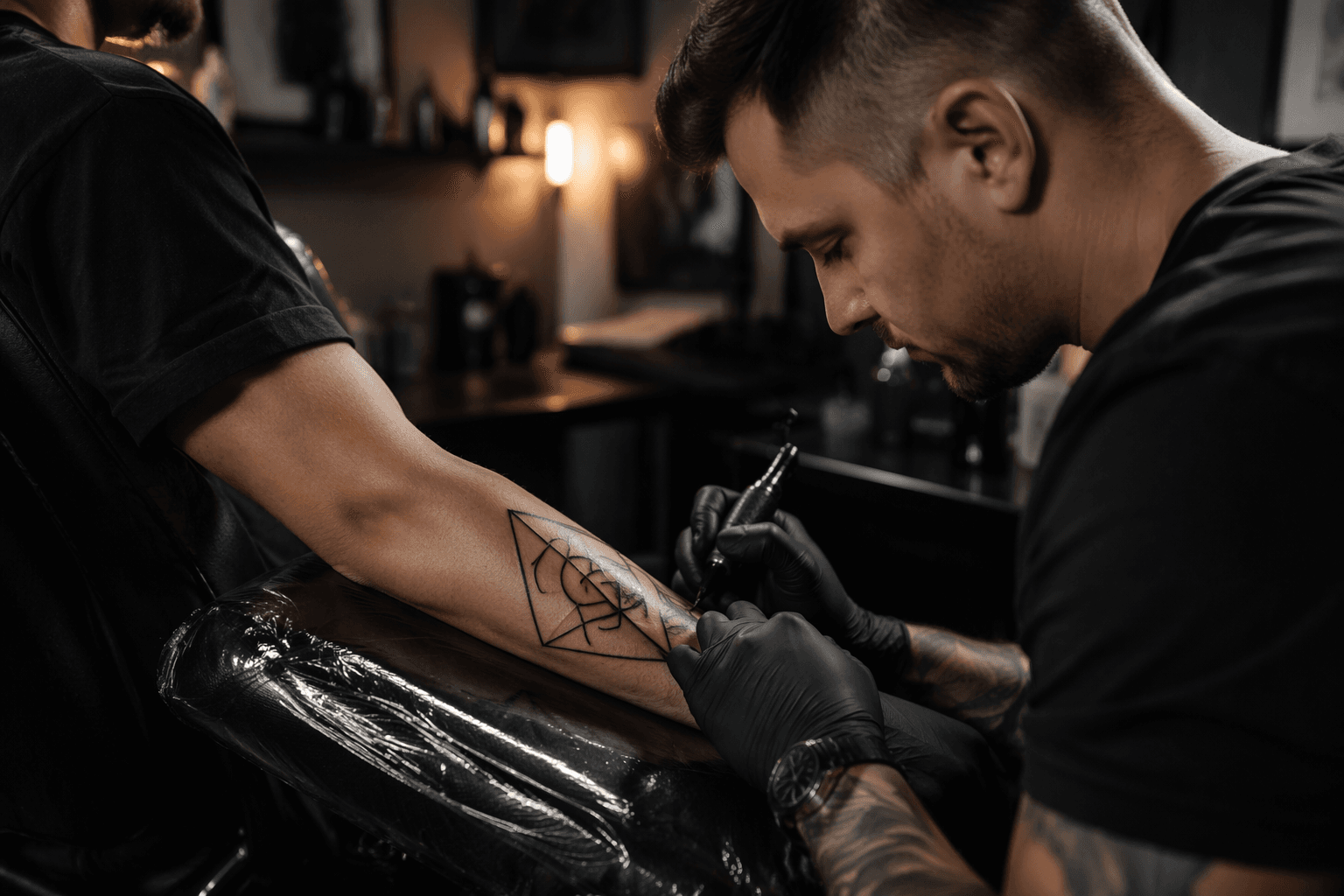
A lot of beginners try to solve bad lines by drawing faster, but the grip is usually the first problem. Tattooing 101 recommends placing the middle finger under the cartridge so the machine weight rests more naturally, while the index finger and thumb control the grip. The ring finger and pinky then help stabilize against the skin, which gives the hand more control without squeezing the machine into a death grip.
That setup matters because geometric tattoos expose small hand errors immediately. If the machine sits awkwardly in the hand, every tiny correction shows up as a wobble. Clean geometry starts with a hold that lets the tattooer move the machine in a straight, repeatable path instead of fighting it.
Stability is not optional, it is the whole game
The next piece is body position, and this is where a lot of otherwise talented beginners fall apart. Tattooing 101 recommends three points of contact: anchor the elbow, plant the palm, and keep the pinky connected to the stretching hand. That triangle of contact reduces shakiness, which is exactly what you want when you are trying to pull a line across a placement that leaves no room to hide.
This is the kind of discipline geometric tattoos demand because a small wobble turns into a visible kink in a circle or a break in a grid. If the hand floats, the line floats with it. If the body is braced, the line has a chance to stay honest.
Depth is where crisp turns into blown out or scratched in
Linework is not just about movement. It is also about how deep the needle actually sits in the skin. Tattooing 101 says to stay roughly 1 to 2 millimeters deep, depending on body part, and CNC Tattoo reinforces an important point that beginners miss all the time: needle hang is not the same as actual depth. CNC Tattoo suggests starting with a 1 to 2 millimeter hang, but the point is to understand the difference between how far the needle is exposed and where it lands in the dermis.
That distinction matters because the dermis is the layer where tattoo ink settles permanently. Go too shallow and the line can heal faint, patchy, or scratched in. Go too deep and you risk blowouts that destroy the crisp edge geometry depends on. In a style built on symmetry and hard borders, depth is not a subtle detail. It is the difference between clean structure and a tattoo that looks tired before it even finishes healing.
The mistakes that sabotage geometric pieces most often
Tattooing 101’s linework technique guide calls out the beginner errors that wreck clean geometry over and over again, and the list is pretty familiar if you have spent any time watching new artists learn. Moving the hands too fast or too slow can break the line rhythm. Holding the machine the wrong way throws off control. Shaky lines, faint lines, and blowouts all show up fast in geometric work because the design gives them nowhere to hide.
A separate machine-speed guide adds another piece that matters just as much: hand speed and machine voltage need to match if you want solid tattoos without overworking the skin. That balance is easy to talk about and hard to feel, which is why beginner linework gets ruined by trying to force the machine through the skin instead of letting the speed and voltage work together.
What to practice first if you want clean geometry
Before you touch a real mandala or a symmetry-heavy panel, drill the mechanics. Tattooing 101 is clear that artists should learn how to pull long, clean lines anywhere on the client’s body, not just on easy flat areas. That means practicing consistency across curves, limbs, and awkward placements, because geometric tattoos do not only live on perfect surfaces.
A practical training order looks like this:
- Lock in the grip so the machine sits naturally under the middle finger
- Build stability with elbow, palm, and pinky contact
- Practice matching hand speed to voltage so the line stays solid
- Learn the feel of 1 to 2 millimeters of depth without cutting too deep
- Move to longer straight pulls only after short lines stop wobbling
The companion Tattooing 101 video on linework adds another useful reality check: once you move from thin outlines to thicker structure, you need better angles, larger needle groupings, and more intentional machine settings. That shift matters in geometry because bold borders and heavier structure are often what hold a pattern together after healing.
Why mandalas make the stakes even higher
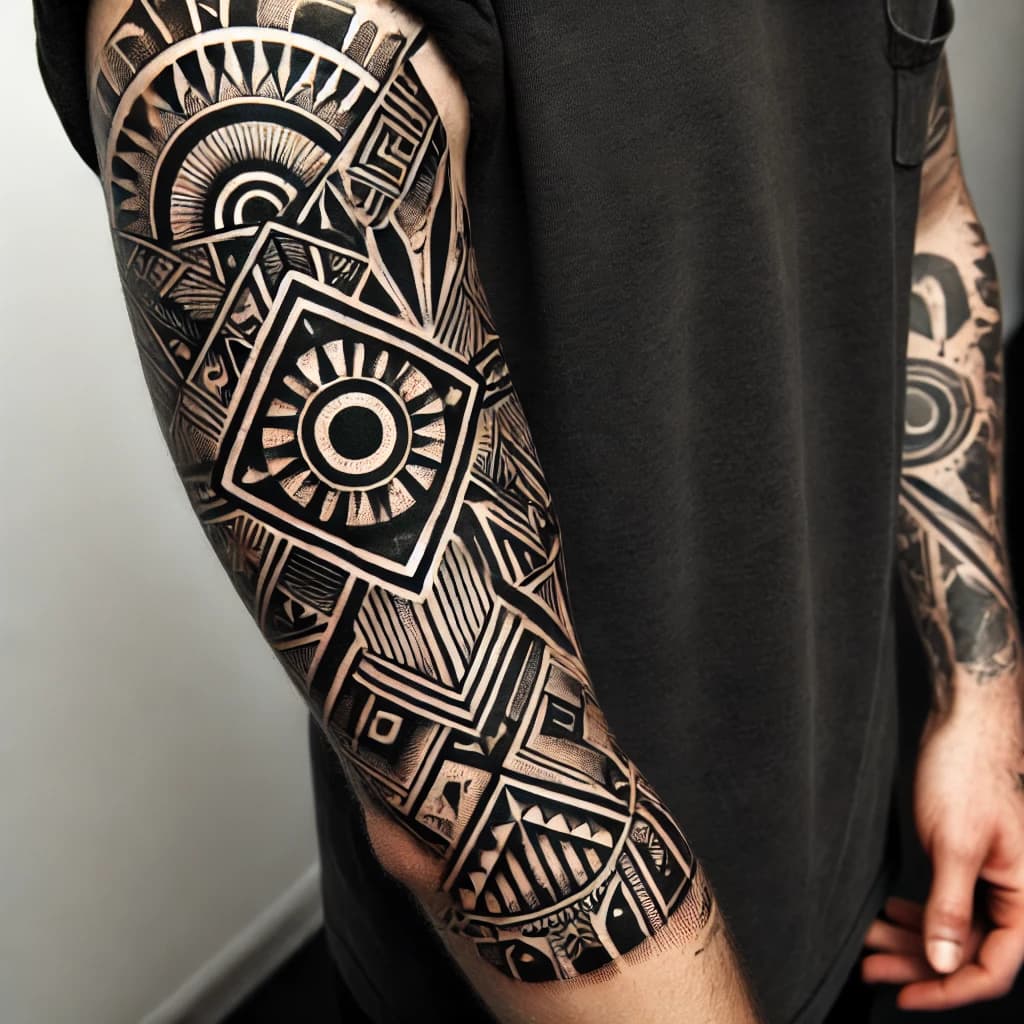
Geometric tattoos are often tied to mandala-style layouts, and that is not just an aesthetic choice. Britannica describes the mandala as a symbolic diagram used in Hindu and Buddhist Tantrism for sacred rites and meditation, and also as a representation of the universe. That history helps explain why people read geometric tattoos so closely: the style carries symmetry, symbolism, and spiritual weight all at once.
It also explains why flaws stand out more here than in many other styles. A crooked line in a mandala is not just a crooked line. It interrupts a pattern that is built to feel balanced, centered, and deliberate. When the linework is clean, the whole tattoo feels locked in. When it is not, every ring around it starts to look off.
Geometric tattooing lives and dies on consistency. Get the grip, stability, voltage, and depth right, and the design has a chance to heal with the sharpness it was meant to have. Miss those basics, and the geometry shows the mistake for years.
This article was produced by Prism’s automated news system from verified source data, official records, and press releases, then run through automated quality and moderation checks before publishing. The system is built and supervised by the people who set the standards it runs under. Read our full AI policy.
Did this article answer your question?