Big Ross Tattoo Portfolio Shows Why Geometric Clarity Drives Bookings
Ross’s portfolio shows the booking shift clearly: geometric clients now look for healed proof, scale, and structural control before they ever reach out.

Why the portfolio matters before the booking form
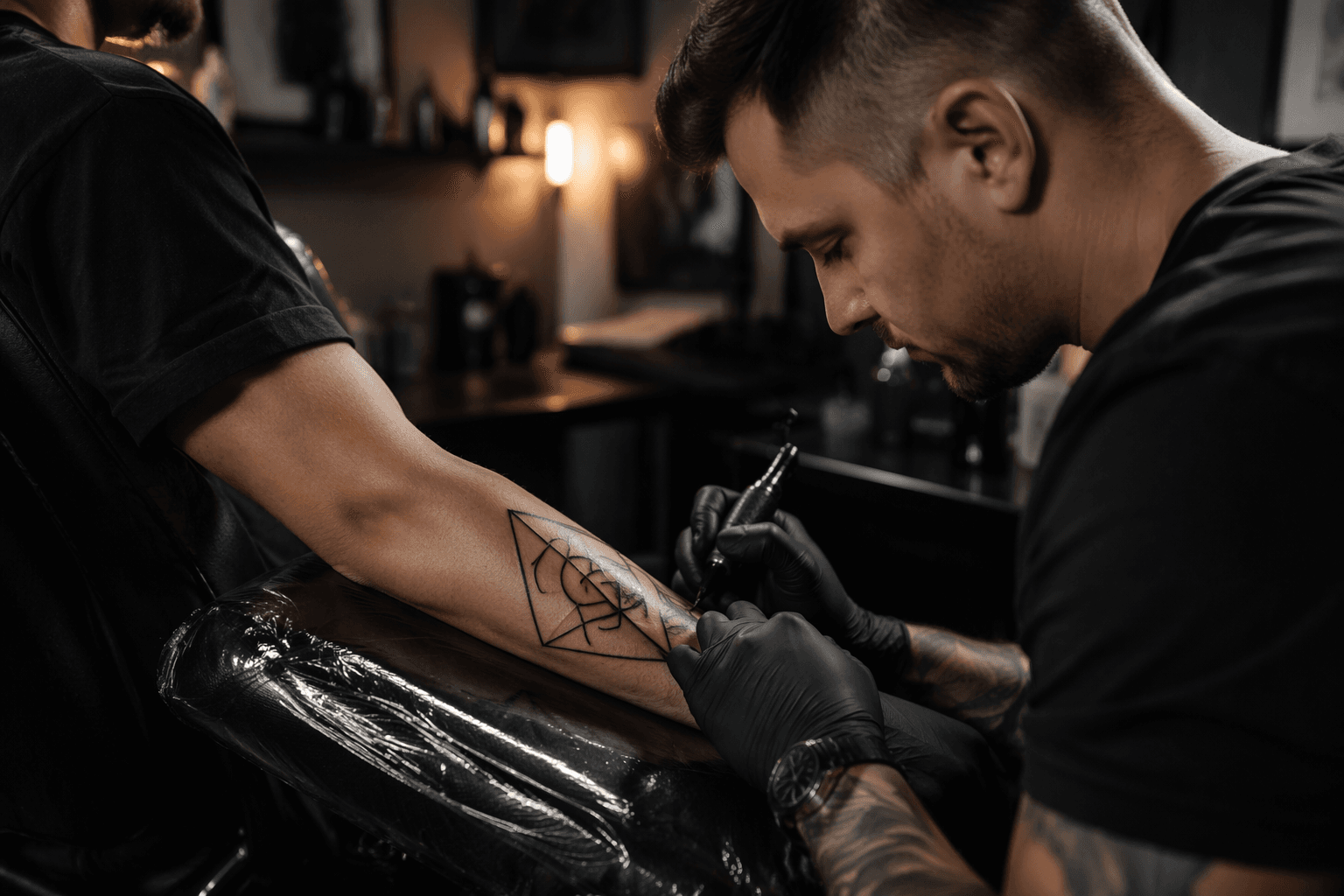
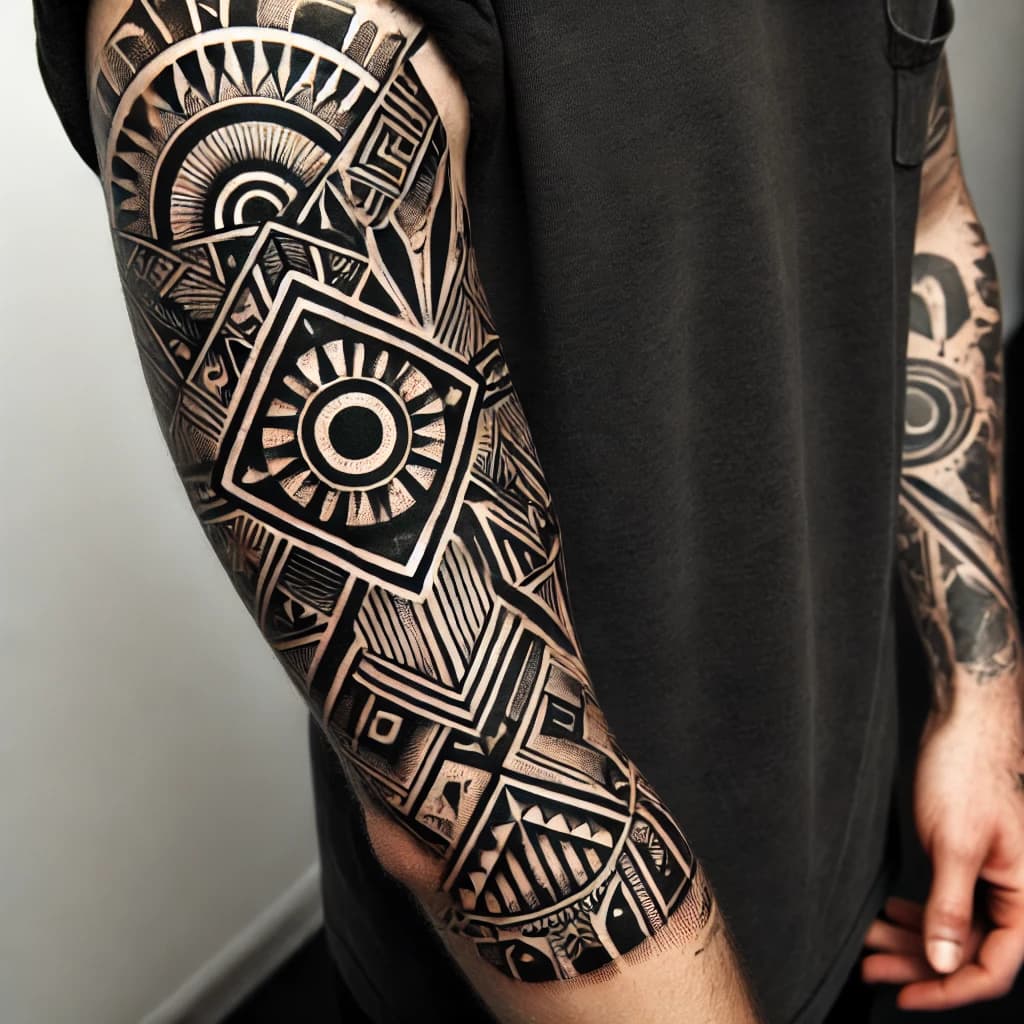
Big Ross Tattoo’s portfolio reads less like a gallery and more like a live shop floor for geometric work. The page tells you immediately that the studio’s lane is custom black-and-grey geometric, mandala, and ornamental designs, usually in medium to large scale, with geometric dotwork and abstract blackwork shaping the look. That kind of clarity matters because style mismatch is one of the easiest ways a custom project goes sideways, especially when the piece depends on symmetry, line discipline, and body flow.
The strongest signal on the page is not hype. It is specificity. When an artist is direct about the visual language, the scale, and the finish, collectors can judge whether the work belongs on a forearm, a sleeve, or a larger body panel before they send an inquiry. That makes the portfolio itself part of the decision-making process, not just a place to admire finished tattoos.
What serious geometric clients should look for
A true geometric specialist leaves proof in the work itself. On a portfolio like Ross’s, the first things to inspect are consistency of linework, saturation, composition at larger scale, and whether the structure still looks clean in healed photos. Those are the details that separate an artist who occasionally posts geometric pieces from someone who actually understands how the style holds together on skin.
A quick scan should answer a few practical questions:
- Do the lines stay even across repeated shapes and long runs?
- Does the blackwork read solid, or does it look patchy and underfilled?
- Do the patterns wrap the body naturally, instead of sitting flat like a stencil on top of the anatomy?
- Are there healed tattoos shown, so you can see how the lines, dotwork, and shading age?
That last point matters a lot. Healed results are a credibility check in tattoo research because fresh ink can hide weak structure, while healed skin exposes whether the artist built the piece to last. For geometric work, healed images are often the difference between a confident booking and a cautious pass.
Scale is part of the style, not just the size
Big Ross Tattoo’s booking info makes its scale preference clear: the artist is open to large projects, including full arm and leg sleeves, plus full back and front torso pieces. That matters because geometric tattoos are rarely just about the motif. They are about how the design stretches, repeats, and balances across a larger field without losing precision.
The portfolio’s medium-to-large scale focus suggests a collector is not dealing with a flash-only shop or a one-off ornamental filler specialist. Instead, the work points toward pieces that need planning, spacing, and structural confidence. If you want a clean mandala transition on a shoulder cap or a full-panel black-and-grey composition across the torso, the portfolio should show that the artist can keep geometry readable when the canvas gets bigger and more complicated.
Cincinnati booking, pricing, and the specialist market
Big Ross Tattoo says books are open for Cincinnati appointments, and the pricing gives a very real sense of the entry point for this kind of custom work. The page lists a $150 minimum and an approximate hourly rate of $150 to $200. For clients, that is useful because it turns a style choice into a budgeting decision, and it makes the cost of a custom geometric project easier to compare with other specialist work in the area.
The bigger pattern is that geometric tattooing is increasingly portfolio-driven and location-aware. Other current specialist pages reinforce that model, including shops and artists in Los Angeles and elsewhere that foreground sacred geometry, mandala blackwork, dot work, and related pattern-based styles. The market is less about finding any generalist shop and more about finding the artist whose shading, symmetry, and body-flow approach matches the piece you want.
Why the style feels both current and ancient
Geometric tattoos may look sharply modern, but the visual language sits inside a much older human habit. Smithsonian Magazine notes that people have been marking their skin for thousands of years, often to show religious faith, relieve pain, protect wearers, or signal class. That history helps explain why geometric work keeps resonating: it feels clean and contemporary, but it also carries the weight of long-standing symbolic marking traditions.
Ornamental tattooing deepens that connection. The style typically emphasizes geometry, symmetry, and black shading or delicate pointillism, which is why it pairs so naturally with mandalas and abstract blackwork. Mandala itself comes from Sanskrit and refers to a circle or a geometrically structured form, so even the vocabulary behind the style points to order, balance, and repetition. In practice, that is exactly what collectors are paying for when they choose a geometric specialist.
Why regulation and aftercare still matter
The artistry only works when the business side is solid. In Ohio, tattooing is regulated under Chapter 3730 of the Ohio Revised Code and Chapter 3701-9 of the Ohio Administrative Code, and oversight is handled locally by the health district where the facility is located. The rules also require patrons to receive both verbal and written aftercare guidance after a body art procedure, which is especially important for tattoos that rely on crisp lines, dense blackwork, and precise spacing.
That regulatory structure matters because geometric tattoos often involve long sessions and repeated passes that make hygiene and aftercare non-negotiable. For clients booking in Cincinnati, the portfolio is only one part of the decision. The other part is whether the studio is operating inside the safety framework that protects the work once it leaves the chair.
The travel circuit behind the bookings
The homepage adds one more useful clue about how this niche really moves: it lists appearances at the Cincinnati Tattoo Festival, Charlotte Tattoo Company, and Sacred Mandala Studio, with dates spanning Cincinnati from May 8 to 10, Charlotte from May 19 to 22, and Durham from May 27 to 29. That kind of schedule shows how specialist geometric artists build reputation across a regional circuit rather than relying only on walk-in traffic.
For collectors, that means availability can shift quickly and serious artists often book around events, guest spots, and city-to-city demand. For the geometric scene as a whole, it confirms the larger trend: the portfolio is no longer just proof of style. It is the map that tells clients who can actually build clean geometry on skin, at scale, and keep it intact after healing.
This article was produced by Prism’s automated news system from verified source data, official records, and press releases, then run through automated quality and moderation checks before publishing. The system is built and supervised by the people who set the standards it runs under. Read our full AI policy.
Did this article answer your question?