AI Tattoo Tools Bring Precision and Symmetry to Geometric Ink
AI is making geometric tattoo planning faster and cleaner, but the real test is still whether the design survives skin, healing, and placement.
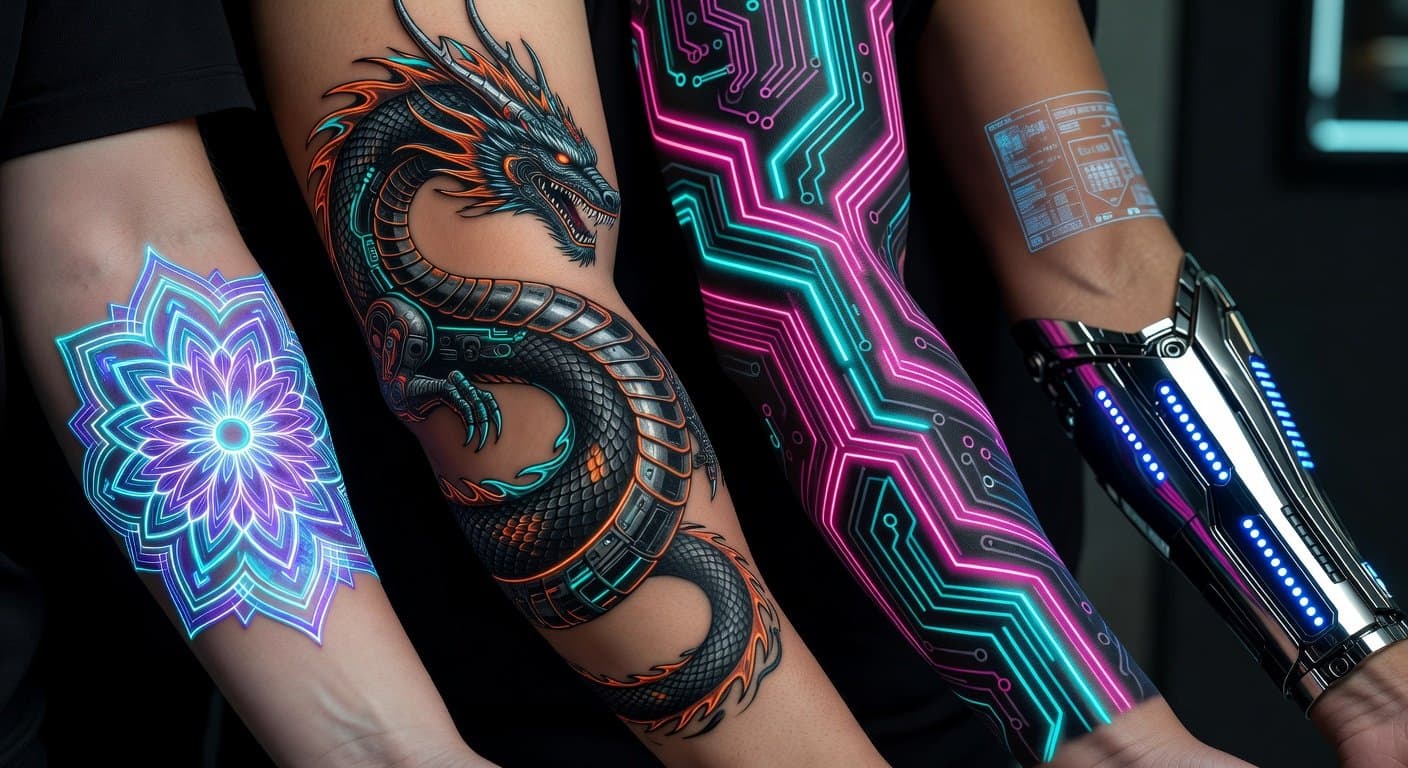
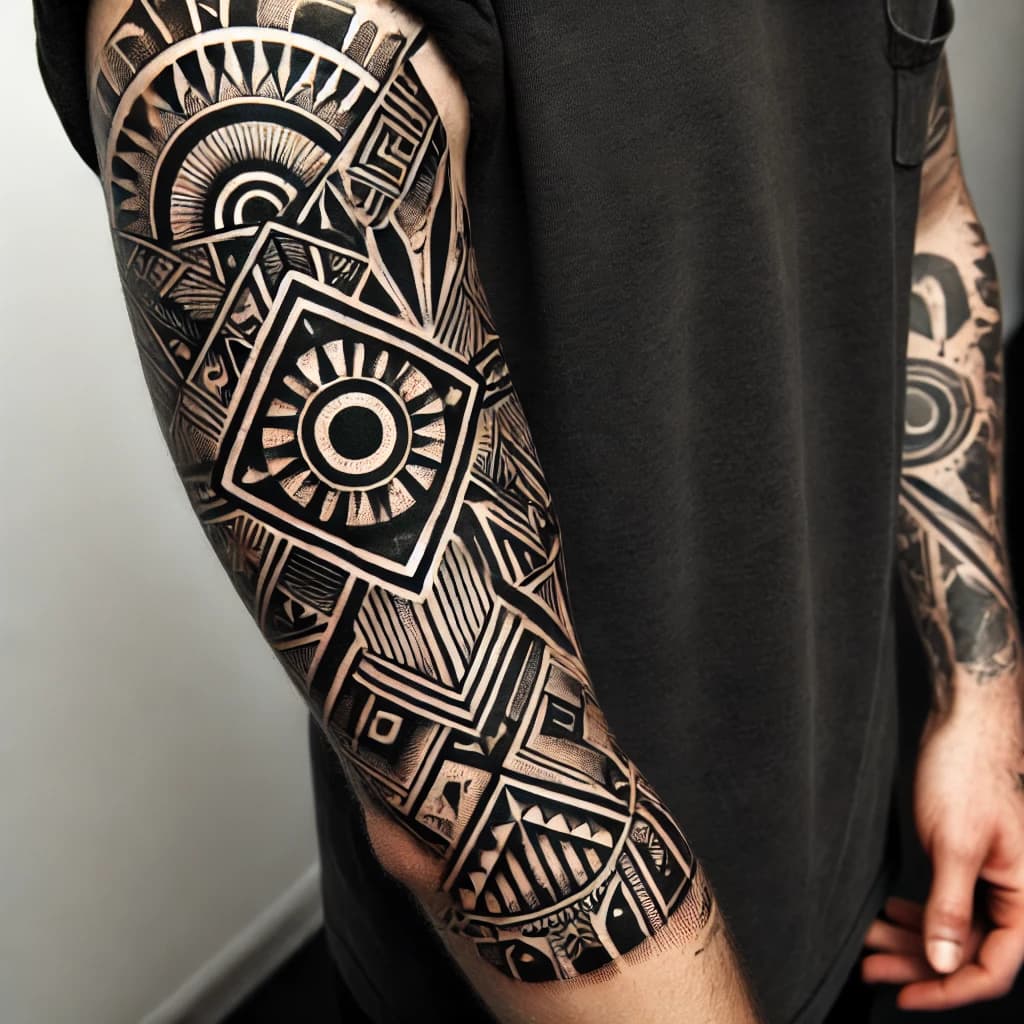
AI is strongest at the part of geometric tattooing most people underestimate: the drafting. A rough prompt can turn into a mandala, a Fibonacci spiral, or a Seed of Life variation in minutes, and that speed is exactly why AI is moving from novelty to a real consultation tool. The catch is simple: a design that looks mathematically perfect on a screen can still fail if it does not sit right on a shoulder cap, sternum, or forearm, or if it depends on linework too fine to stay readable after healing.
What AI gets right for geometric work
The newest tattoo tools are good at turning a vague idea into something concrete fast. Text prompts, image uploads, style transfer, and iterative refinement let clients test several directions before they ever sit down for a consultation, which is a big shift from the old back-and-forth of hand-sketches and loose references. For geometric tattoo fans, that matters because symmetry is easy to admire in theory and hard to judge until you see it in proportion.
AI also tends to be conservative in ways that actually help. The better systems can scale a design, keep the geometry balanced, and avoid overly fine details that would blur after healing. That is a real advantage for anyone chasing clean linework, fine-line minimalism, or blackout geometry with crisp edges, because the point of geometric ink is not just looking precise in the mockup. It has to stay precise on real skin.
Where the screen lies to you
The biggest mistake is trusting the render more than the body. A mandala can look dead center in a generator and still drift off balance once it wraps over muscle or bone. A design that feels tight and elegant on a flat preview may crowd the sternum, flatten out on the shoulder cap, or lose the rhythm of its negative space across a forearm.
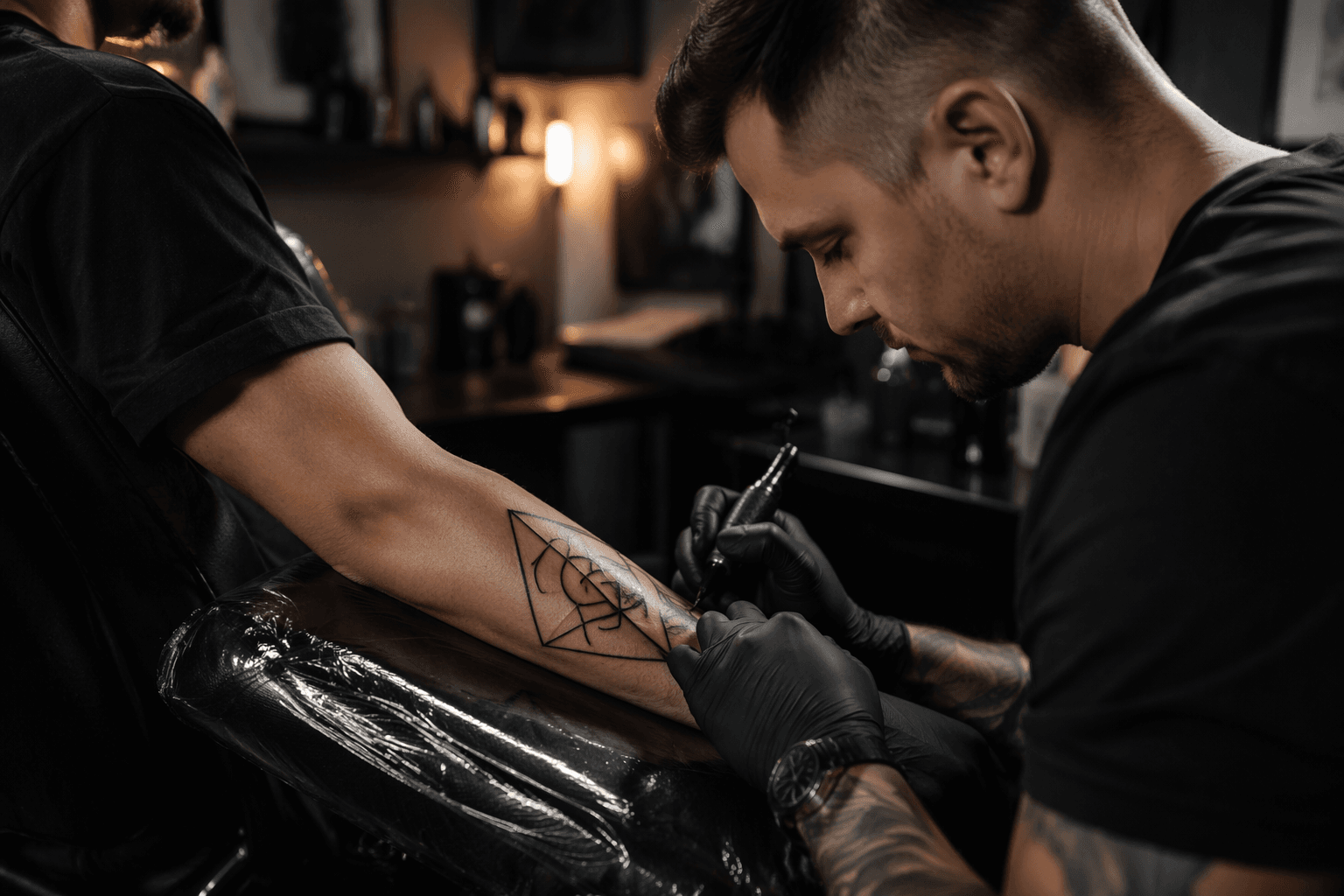
That is where artist-drawn work still has the edge. A human tattooer can make small, ugly-but-important adjustments for skin flow, needle size, and healing behavior, while AI often gives you a polished concept that has never been stress-tested against anatomy. In geometric tattooing, that difference is everything. Precision is only useful if it survives the stencil, the session, and the months after.
Use AI for the conversation, not the final verdict
The smartest way to use AI is as a briefing tool. MyInk.ai pushes that idea hard with a workflow built around a four-preview set, placement previews using your own photo, and extra guidance on whether a design is actually worth taking to an appointment. For geometry, that is especially useful because placement changes the whole read of the piece. A radial mandala on a sternum is a different tattoo than the same concept on a calf or shoulder.
Here is the practical line I would draw:
- Use AI to test motif direction, symmetry, and scale.
- Use AI to compare placement options on your own body photo.
- Use AI to narrow down the exact mood before the consultation.
- Do not use AI as proof that a design is buildable without an artist’s input.
That last point is the one people keep learning the hard way. If a concept only works because the generator made every line impossibly clean, it probably needs to be simplified before it ever gets stenciled.
Why stencils still matter, even in the AI era
Tattoo stencils have always been more than a copy tool. Tattoo Archive describes them as a practical roadmap and a form of quality control, especially in shops where artists may have different skill levels. That is why the AI shift feels less like a revolution and more like a digital extension of an older workflow. The stencil is still the moment where the design stops being a pretty idea and becomes an actual plan for skin.
That matters even more with geometric tattoos than with many other styles. If the symmetry is slightly off, you see it immediately. If the spacing is too tight, you see that too. AI can speed up the drafting layer, but the stencil is where the real judgment starts.
This style has older roots than the current hype
The reason AI-generated geometry resonates so quickly is that geometric and abstract tattooing already has deep history. The Iceman, whose tattoos are around 5,200 years old, carried geometric and abstract markings, and Polynesian tattoo traditions have long used elaborate geometric designs that can cover the whole body. Mandalas add another layer, drawing from Hindu and Buddhist traditions where they serve as symbolic diagrams for sacred rites and meditation.
That lineage matters because it shows AI is not inventing geometric tattooing from scratch. It is just speeding up a process that tattooing has always relied on: translating pattern into body, then translating body back into pattern. The tools have changed; the obsession with structure, repetition, and placement has not.
Why the shop debate is still real
There is a split in how artists talk about AI. Some see it as a useful time-saver that leaves more room for creativity in the final tattoo design. Others think it takes away from the art and the personal connection. Keith "Bang Bang" McCurdy has described the technology as "more controlled," while tattooist Preston Taylor has said it "doesn’t seem personal." Both reactions make sense, because AI can absolutely streamline concepting and still leave a sterile feeling if the human part gets stripped out.
That tension is especially visible in geometric work, where clients often want immaculate balance but still want the piece to feel alive on the body. The best results come when AI handles the early sorting and the artist handles the final translation. The worst results come when a client treats a generated image like a finished tattoo instead of a starting point.
The bottom line for geometric collectors
AI is worth using when it helps you make cleaner decisions before you book. It is useful for testing symmetry, comparing placements, and trimming away ideas that would heal badly or fight the body. It becomes a red flag when the design depends on microscopic detail, ignores how skin moves, or looks more impressive in a render than it could ever look after healing.
Peer-reviewed research keeps pointing to the same reality: tattooed skin is not the same as untouched skin, and aftercare plus sun protection still matter for appearance and healing. That is why the best geometric tattoos will still come from the same place they always have, a good eye, a disciplined stencil, and a design simple enough to survive contact with real skin. AI can help you get there faster, but it cannot replace the judgment that makes the tattoo last.
This article was produced by Prism’s automated news system from verified source data, official records, and press releases, then run through automated quality and moderation checks before publishing. The system is built and supervised by the people who set the standards it runs under. Read our full AI policy.
Did this article answer your question?