Blackwork Tattoos Put Geometric Patterns, Bold Contrast in Focus
Blackwork is moving geometry out of the tribal lane and into a sharper, more technical language of contrast, pattern, and body mapping.
Blackwork gives geometry a stronger backbone
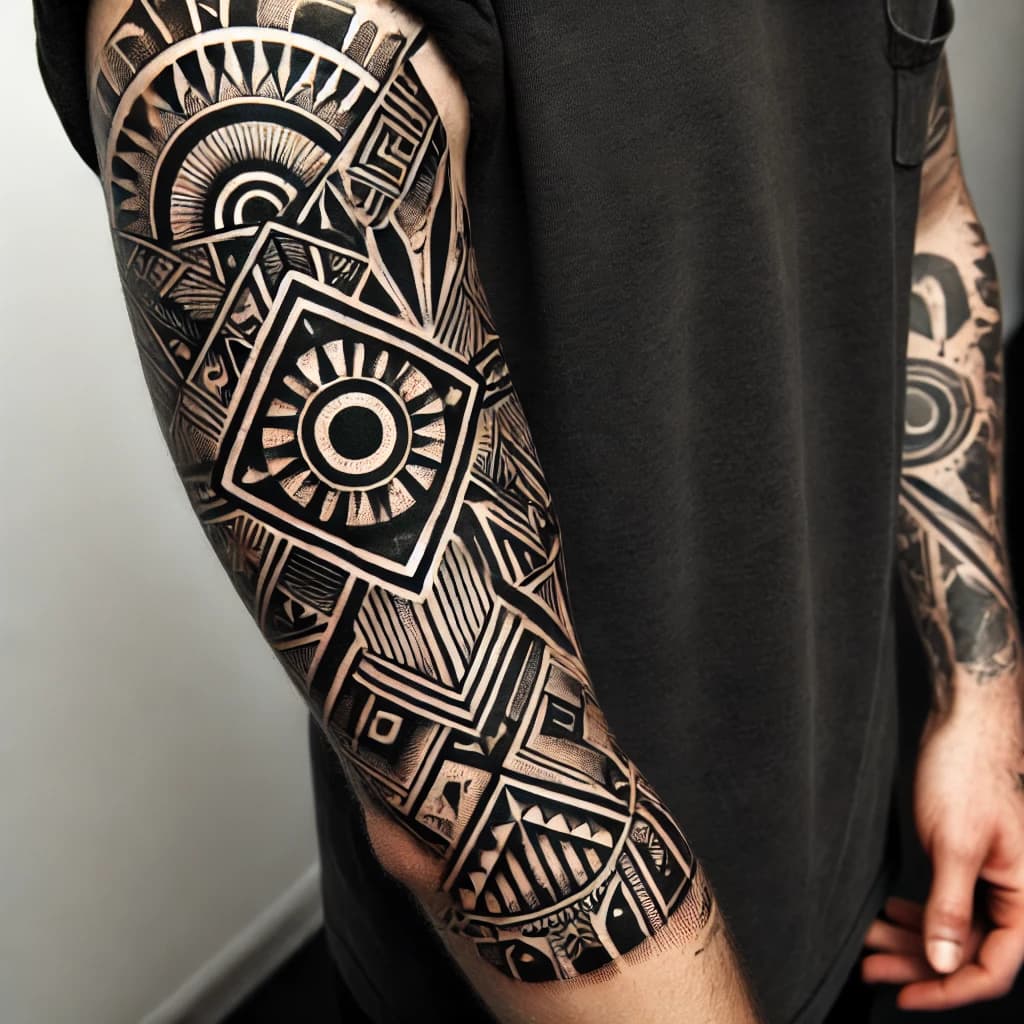
Blackwork is built on solid black ink, and that single choice changes everything. The style’s bold contrast makes angular structures, repeated motifs, and dense patterned bands read with far more force on skin than they would in softer linework or color-heavy pieces. That is why blackwork keeps showing up in geometric tattoo conversations: it gives structure, weight, and visual clarity to designs that depend on precision.
The gallery frames blackwork as a style with strength, resilience, and ancient traditions at its core. It also makes clear that this is not a narrow lane anymore. Blackwork ranges from geometric patterns to intricate tribal designs, which is exactly why it has become such a useful platform for modern geometric work rather than just a look defined by one heritage or one set of motifs.
The old roots still matter, but the style has broadened
Blackwork’s roots in tribal tattooing, especially Polynesian and Maori traditions, still shape how people read it. That history matters because blackwork did not start as a clean, abstract design language. It grew out of systems where pattern, placement, and meaning were closely tied together, and that legacy still gives the style its seriousness.
What has changed is the range of work now living under the blackwork umbrella. The page’s examples and tags show blackwork blending with fine line, dotwork, and even competition-style showpieces, which tells you the category is now more of a framework than a fixed aesthetic. For geometric collectors, that shift is the real story: blackwork is no longer just about tribal associations, it is about how hard contrast can be used to organize space on the body.
Why blackwork and geometry fit so well together
Geometry needs structure to land properly, and blackwork supplies it. Clean black fields make sharp angles look sharper, repeating forms feel more intentional, and negative space do real work instead of simply sitting there. When a design leans on symmetry, tessellation, or banded patterning, blackwork helps every edge hold.
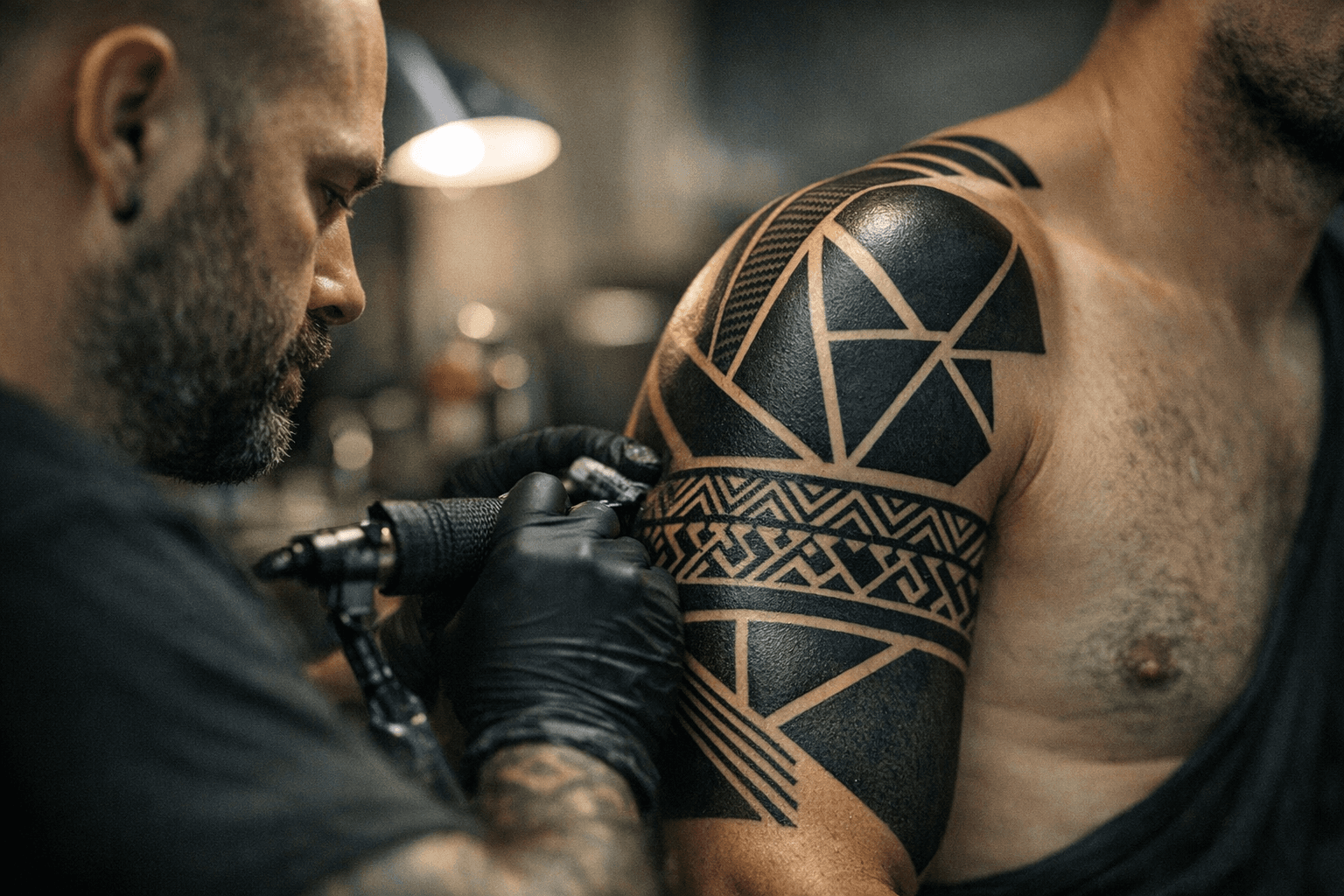
That is also why the style can make minimal geometry look more deliberate and complex pattern architecture look less chaotic. A simple arrangement of lines can feel weightier in black ink, while a dense composition can still stay readable because the contrast does the heavy lifting. In geometric tattooing, readability is everything, and blackwork is one of the best tools for keeping a piece legible over time.
Longevity is part of the appeal
The gallery makes a strong case for black ink on practical grounds: it tends to fade less over time than color. That matters to anyone choosing a tattoo that needs to stay crisp after years of wear, especially if the design depends on contrast to preserve its impact. Blackwork is not just about looking good on day one; it is about holding the shape of the idea.
That durability is one reason the style appeals to both minimalists and people who want a high-impact statement piece. Minimal geometry benefits from staying clean and clear, while larger blackwork builds can keep their force without relying on a rainbow palette to stay visible. If you want the tattoo to age into its structure instead of blurring into decoration, blackwork has a real advantage.
Body mapping is where the style gets practical
Blackwork is also flexible enough to be tailored to specific body parts like arms, legs, and backs. That matters because geometric work usually lives or dies on placement. A forearm band, a calf panel, or a full back piece gives different options for symmetry, flow, and repetition, and blackwork adapts to all of them without losing authority.
This is where clients should think beyond the flash sheet. A design that looks balanced on paper may need to be reworked once it meets the curve of a shoulder or the taper of a forearm. Blackwork’s strong visual weight helps artists map pattern around those contours instead of fighting them, which is part of why the style handles large-format pieces so well.

It is also one of the strongest tools for cover-ups
Blackwork’s visual density makes it especially effective for cover-ups. The style’s ability to absorb older imagery without losing coherence is a major reason it keeps coming up in projects where the goal is transformation rather than simple replacement. If the old tattoo is still fighting for attention, a stronger field of black can finally quiet it down.
That does not mean every cover-up should be a wall of ink. The best blackwork cover-ups still rely on pattern logic, not just darkness for darkness’ sake. When the new geometry is arranged with enough rhythm and contrast, the finished piece feels intentional instead of buried, and that difference is what separates a rescue from a reset.
What artists and clients should keep in mind now
The modern blackwork look is no longer just about filling skin with black. It is about balancing cultural sensitivity, precision, and the demand for something visually immediate. Because the style carries roots in Polynesian and Maori tattooing, artists need to be careful about how they borrow, adapt, or separate those references from contemporary geometric construction.
For clients, the takeaway is simple: choose blackwork when you want a tattoo that can carry meaning, age with discipline, and stay visually hard-edged. Choose it when you want geometry that can survive the body’s curves and the years ahead. In the current landscape, blackwork is not just a style with strong contrast, it is the framework that lets geometric tattooing look serious, durable, and unmistakably modern.
This article was produced by Prism’s automated news system from verified source data, official records, and press releases, then run through automated quality and moderation checks before publishing. The system is built and supervised by the people who set the standards it runs under. Read our full AI policy.
Did this article answer your question?