Cyber Sigilism Tattoos Blend Tribal Flow, Tech Shapes, and Symbolism
Cyber sigilism looks like geometry for the digital age, but the strongest versions still depend on symmetry, body flow, and disciplined negative space.

Cyber sigilism looks like geometry that has been pushed through a circuit board, then sharpened again. For readers who love clean structure, the real question is not whether it looks cool, but whether it belongs inside geometric tattooing or stands apart as its own language borrowing precision.
What cyber sigilism is actually saying
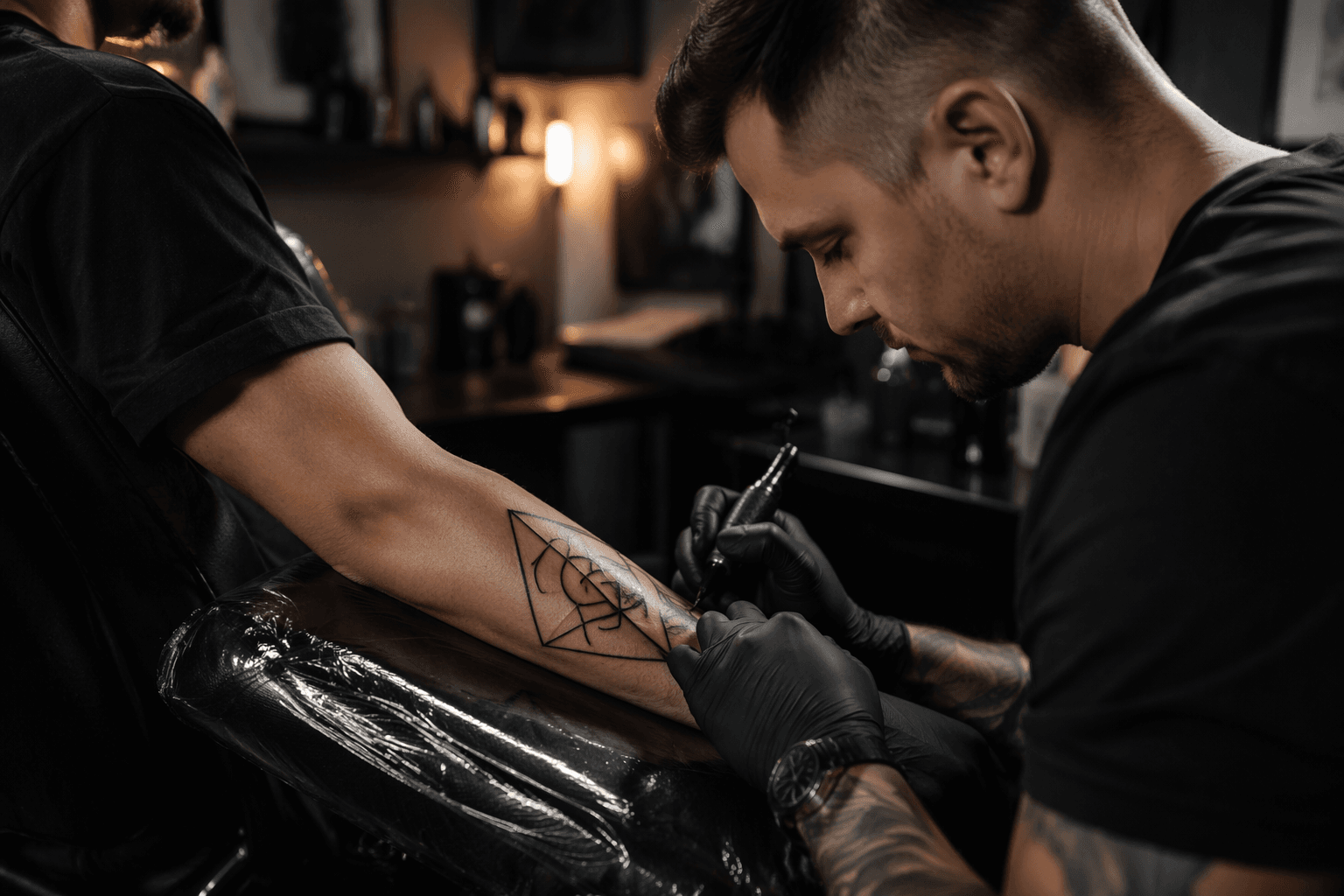
Cyber sigilism is described as a blackwork style built from sharp, thin geometric lines and abstract forms that follow the body’s contours. The word itself does a lot of the work: cyber points to the digital world and the culture around it, while sigil suggests a personal symbol carrying intention, desire, or spiritual charge. That is why the style can read two ways at once, as a mystical, manifestation-driven tattoo language or as abstract art with a digital-age edge.
The look did not appear in a vacuum. One report traces it to Berlin’s underground club and techno scenes in the late 2010s, then to the social media spread that carried it far beyond that first scene. That same reporting credits Aingel Blood, an American LGBTQ+ tattoo artist, with helping name and define the movement. The visual mood is equally specific, drawing from Y2K aesthetics, early internet graphics, cyberpunk films like The Matrix, witch house music, industrial album art, and rave culture.
Why geometric tattoo readers keep coming back to it
If geometric work is already part of your tattoo vocabulary, cyber sigilism feels familiar because it still depends on structure. The strongest examples begin with symmetrical shapes such as triangles and diamonds, then build complexity through layers and dotwork. That is not far from the logic behind sacred geometry or modern geometric design, where clarity matters as much as ornament.
This is also why the style keeps getting folded into broader conversations about geometric tattoos rather than treated as pure novelty. Tattooing 101 says geometric tattoos remain popular in 2025 and require precision and attention to detail. CO:CREATE links the contemporary resurgence to late-20th-century experimentation by artists including Dillon Forte and Black Symmetry, while geometric history coverage places the deeper roots in ancient Egypt, Māori moko, Native American tattoo traditions, and sacred geometry. Cyber sigilism sits inside that history, even when it looks futuristic on the surface.
Where the design works, and where it falls apart
The gallery logic is clear: cyber sigilism looks best when the stencil respects the body instead of fighting it. The style works especially well when it wraps around the shoulder, chest, ribs, or hips and follows the S-curves of the muscles. On those surfaces, the design can breathe, and the repetition of lines and symbols feels intentional rather than crowded.
That same principle is what makes the style compatible with geometric tattoo readers who care about repeatable motifs. Symmetry gives the eye something to trust, while negative space keeps the composition from collapsing into noise. If you want the look to stay geometric, the stencil needs to hold together at a distance and up close. Thin black lines, mirrored forms, and clearly separated layers all help. Once the design gets too tangled, too asymmetrical, or too packed with ornamental drift, it starts to read as a different kind of tattoo, one with less discipline and more visual improvisation.
For placements like the spine or forearm, the rule is the same even if the shape changes: let the design follow a strong line of motion. Cyber sigilism can borrow that long, directional flow, but it still needs a readable framework underneath it. Without that, the tech-shape energy turns restless instead of precise.
What it borrows from tribal work, and what it does not
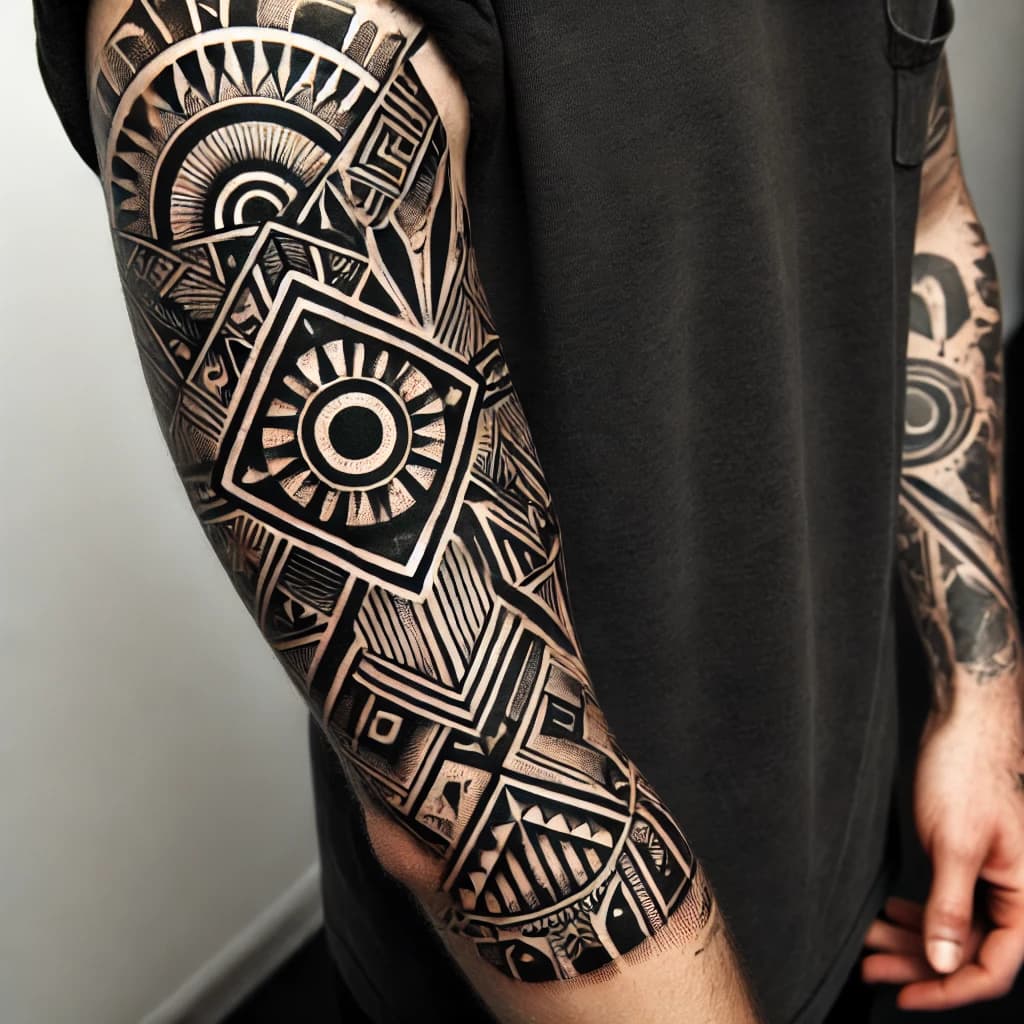
Cyber sigilism is often discussed near tribal tattooing because both can carry ideas of identity, history, and status. Modern tribal styles were huge in the 1990s and early 2000s, then fell out of style before returning in revised forms such as tribal 2.0 or neotribal. That revival helps explain why today’s readers recognize the appeal of bold black structure and body-wrapping motion, even when the imagery itself has changed.
Still, the style should not be confused with traditional tribal tattooing. A 2025 El País discussion on cultural appropriation makes the point plainly: the line between cultural exchange and appropriation is shaped by power relations, and Indigenous tattoo traditions remain tied to memory, belonging, and land. That matters here because cyber sigilism borrows a sense of flow and force, but it is not the same thing as a sacred tattoo system with cultural roots and responsibilities. If the design starts leaning too hard on tribal cues without understanding that difference, the result can feel borrowed rather than built.
Why the trend is hitting now
Cyber sigilism is drawing attention from younger clients in 2025, and that makes sense in a tattoo culture shaped by social media and pop culture acceleration. It offers the visual shorthand of something new, but it still gives the wearer a way to talk about meaning, intention, and personal code. That combination is powerful in a moment when people want tattoos that feel both future-facing and legible as identity marks.
The style’s appeal also comes from how adaptable it is. One person reads it as a manifestation tool, another as abstract blackwork, and another as a descendant of geometric and tribal languages remixed for a digital generation. That flexibility is exactly why it keeps showing up in the same conversation as mandalas, ornamental work, sacred geometry, and neotribal design. It is not just a trend mood. It is a design system with a point of view.
What to bring to a consultation if you want this look without losing geometric discipline
Bring more than a screenshot. Bring proof that you know which parts of the look matter most to you: the symmetry, the body wrap, the symbolic charge, or the tech-inspired edge. If you want the tattoo to stay geometric, be ready to talk about where negative space should remain open, where the composition should mirror itself, and how the lines should move across the body’s curves.
- Show examples that have the same level of symmetry you want.
- Point out whether you want triangles, diamonds, or a more layered blackwork build.
- Ask how the design will sit on the shoulder, chest, ribs, hips, spine, or forearm.
- Decide in advance whether the tattoo is meant to read as symbolic, abstract, or somewhere between the two.
- Ask the artist how they will keep the stencil crisp so the piece does not drift into visual noise.
A strong consultation starts with clarity:
Cyber sigilism can absolutely sit beside geometric tattooing, but only when the structure stays visible. The moment the symmetry slips, the style stops feeling like disciplined geometry and starts looking like a trend borrowing its bones.
This article was produced by Prism’s automated news system from verified source data, official records, and press releases, then run through automated quality and moderation checks before publishing. The system is built and supervised by the people who set the standards it runs under. Read our full AI policy.
Did this article answer your question?