Geometric Tattoo Design Starts with Strong References and Clean Structure
Geometric tattoos only look effortless when the references, symmetry, and placement are right. The hard part is making a design that still reads after it heals and moves with the body.

Strong references are the real starting point
A geometric tattoo fails long before the needle touches skin if the design never gets past the page. The cleanest work starts with a reference set that supports the idea instead of fighting it, because symmetry, spacing, and alignment are much easier to control when the artist is building from the right visual material. That matters in geometric work more than in looser styles, since one crooked axis or cramped gap can make the whole piece feel off.
The smartest reference hunting is usually less about searching more and more about searching better. Pinterest and copyright-free photo libraries tend to give cleaner, higher-resolution images than a broad image search, and better search terms can lead you to a stronger angle, better lighting, and a source image that actually helps construction. If you want a back piece, chest panel, or leg flow design, the reference has to show shape, not just mood.
Geometry on skin is not geometry on paper
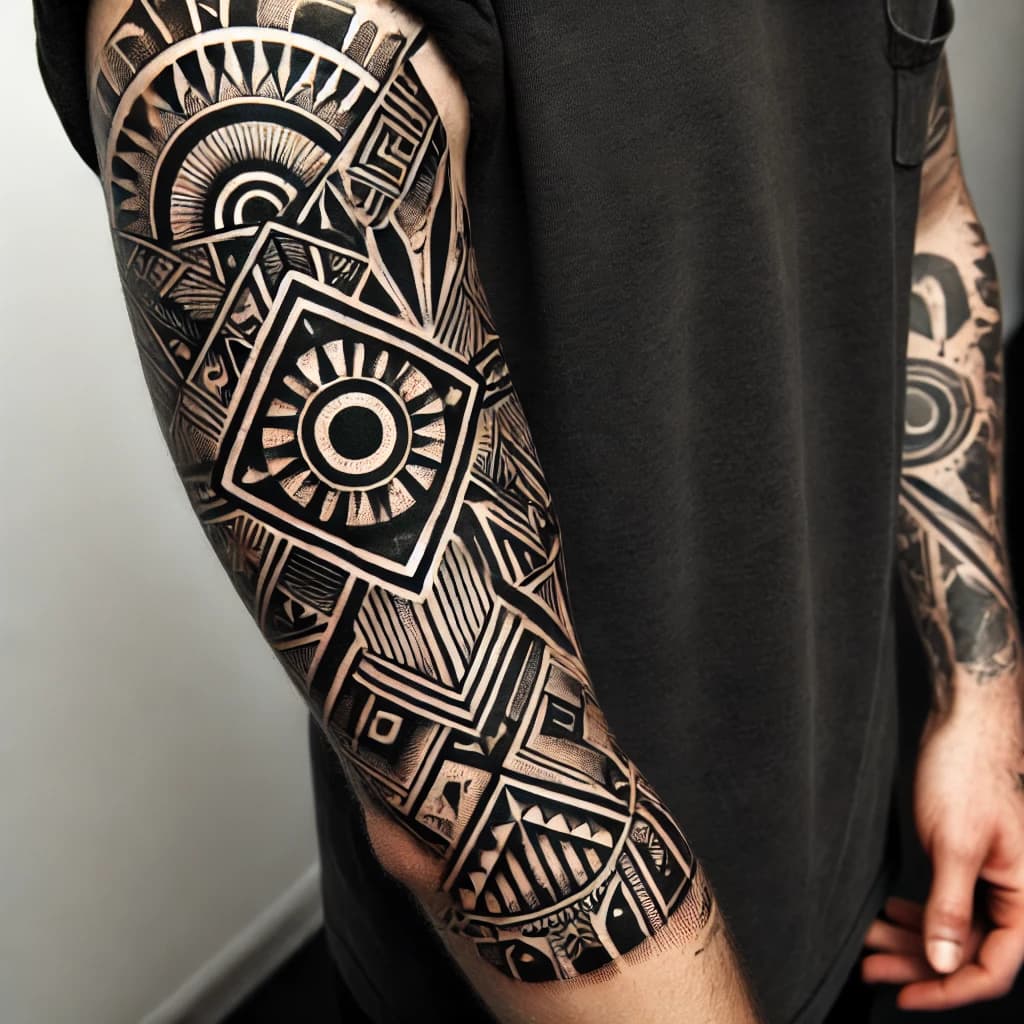
Geometric tattooing sits in a long visual tradition. Sacred geometry assigns symbolic and sacred meanings to shapes and proportions, while yantra, or sak yant, tattooing uses sacred geometrical designs tied to Buddhist and tantric traditions in places such as Cambodia and Thailand. In modern tattoo culture, those older systems show up in ornamental work, mandala builds, blackwork structure, and symmetry-heavy compositions that are meant to fit anatomy instead of flattening it.
That distinction matters because skin moves, stretches, and ages. A design that looks mathematically perfect on a screen can drift once it wraps around a shoulder cap, crosses the ribs, or spans a knee. The best geometric tattoos are built with body flow in mind, which is why large placements like the back, chest, shoulders, midsection, and legs are so often recommended for designs that need precise alignment.
The three-step workflow that keeps the piece clean
There are two basic ways to build the design, hand-drawing and digital design, but both work best when you treat the process as layered construction rather than a single clean sketch. The practical sequence is simple: gather references, sketch in layers, then check the structure against tattoo realities before you commit.
1. Start with references that support the concept
If the tattoo is meant to feel custom, the references should guide the structure, not copy the final image. That is where a lot of beginners go wrong. They save one pretty geometric image, then try to force a new idea out of it, which usually creates uneven symmetry or awkward spacing.
2. Build in layers
Whether you are sketching on paper or on an iPad, layer the work so you can test the framework before you lock in detail. Start with the main axis, then the repeating geometry, then the accent elements. This keeps the design adjustable, which is critical when you realize a dot cluster is too heavy or a line set is too thin to survive healing.
3. Use the rules that keep it tattooable
A beautiful design still has to work for a tattoo machine. That means thinking about how line weight will heal, how much negative space the eye needs to read the shape, and whether the pattern can tolerate the body’s curves. Overly delicate linework, packed dotwork, and crammed symmetry are classic beginner mistakes because they may look precise on paper but blur into noise on skin.
Placement decides how well the geometry survives
Placement is not just a location choice, it is part of the design language. A perfectly centered mandala can look sharp on the sternum and feel broken on a high-motion zone if the artist did not plan for anatomy. The same piece can read beautifully across the upper back and feel crowded if you try to compress it into a smaller, more irregular area.
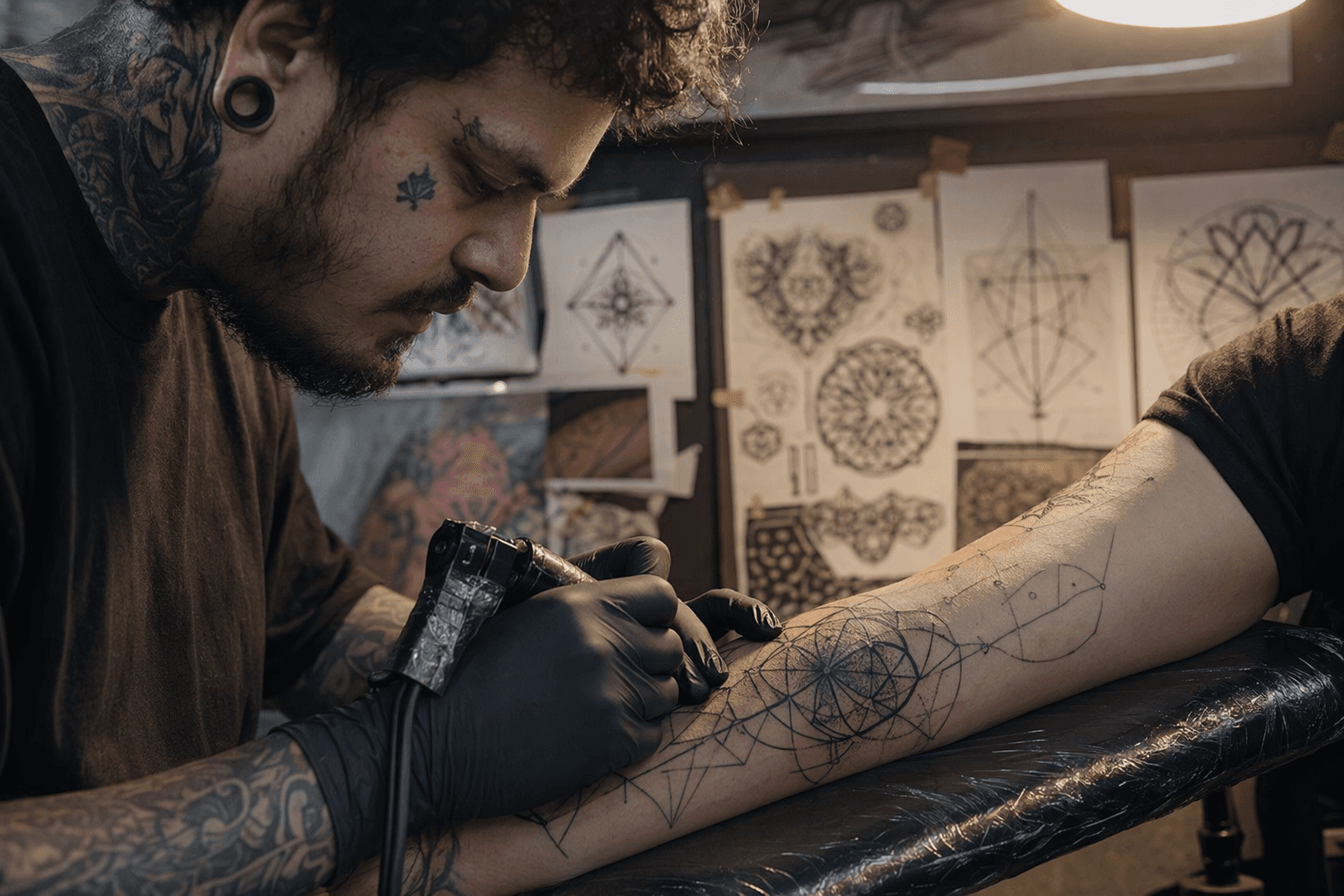
For geometric tattoos, the best placements usually give the design room to breathe. Back panels, chest pieces, shoulder caps, and leg work are especially useful because they let the artist align the design to the body’s natural structure instead of fighting it. If the tattoo needs symmetry, you want a canvas that gives you symmetry.
Stencil testing is where a lot of “good” designs get saved
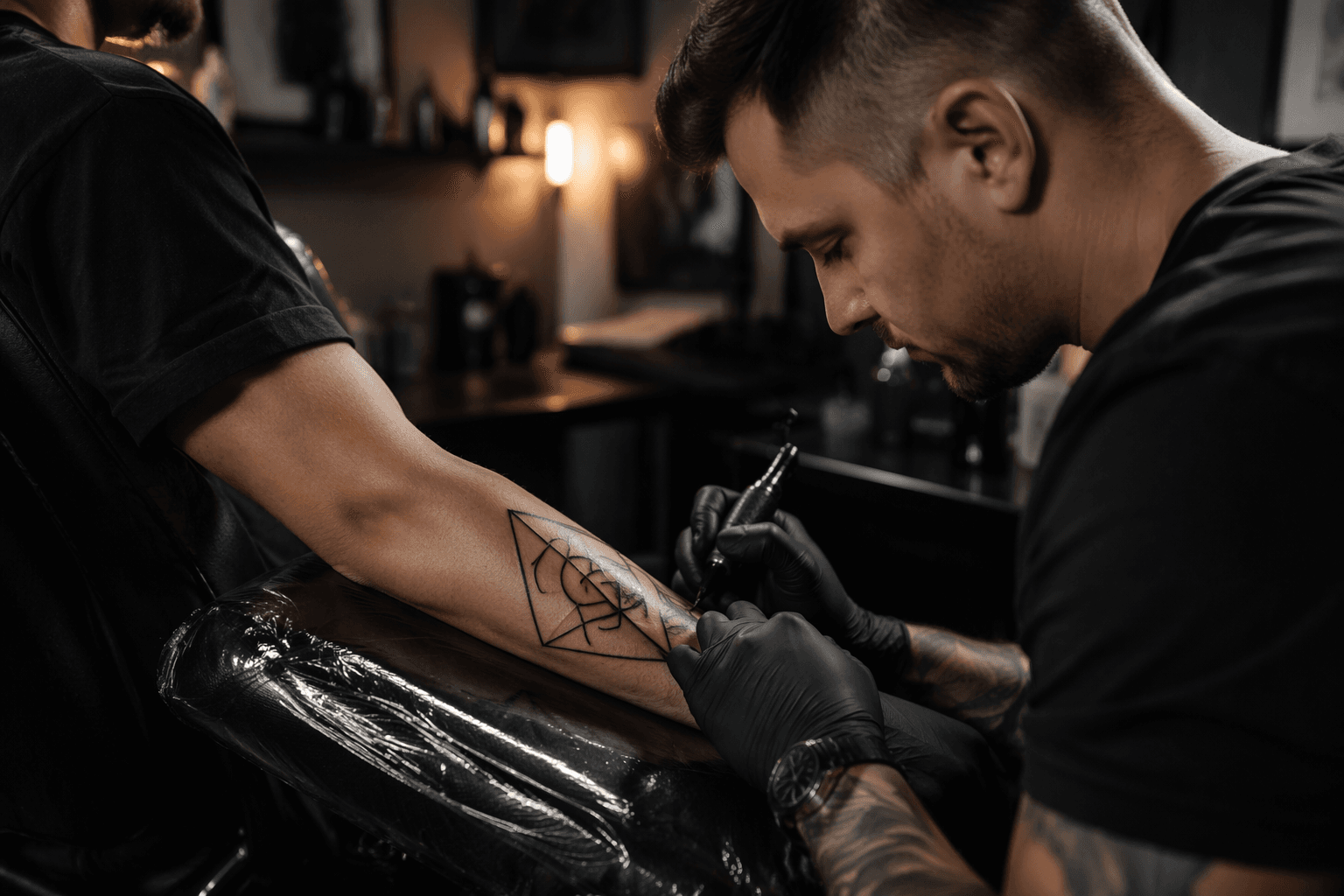
Stencil testing is the step that exposes bad assumptions. A design can look balanced in a sketchbook and instantly reveal a problem once it is placed on a shoulder curve or across a rib cage. That is why a clean stencil test matters so much: it shows you whether the core structure still reads at the actual size and angle you plan to tattoo.
This is also where beginners often discover that their first version is too busy. If the stencil loses clarity from a few feet away, the design probably has too many internal details, too little contrast, or line weights that are too close together. Geometric work needs enough precision to feel deliberate, but not so much density that the shape collapses after healing.
Line weight and dotwork density make or break the finish
The most common precision mistake in geometric tattoos is chasing detail instead of legibility. Thin lines can be elegant, but if every line is hairline-thin, the piece may not hold its structure long term. The same goes for dotwork: dense packing can create beautiful shading, but if the dots are too close, the tattoo can turn muddy as it heals and settles.
A stronger approach is to treat line weight and dot density as hierarchy. Let the main frame carry the design, use secondary lines to support it, and keep your dotwork or texture from overpowering the core geometry. That is especially important in ornamental and sacred geometry work, where the eye needs clear anchors to follow the pattern.
Healing changes the design, so design for healing
Tattooing is permanent, and the U.S. Food and Drug Administration says tattoos and permanent makeup carry risks that can include infections and allergic reactions. A 2012 U.S. Centers for Disease Control and Prevention report documented 22 cases of tattoo-associated nontuberculous mycobacterial skin infections across four states, which is a reminder that the quality of the design still has to live inside a real skin and healing process.
That is why aftercare is part of design thinking, not an afterthought. Oklahoma State Department of Health guidance says scabbing is a normal part of healing and warns that picking a scab may lead to infection or damage. The FDA also emphasizes sun protection and proper care, because even the cleanest linework can degrade if you abuse it in the first few weeks.
A 2024 study of 67 tattoos found measurable differences in tattooed skin, including lower temperature and higher stratum corneum hydration than non-tattooed skin. The takeaway is not that geometry needs special science jargon, but that skin is not a flat sheet. It is a living surface, and the design has to respect that from the first sketch.
Copyright, custom work, and why originality still matters
Original custom tattoos may be treated as the artist’s intellectual property, which is why reference gathering should stay in the inspiration lane instead of the copy-paste lane. Flash can absolutely be repeated when that is the point, but custom geometric work should be built from references, not lifted wholesale from someone else’s finished piece.
That is also why the best guides, including those from Tattooing101 and Tattoodo, focus on process as much as style. They keep coming back to the same truth: good tattoo design is not just drawing something attractive. It is building a blueprint that reads cleanly on skin, heals in the real world, and keeps its structure when the body starts doing what bodies do.
Geometric tattooing rewards patience, structure, and restraint. If you start with strong references, sketch in layers, test the stencil hard, and keep the composition honest to the body, the finished tattoo will still make sense years later, not just on the day it was inked.
This article was produced by Prism’s automated news system from verified source data, official records, and press releases, then run through automated quality and moderation checks before publishing. The system is built and supervised by the people who set the standards it runs under. Read our full AI policy.
Did this article answer your question?