Jerwood gallery reimagines yin yang tattoos with animals, moons, and symmetry
Jerwood Visual Arts shows yin yang tattoos becoming more personal, from minimalist circles to koi, moons, and flame-led symmetry across the body.
Why this gallery matters
Jerwood Visual Arts takes yin yang tattoos out of the one-circle cliché and turns them into a decision guide for symmetry, placement, and meaning. The gallery opens with a minimalist lower-back design, then moves through forearm, ankle, upper-arm, and upper-back versions that prove the symbol can stay recognizable even when animals, moons, trees, and flames enter the composition.
That shift matters because the strongest pieces do more than decorate skin. They make balance visible through mirrored shapes, circular motion, and careful line weight, so the tattoo reads clearly from a distance and still rewards a closer look. The gallery’s message is simple: if the relationship between the two halves is still deliberate, yin yang can survive almost any stylistic translation.
Minimalist: when less makes the symbol sharper
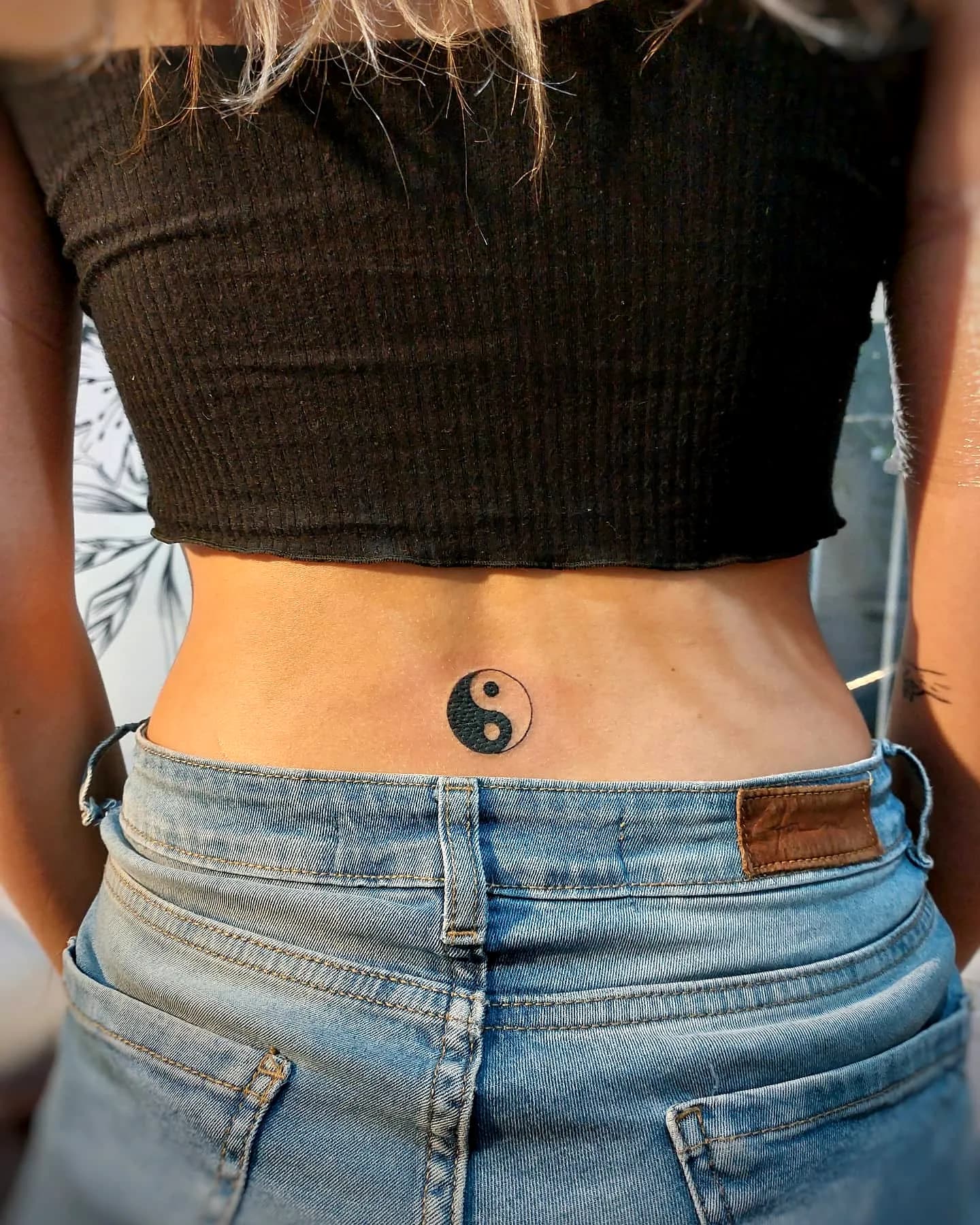
The minimalist lower-back version is the cleanest entry point for readers who want the idea without visual noise. It keeps the form close to the classic yin yang circle, but the placement gives it a body-conscious edge, using the lower back as a broad, centered canvas that can support symmetry without crowding the design.
A minimalist approach works best when you want the tattoo to feel calm, legible, and easy to live with. The symbol does not need heavy ornament to communicate its point, because yin yang already carries a built-in visual logic: one side answers the other, and the whole design depends on that tension. In geometric terms, the appeal comes from restraint, not embellishment.
Ornamental: when linework starts carrying the meaning
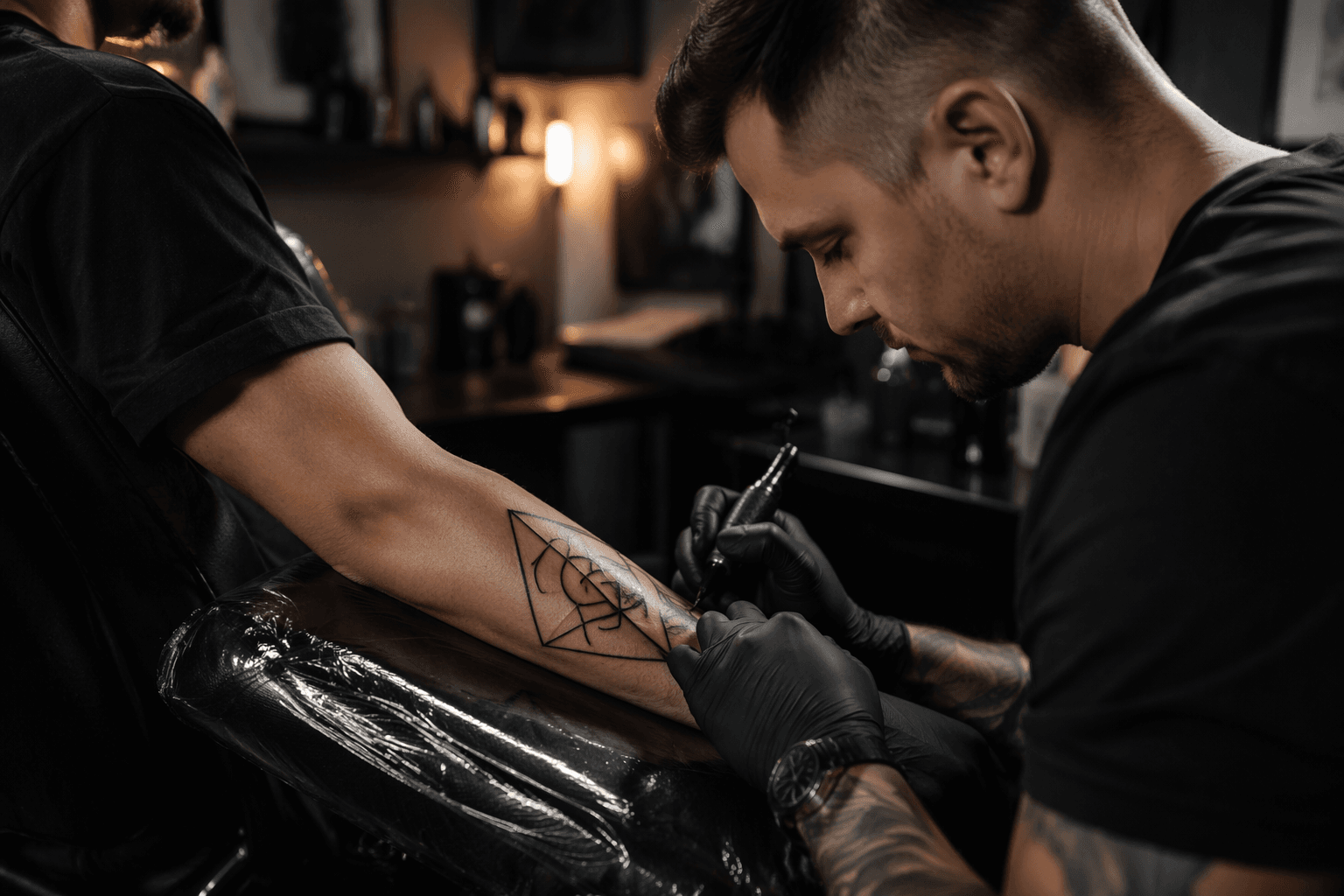
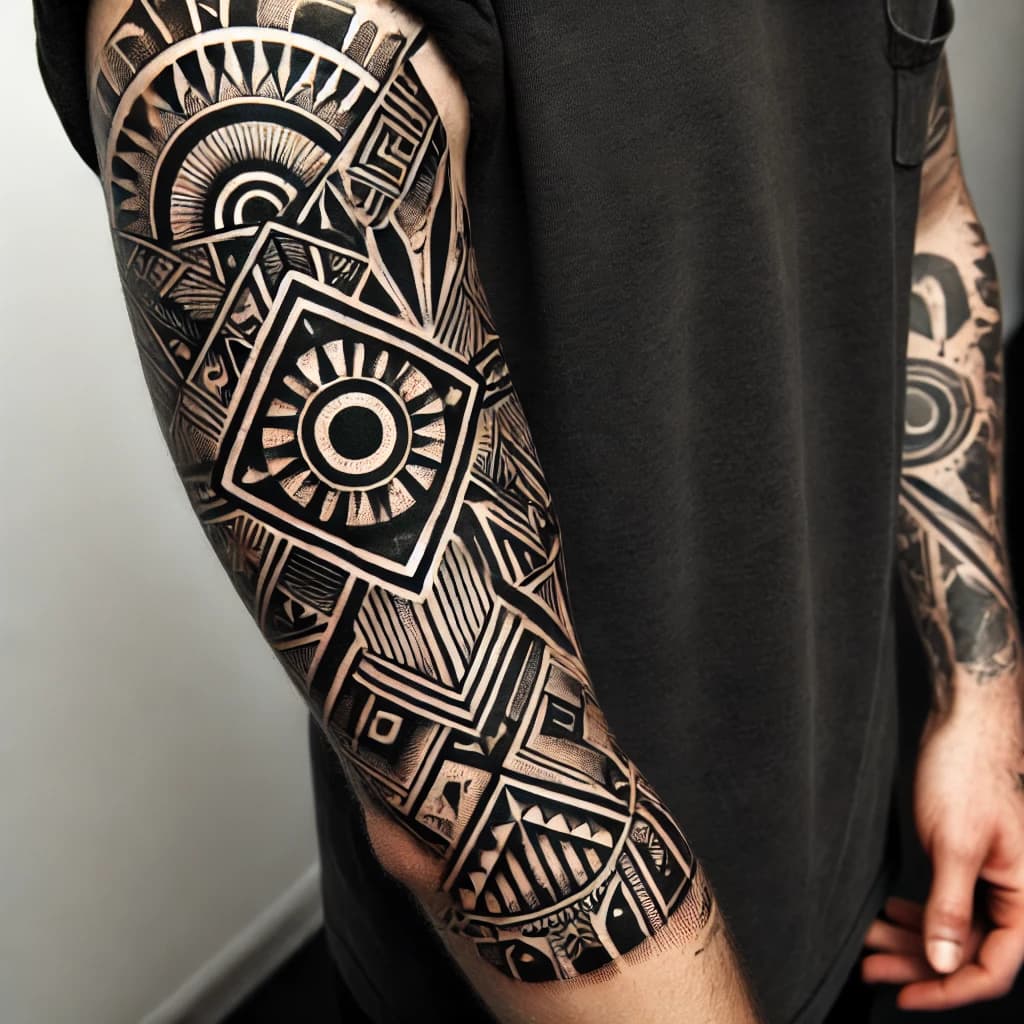
Once the gallery moves into ornamental territory, the symbol becomes less literal and more architectural. The forearm design built from stylized lines and circular elements shows how the yin yang idea can be translated into geometry without losing its center of gravity. The structure still feels balanced, but the effect is more decorative and more modern.
That same logic appears in the ornamental fish arrangement on the upper arm and the flame-accented forearm piece. Both designs push beyond the plain black-and-white split, yet they stay anchored by symmetry and complementary forms. For readers who like geometric tattoos with extra texture, this is the sweet spot: enough detail to feel customized, but not so much that the symbol dissolves into ornament for its own sake.
Animal pairings: where harmony becomes narrative
Jerwood Visual Arts leans hard into animal imagery, and that is where the gallery gets especially interesting. The koi-fish yin yang in black and gray is one of the clearest examples, because the fish preserve the circular flow of the original motif while adding movement and personality. The ankle version with watercolor koi goes even further, bringing softness and color into a form that is usually reduced to hard contrast.
Then there is the playful bear-and-crescent-moon interpretation, which changes the mood entirely. Instead of leaning on traditional duality alone, it turns yin yang into a small visual story, one that feels more whimsical while still respecting the balance at the center. The two-cat composition does something similar in a quieter way, proving that even familiar domestic imagery can carry the same interdependent structure when the shapes are mirrored with intention.
These animal-based versions are useful if you want the tattoo to feel less like a symbol on its own and more like a personal emblem. The message is still harmony, but the subject matter changes how that harmony feels: serene, playful, natural, or even a little mischievous.
Abstract and centered: when the circle expands
Some of the gallery’s strongest ideas come from stretching the motif into broader compositions. The tree-centered circular design on the arm gives the yin yang idea a rooted, organic core, letting the circle hold a living structure instead of just abstract halves. The upper-back fish design with flowing lines does something similar on a larger scale, using the back as room for movement and symmetry that can breathe.
This is where placement starts to matter as much as motif. The forearm and ankle examples feel especially versatile because they can be shown off or covered easily, while the upper-back and lower-back placements create a more centered, statement-like effect. A larger canvas also allows the flowing lines to do more work, which is important when the design depends on movement as much as shape.
How to choose the version that fits your skin and your life
The gallery is most useful when you treat it like a design map rather than a mood board. The key choice is not just whether you want a yin yang tattoo, but what kind of balance you want it to express in daily life.
- Choose minimalist if you want a clean read and a symbol that stays close to the classic circle.
- Choose ornamental if you want geometric structure with more visual density.
- Choose animal-led compositions if you want the tattoo to feel personal, playful, or narrative.
- Choose a larger placement, like the upper back or lower back, if you want the symmetry to read as a centered design.
- Choose the forearm or ankle if you want something more flexible, visible, and easy to adapt to your style.
That practical side is part of the gallery’s appeal. A design that looks elegant on paper can lose clarity on curved skin, but these examples show how line weight, circular motion, and mirrored forms can keep the symbol legible while adapting to the body.
Why yin yang still works in geometric tattooing
The deeper reason this motif keeps returning is that it was never just decorative. Britannica traces yin and yang back to the Yijing tradition in China, where the terms literally mean “dark side” and “sunny side” of a hill, and notes that the concept became the basis of an entire school of cosmology associated with Zou Yan in the 3rd century BCE. That history gives the symbol a seriousness that still resonates in tattooing.
Britannica also describes yin and yang as complementary, interdependent forces that make up all aspects and phenomena of life. Yin is tied to earth, femaleness, darkness, passivity, and absorption; yang to heaven, maleness, light, activity, and penetration. Once you know that, the gallery’s animals, moons, flames, and mirrored forms stop looking like random embellishments and start reading as different visual languages for the same old balance.
Tattooing itself has been practiced in most parts of the world for a long time, which helps explain why a symbol this ancient still feels fresh on skin. Jerwood Visual Arts shows exactly how that happens: by keeping the geometry intact while letting meaning travel through style, scale, and placement.
This article was produced by Prism’s automated news system from verified source data, official records, and press releases, then run through automated quality and moderation checks before publishing. The system is built and supervised by the people who set the standards it runs under. Read our full AI policy.
Did this article answer your question?