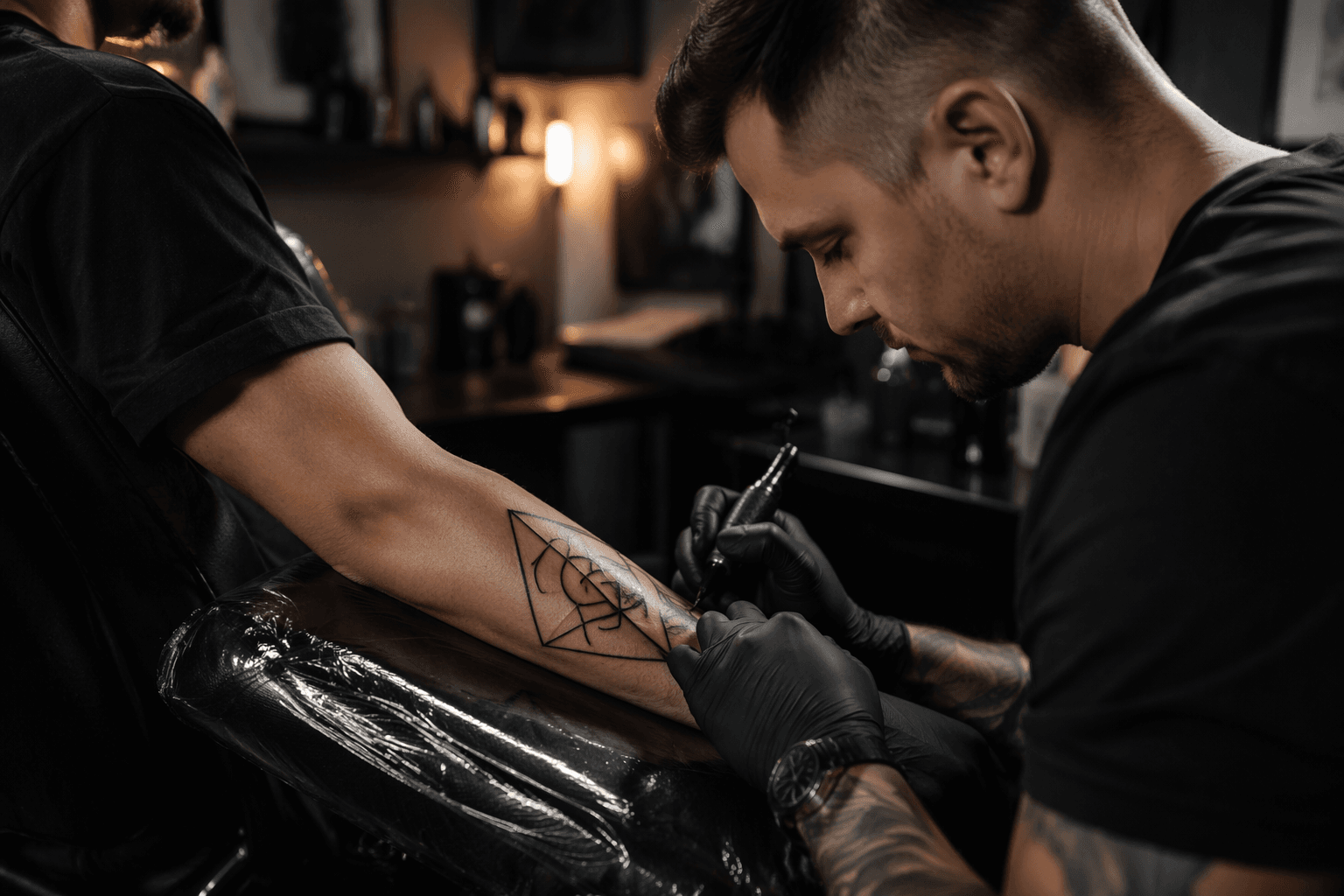
Fine line tattoos emerge as 2026's precise, meaningful body art language
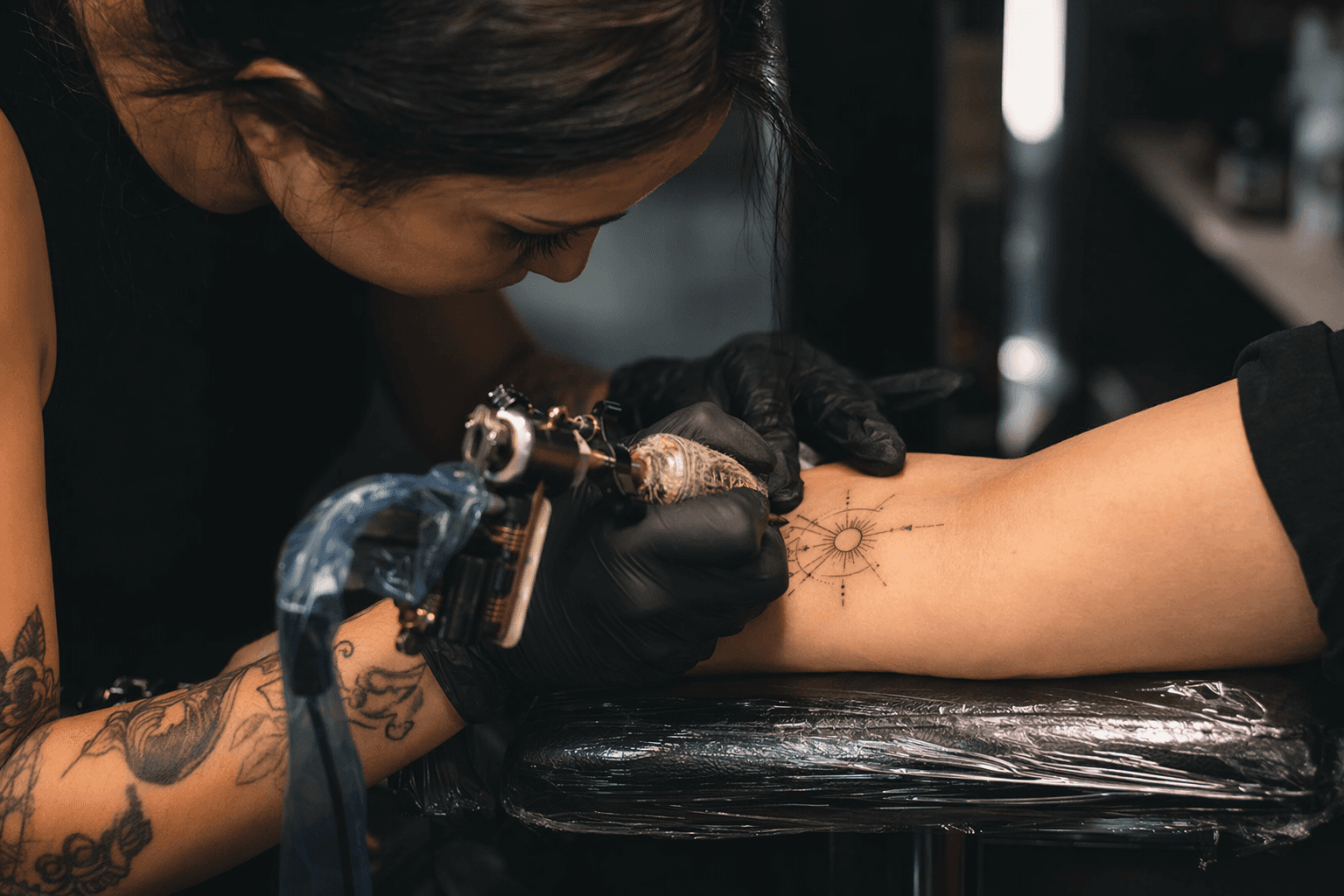
Fine line tattoos are borrowing geometric discipline, and the designs that last are the ones built for body flow, not just a feed-friendly closeup.
The overlap that matters
Fine line tattoos are thriving because they solve the same problem geometric tattoos have always solved: how to make a design feel exact without making it feel heavy. Nikolai Tairis frames fine line work as “a movement,” and that phrase fits the 2026 mood perfectly. These tattoos read like personal artifacts instead of decoration, which is exactly why they keep colliding with geometric tattooing, where clean edges, controlled spacing, and intentional placement already matter more than flash.
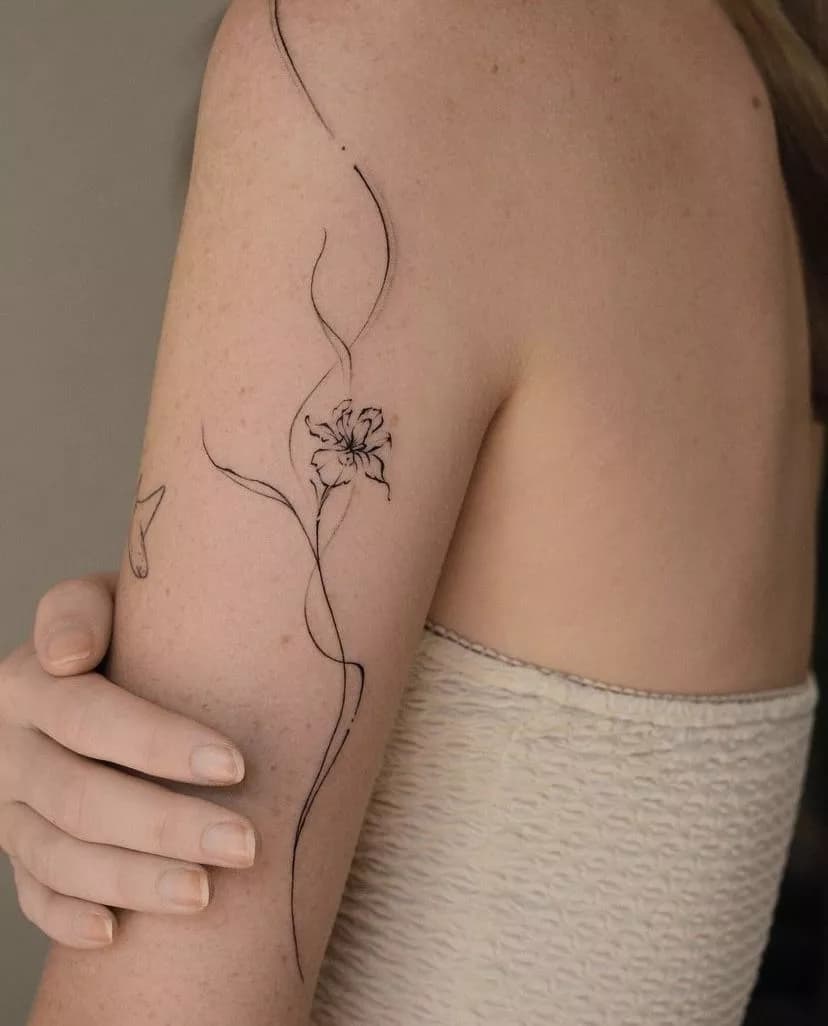
That overlap is not cosmetic. It is structural. The strongest fine line pieces, like the minimalist spine composition built around Roman numerals, scattered stars, and a flowing line, work because the artist is drawing with the body, not just on it. The same is true of the orchid shoulder-blade piece and the flowing floral arm tattoo. They may not be geometric in the strictest sense, but they behave like geometric work in one crucial way: the design depends on how the skin moves.
Why the styles keep blending
The reason fine line and geometry keep meeting in the middle is that both styles reward restraint. Geometric tattoos lean on symmetry, spacing, and a sense that every shape is locked to the next. Fine line tattoos use thinner tools and lighter visual weight, but the best ones still rely on the same discipline. If the spacing is off, the design starts to look accidental instead of precise.
That is where the consumer lens becomes useful. Inspiration photos can make a delicate design look effortless, but the read changes fast once the tattoo is on a living body. InkedMag has pointed out that fine-line demand is moving quickly, and that placement and longevity often come second to designs that photograph well online. That is the trap. A tattoo can look beautiful in a close crop and still lose clarity if the composition is crowded, the placement fights the body, or the lines are too fragile for the area.
For that reason, small placements deserve extra scrutiny. A tiny fine line design on a spine, shoulder blade, wrist, or ankle may look elegant in a render, but the real question is whether it still reads cleanly when the body twists, ages, and sheds some sharpness over time. In geometric work, that question is already obvious. Fine line is simply making more people ask it.
The skin care reality behind the look
The prettiest thin-line tattoo still has to survive real skin, and skin is not a flat poster. The American Academy of Dermatology warns that tattooed skin can react in unexpected ways even when the artist is licensed and the aftercare is followed. It also notes that UV exposure can fade ink, while tanning beds and sunlamps may raise skin-cancer risk or trigger painful skin reactions. In practical terms, a tattoo that relies on crisp linework has less room for sun damage than a bolder piece does.
That matters even more because fine-line tattoos are popular in the exact age group most likely to wear them. A recent PubMed review says tattooing has become a global trend in industrialized countries, with prevalence rates reaching 30 to 40 percent among adults younger than 40. A Danish population-based survey found that 10.2 percent of tattooed participants had experienced tattoo-associated skin reactions beyond the first three weeks after getting tattooed. Those are not edge-case numbers. They are a reminder that delicate work still lives inside ordinary skin biology.
Medical News Today’s guidance on aftercare backs that up. The first few weeks matter most for preventing infection and preserving the finished look, and peeling is a normal part of healing rather than a sign that the tattoo is failing. If you want a fine line piece to stay readable, the unglamorous part is the real part: keeping it clean, avoiding unnecessary irritation, and protecting it from hard sun. The American Academy of Dermatology also recommends applying sunscreen about 15 minutes before going outside and reapplying at least every two hours, while staying away from tanning beds and sunlamps altogether.
What geometric readers should look for
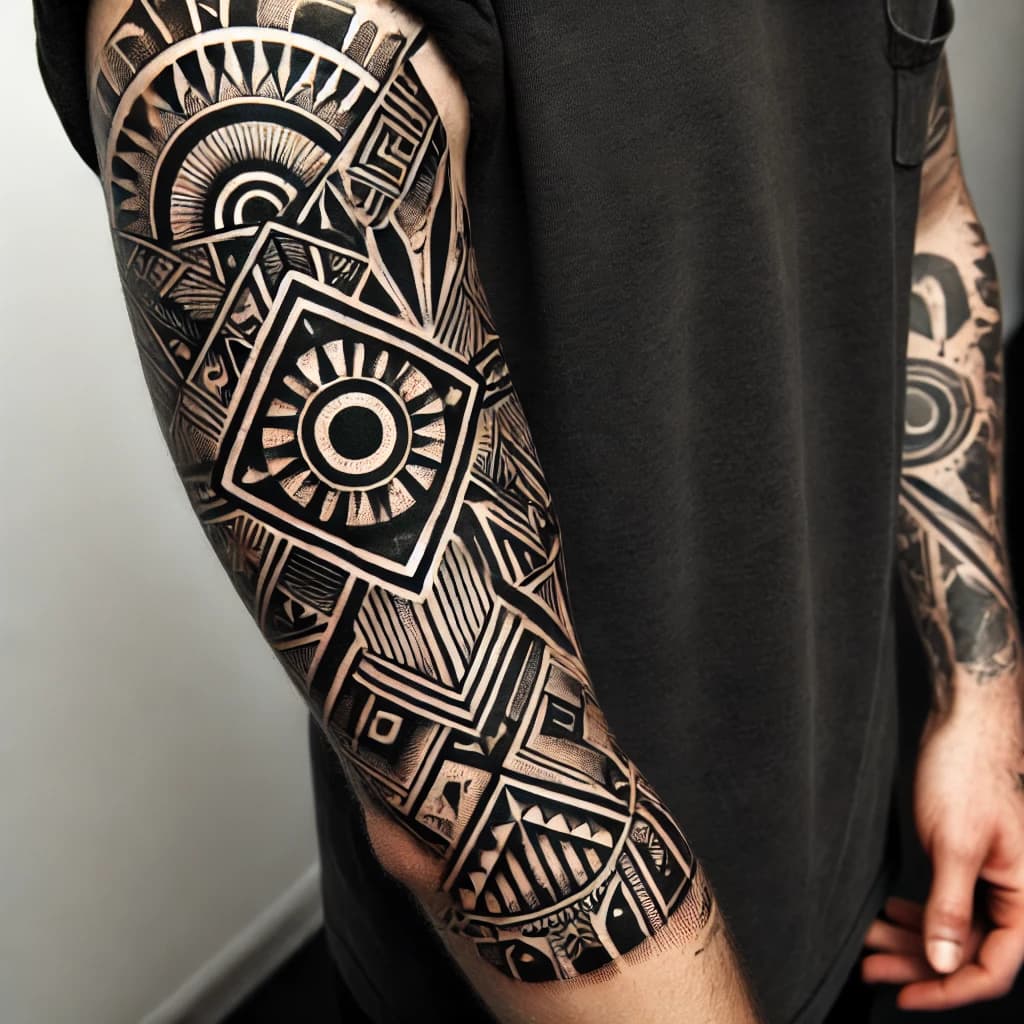
This is where geometric tattooing and fine line work either complement each other or fall apart. The best crossover pieces share the same core traits as strong geometry: balanced negative space, clear hierarchy, and a shape that still makes sense if you step back from it. The design should feel engineered for the body, not pasted onto it. That is why the spine, shoulder blade, and arm examples land so well. They follow the line of motion instead of trying to fight it.
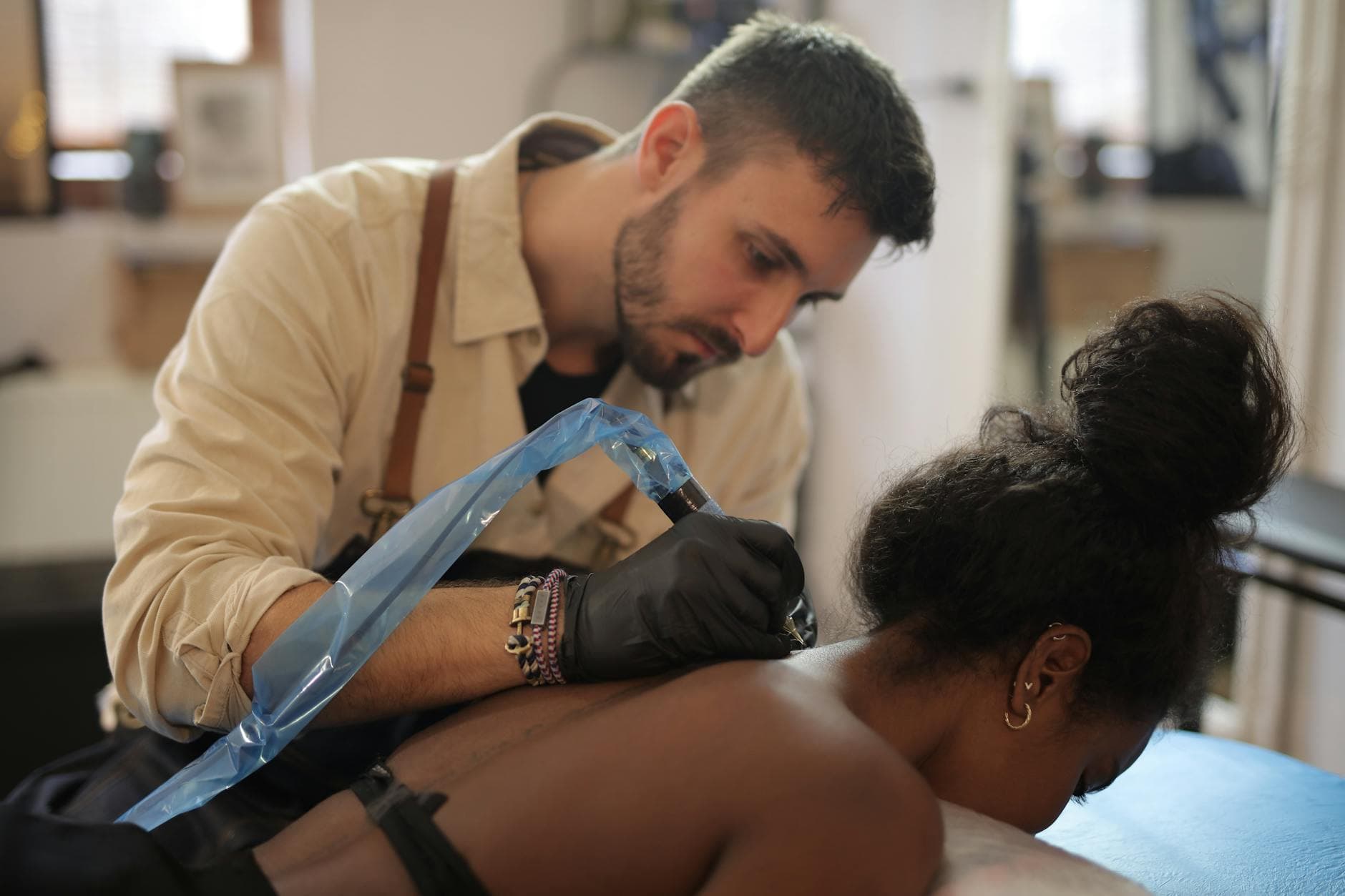
Tattoo culture has been moving in this direction for a long time. Smithsonian notes that tattoos have been used for thousands of years for religious, therapeutic, protective, and status-signaling purposes. It also points out that Ötzi’s tattoos were geometric and abstract, and that the Gebelein mummies, along with later Peruvian finds, carried geometric shapes such as triangles and diamonds. In other words, the clean, symbolic side of tattooing is not a new invention. 2026 is just giving it a more minimalist accent.
That historical thread also explains why specialists like Dillon Forte and Karolina Szymańska keep coming up in conversations about sacred geometry and fine-line precision. Tattoodo’s coverage of geometric and ornamental tattooing treats symmetry, mandalas, sacred geometry, and pointillism as defining elements of the category, while also noting the more delicate, ornamental feel that often overlaps with feminine presentation. The best work in that lane is not just pretty. It is mathematically calm, visually legible, and built to keep its shape.
How to tell a lasting piece from a pretty one
When you are choosing between a fine line tattoo and a geometric tattoo, or deciding to blend the two, ask a few blunt questions before you commit. Does the line weight still make sense if the tattoo softens a little? Does the spacing leave the design room to breathe? Does the placement work with the body’s natural movement, or does it depend on a perfect still image?
The answer matters more on small placements than anywhere else. Tiny tattoos magnify every mistake: a cramped motif loses clarity, a weak anchor point drifts, and a design that looked elegant in a close-up can start to feel unfinished at normal viewing distance. The strongest pieces in this style family do something harder than being “minimal.” They stay readable. That is the real promise behind the fine line and geometric overlap, and it is why the smartest tattoos in 2026 look quiet up front but stay coherent long after the first photo is forgotten.
This article was produced by Prism’s automated news system from verified source data, official records, and press releases, then run through automated quality and moderation checks before publishing. The system is built and supervised by the people who set the standards it runs under. Read our full AI policy.
Did this article answer your question?