Geometric Tattoos Blend Shape, Symbolism, and Sacred Geometry
Geometric tattoos look clean at first glance, but their meaning changes fast once you know the shapes, the placement, and the sacred forms hidden inside.
Shape is the message
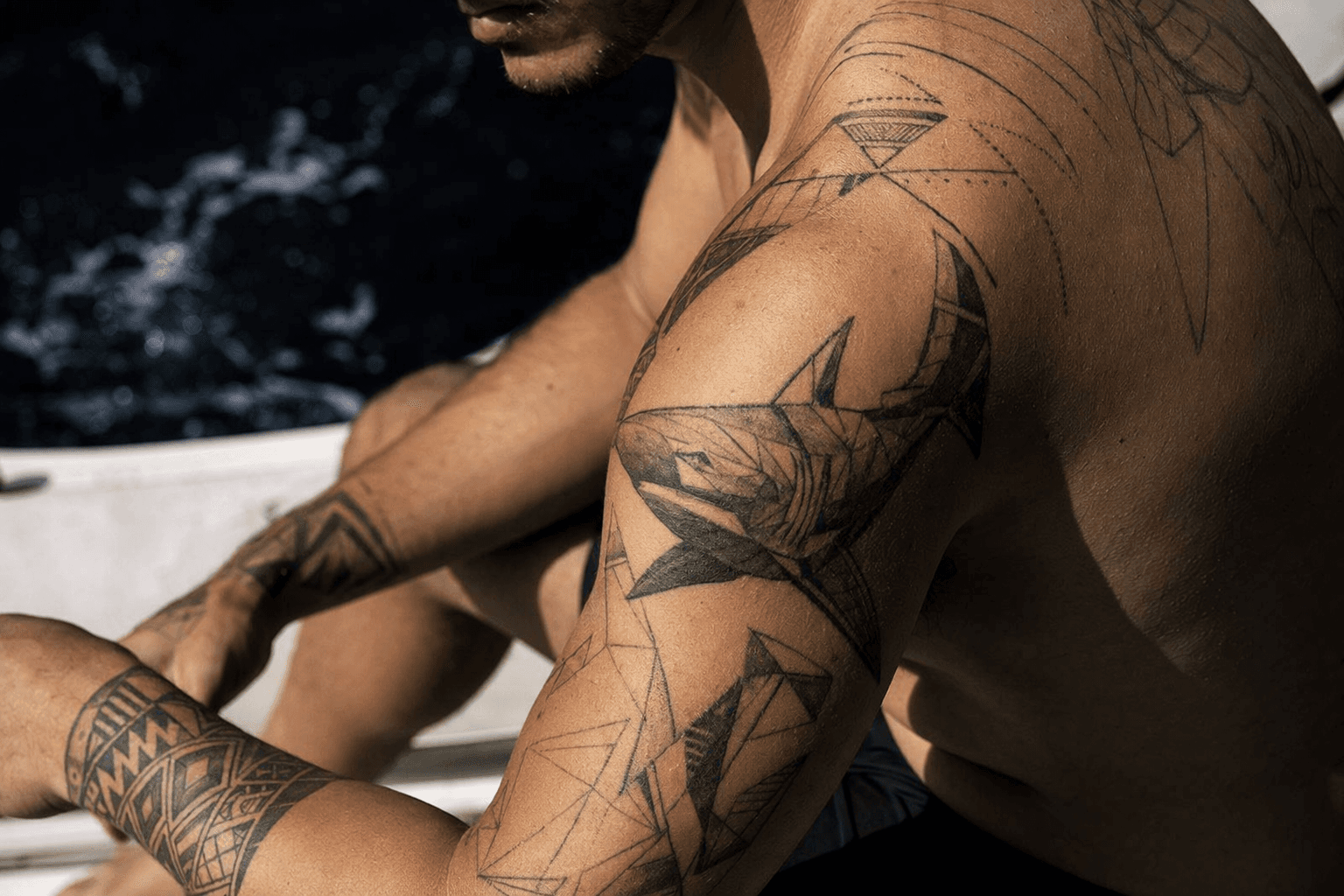
Geometric tattoos reward a closer look because the structure is the art. A circle, triangle, square, spiral, or hexagon can read as decoration from across the room, then turn into something much more specific when you understand how the design is built and where it sits on the body.
That is why this style keeps pulling in both first-timers and seasoned collectors. It can be as spare as a single triangle on the wrist or as complex as a full sleeve of interlocking forms, and the same visual language can feel personal, spiritual, or purely aesthetic depending on how it is composed.
How to read the common shapes
The fastest way into a geometric tattoo is to start with the basic forms. In the guide’s shorthand, circles suggest wholeness and eternity, which is why they often feel complete even when the rest of the tattoo is minimal. Triangles lean toward strength and the mind-body-spirit connection, but that meaning can shift with orientation and placement, so the same shape may read as ambition to one wearer and family to another.
Squares are the most grounded of the group, associated with stability and order. Spirals bring movement into the picture, standing for growth and the long curve of a life path. Hexagons, with their repeating honeycomb logic, carry a sense of harmony and natural order that makes them especially useful when a design needs to feel engineered without looking cold.
What matters most is that these meanings are not fixed rules. Geometric tattoos work because they are readable, not rigid. The same triangle can tell a different story when it points toward the heart, sits at the nape of the neck, or becomes one part of a larger pattern.
Why the style feels so universal
Part of geometric tattooing’s appeal comes from the fact that people across cultures keep returning to the same visual building blocks. Straight lines, mirrored structures, repeating angles, and circular patterns all feel instinctive because they organize chaos into something the eye can follow. That makes the style easy to learn and hard to outgrow.
The larger history of tattooing supports that instinct. Smithsonian Magazine notes that humans have been marking their skin for thousands of years, and those marks have long carried religious, protective, and status-related meaning. Geometric work sits comfortably inside that tradition because it turns form into symbolism without needing narrative imagery to do the heavy lifting.
When geometry becomes sacred geometry
The sacred-geometry side of the style deepens the conversation. Here, the tattoo is not just balanced or symmetrical, it is tied to diagrams that have traveled through religious and philosophical systems for centuries. A yantra, in Tantric Hinduism and Vajrayana Buddhism, is a linear diagram used as a support for ritual, which helps explain why these designs feel both exact and devotional.
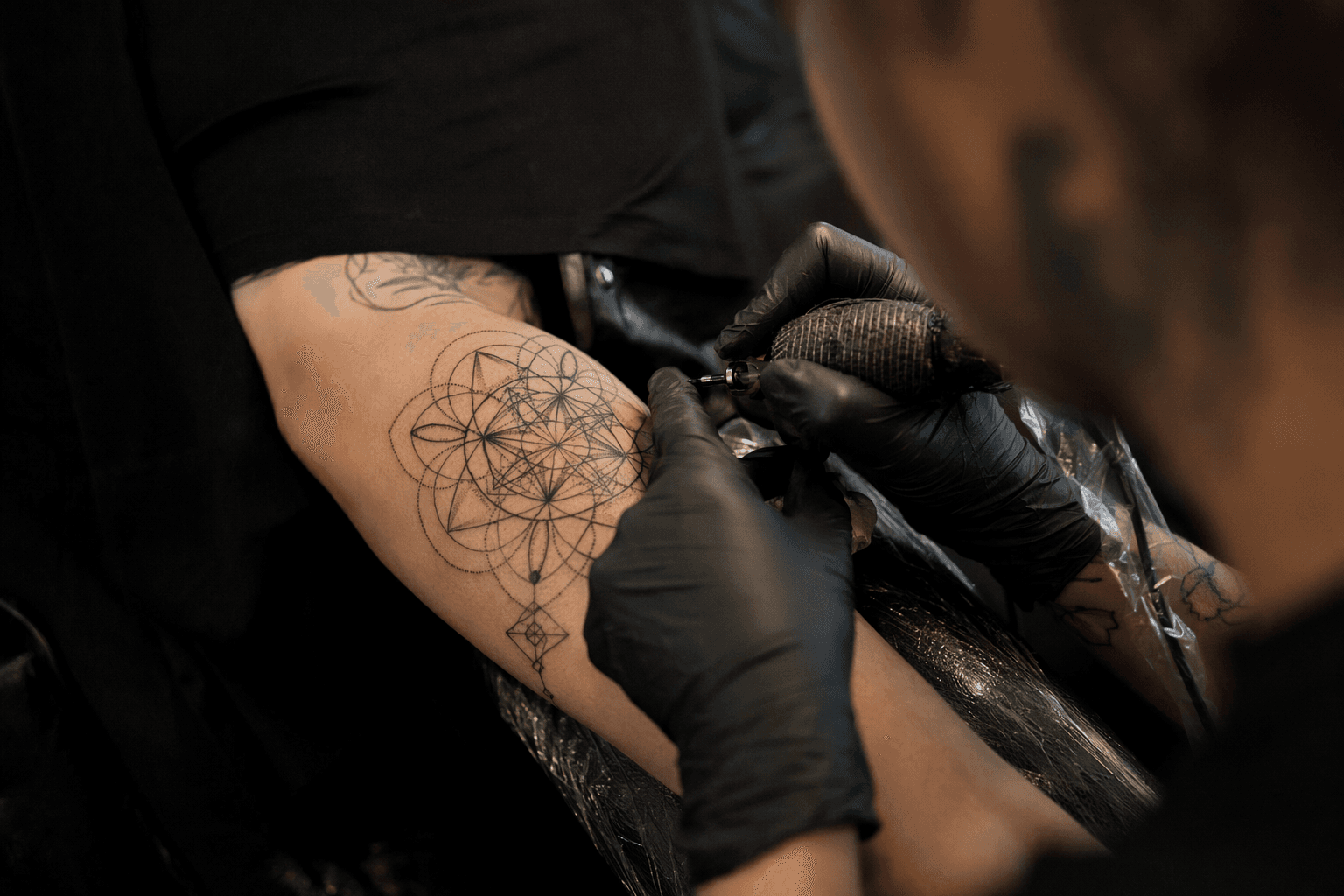
The Flower of Life is often chosen for its overlapping circles and its association with creation and interconnectedness. Metatron’s Cube is linked to balance, protection, and universal energy flow, though it is worth knowing that Metatron is a figure from Jewish mystical tradition rather than the Hebrew Bible itself. The Sri Yantra is one of the most recognizable sacred forms in tattooing, built from nine triangles, five pointing downward and four upward, with the interplay of those triangles understood as an expression of cosmic manifestation.
For tattooing, that matters because sacred geometry is not just a style choice. It gives you a framework for meaning, but the symbol still changes once it is placed on skin, scaled up, rotated, or combined with other elements.
Placement changes everything
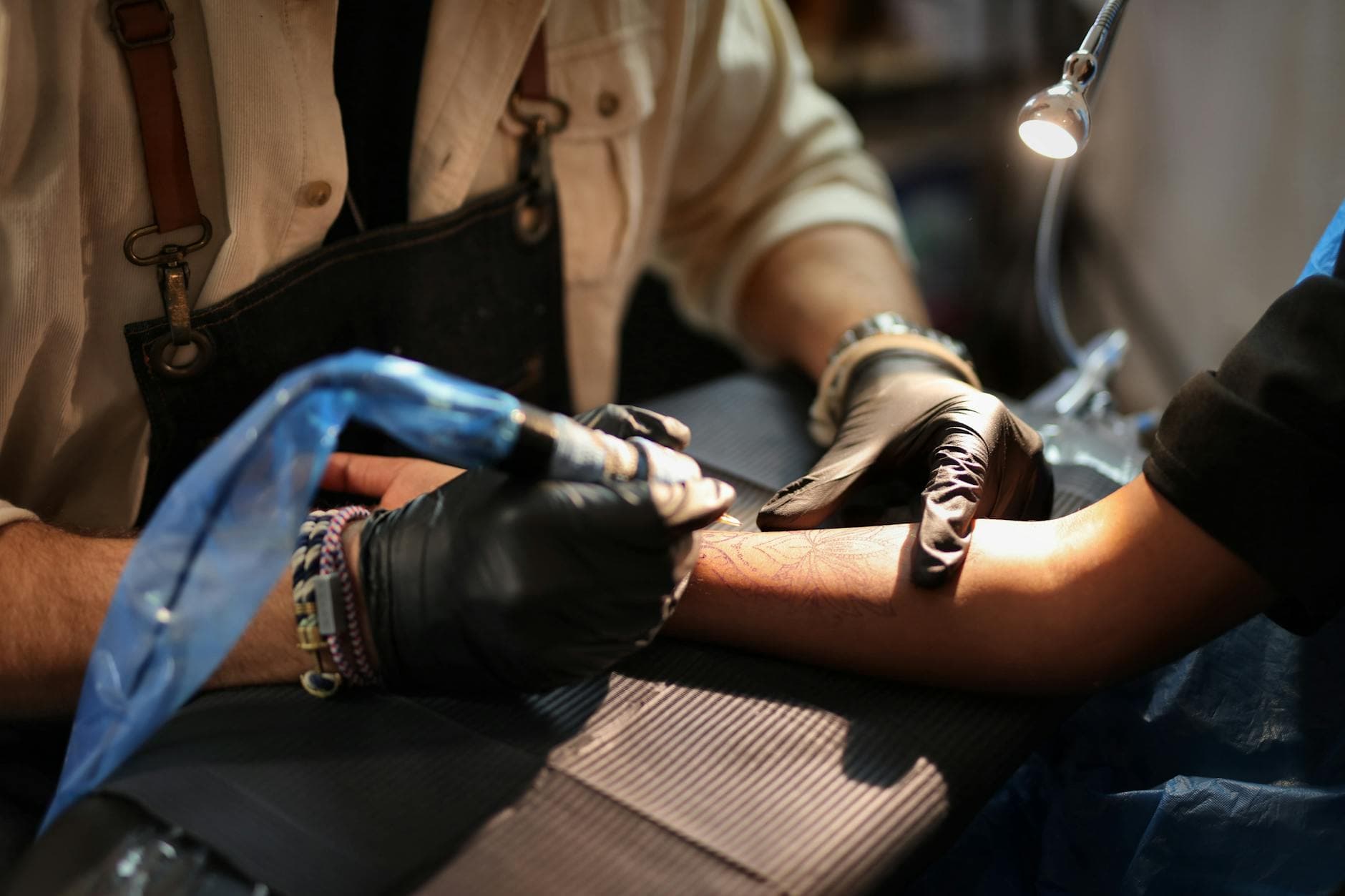
In geometric work, placement can make or break the design because the body is not a flat page. A pattern that looks perfect in stencil form can lose its balance if it does not flow with the curve of a forearm, the slope of a shoulder, or the bend of a knee. That is why symmetrical work and body-flow-sensitive designs need extra care before the needle ever starts.
Joint placement deserves special caution. University College London Hospitals NHS Foundation Trust advises against tattooing directly over a joint because the area may become problematic later, and that warning matters even more for precise geometric designs that rely on clean lines and consistent spacing. Health and longevity are part of the aesthetic here, because a tattoo that heals poorly can disrupt the very symmetry that made it appealing in the first place.
Aftercare is part of the design conversation too. The American Academy of Dermatology notes that aftercare helps keep tattooed skin healthy and vibrant, which is especially important for line-heavy tattoos where fading or blurring can dull the structure quickly. In geometric work, a healed line is part of the composition, not just the finish.
Why geometric tattoos keep growing
The bigger cultural backdrop helps explain why this style keeps showing up in consultations. Pew Research Center found in 2023 that 32% of U.S. adults have at least one tattoo, and 22% have more than one, based on a survey of 8,480 adults fielded from July 10 to July 16, 2023. Tattoos are no longer a niche code, they are a mainstream way to mark belief, memory, and identity.
That shift favors geometric tattoos because they can do several jobs at once. They can read as minimal design, carry spiritual weight, or act like a private symbol that only makes sense once you know the underlying shape language. Pew also found that many tattooed adults say they got ink to honor someone, express personal beliefs, or improve physical appearance, and geometric tattoos fit all three motives without forcing one meaning to dominate.
There is also a practical reason the style keeps gaining ground: custom technical work still has room to grow. Industry sources project continued expansion in the tattoo market, and that supports the demand for designs that require precision, symmetry, and thoughtful composition. Geometric tattoos reward that kind of care because every line contributes to the final read.
What to keep in mind before you choose one
If you are choosing a geometric tattoo, think about three things at once: the shape, the placement, and the story you want it to tell. A single triangle can feel spare and modern, a Flower of Life can feel expansive and meditative, and a Sri Yantra can bring ritual structure into a tattoo that is also visually striking.
The best geometric tattoos do not just look balanced. They stay legible as they heal, sit well with the body, and keep their meaning even when you are not standing in front of a mirror studying them. That is the real durability of the style: it turns pattern into personal language, and it keeps that language alive long after the trend cycles move on.
Know something we missed? Have a correction or additional information?
Submit a Tip